Jaguar is a project that grew out of the need for a fast, intuitive, and cost effective indoor navigation solution. We are a small team consisting of an advisor (Professor Chen-Hsiang (Jones) Yu) from the Wentworth Institute of Technology and an undergraduate student (Brandon Dalton) from the University of Southern California. Indoor navigation is a tough challenge and has been for some time now. However, we hope that Jaguar will be able to provide a novel solution to the problem through the utilization of NFC technologies, our custom system architecture, and path / route planning algorithm.
NFC or Near Field Communication is a set of communication standards which allow divices to communicate through electromagnetic induction. It is based on a two node system consisting of an interrogator and a tag. The interrogator device is just a fancy way of saying your NFC eneabled smartphone and the tags are the small NFC chips where small bits of location data for the Jaguar system are stored. NFC communicates information over a 13.56MHz channel at a rate of between 106Kbps and 424Kbps. These speeds are perfect for transmitting the small amounts of location data our system needs. Smartphones will also need to be within 4cm of a tag in order to both power the tag and send / recieve data.
We choose to use NFC for three main reasons: the tags are cheap, easily replaceable / durable, and they can be written with percise location information so that the user can always know where they are (even without GPS connectity).
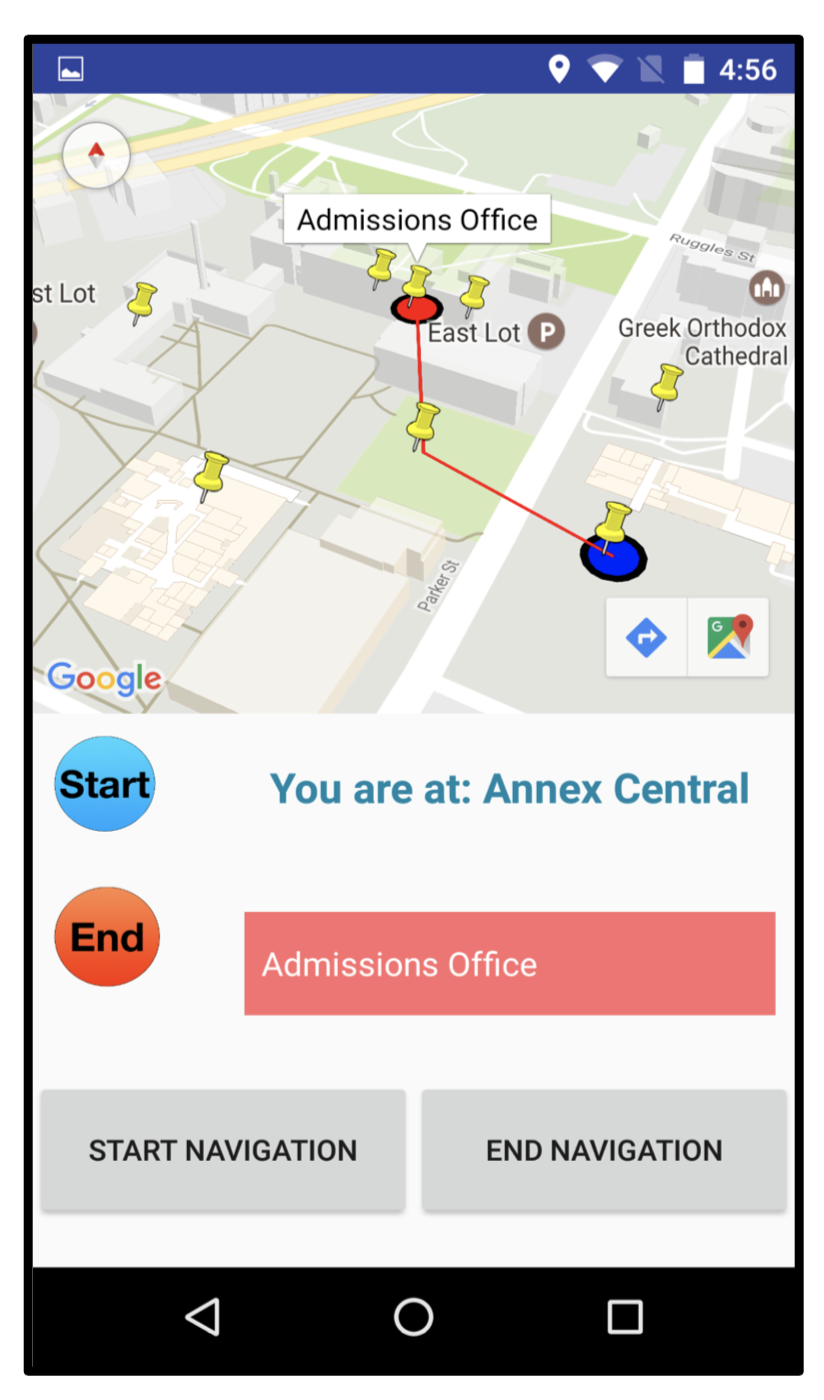
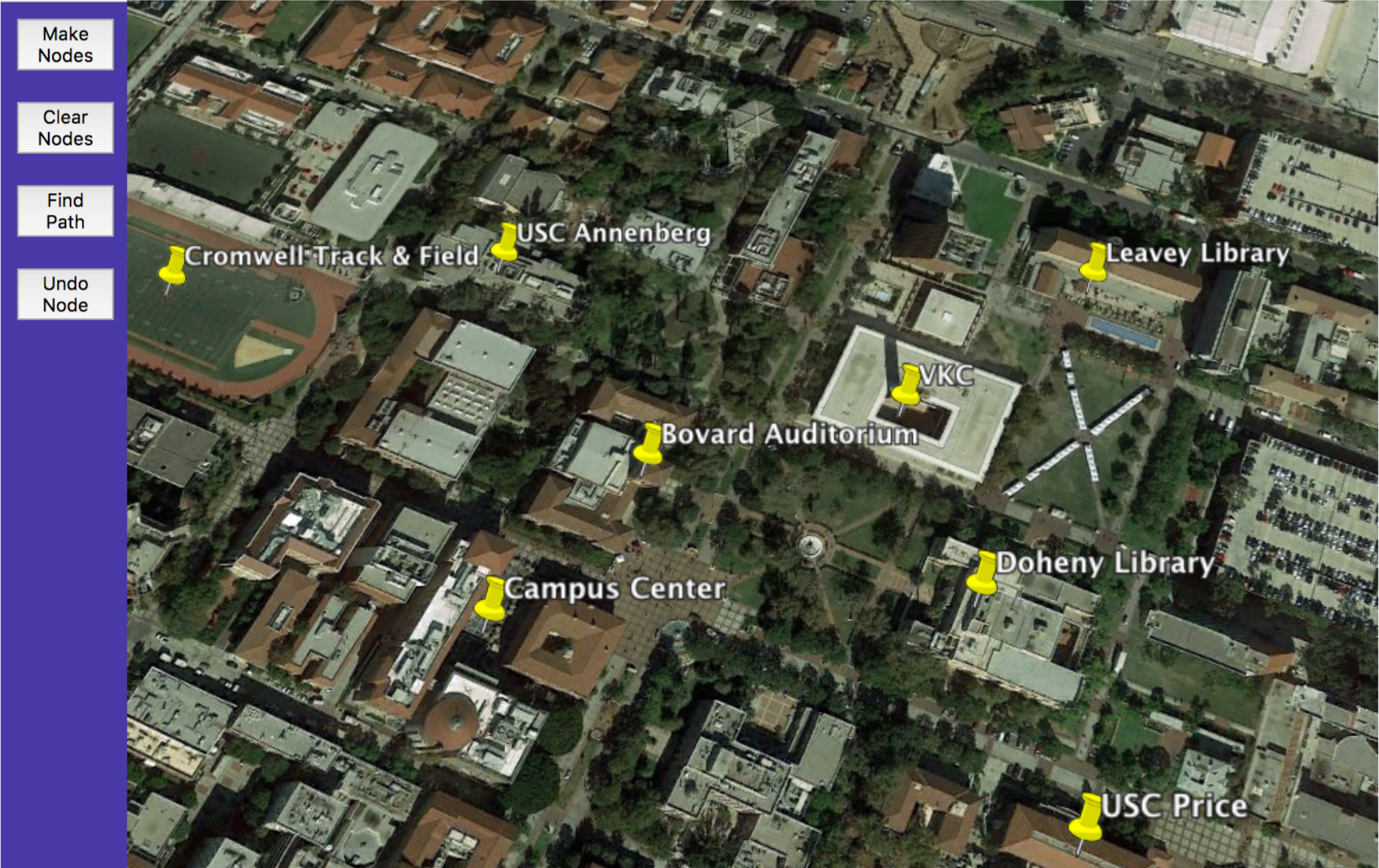
The Jaguar system consists of three main comonents: the mobile application (currently written for the Android platform, but will be expanded to the web shortly), a map authoring tool for system administrators, and a novel navigation algorithm. For more information please see our paper "Jaguar: Indoor Navigation System for Organizations" UIST '17 Adjunct Publication (avalible at the ACM Digital Library).