7/5/2010
|
During my trip to China in
June 2010, I participated in a “future of computing”
conference in Changsha, and had a chance to look around
the environment of the capital of Hunan Province. |
 Changsha
is a little village of about six million people that most Americans
have never heard of. It does not make even the list of top 25
Chinese cities in population, though if it were in the US, it would
be fourth behind New York, Los Angeles and Chicago. Changsha
is the capital of Hunan Province, so the food is quite spicy and
tasty.
Changsha
is a little village of about six million people that most Americans
have never heard of. It does not make even the list of top 25
Chinese cities in population, though if it were in the US, it would
be fourth behind New York, Los Angeles and Chicago. Changsha
is the capital of Hunan Province, so the food is quite spicy and
tasty. As we approached the city, we saw
the same style of high-rise construction that I had noted in
Beijing, though here it was spread out to a number of areas of the
city, not continuous throughout. We soon arrived at a fancy
hotel complex called the Venice Hotel that fancies itself to be
Italy transplanted to China. The pictures at the right will give you
some idea of the effect. The hotel is on an island surrounded
by a canal both of whose ends meet a tributary of the Xiang River,
which itself flows north into the Yangzi (Yangtze). The hotel has a
nautical theme, in concert with its name, and a large fake boat
makes for a lovely outdoor playground for children and parties
alike. I also enjoyed their huge outdoor swimming pool and
smaller indoor pool. It is not near the center of Changsha,
but large apartment buildings under construction were visible in
several directions, and the lobby contained a mockup of the island,
appearing to offer real estate for sale in future houses. As
we approached, solar panels surmounted every roof. Food was
(too) plentiful, including a “noodle bar” where you could get your
favorite type of noodles, with various mix-ins, in a cup of chicken
broth.
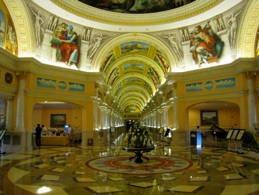
As we approached the city, we saw
the same style of high-rise construction that I had noted in
Beijing, though here it was spread out to a number of areas of the
city, not continuous throughout. We soon arrived at a fancy
hotel complex called the Venice Hotel that fancies itself to be
Italy transplanted to China. The pictures at the right will give you
some idea of the effect. The hotel is on an island surrounded
by a canal both of whose ends meet a tributary of the Xiang River,
which itself flows north into the Yangzi (Yangtze). The hotel has a
nautical theme, in concert with its name, and a large fake boat
makes for a lovely outdoor playground for children and parties
alike. I also enjoyed their huge outdoor swimming pool and
smaller indoor pool. It is not near the center of Changsha,
but large apartment buildings under construction were visible in
several directions, and the lobby contained a mockup of the island,
appearing to offer real estate for sale in future houses. As
we approached, solar panels surmounted every roof. Food was
(too) plentiful, including a “noodle bar” where you could get your
favorite type of noodles, with various mix-ins, in a cup of chicken
broth. The conference was at the same
hotel, and for the honored guests and organizers, began with a
private banquet on the evening we arrived. This was held in an
upstairs suite in the hotel, where the only thing that surprised me
was that two flat-screen TV’s were blasting as we arrived, one in
the suite’s reception room, and one in the dining room.
Fortunately, they fell silent quickly, but I wonder if this might be
customary. As we went around the table introducing ourselves
to each other, our host stopped me after I had introduced myself as
a professor at MIT, to point out that I was in fact an
“academician”, being a member of the US National Academy’s Institute
of Medicine, and that this was a really big deal in China. One
of the Chinese scholars at the table was a member of the Chinese
Academy of Science, and he was treated with great deference both at
dinner and at the subsequent conference. So in fact I leaned
something new. When I had read of Soviet-era “Academician”
somebody in the USSR, I assumed this was just a way to say
“academic”, or professor; it must have meant a member of the
academy. I like spicy food, so I was quite happy with the Hunan
palette. The most novel thing I ate was what looked like a giant sea
snail, with a helical shell. The creature within had been
extracted, cooked (I don’t know in which order), sliced into thin
slices, and spiced, and then returned to the shell. It had the
texture of squid or abalone, a bit chewy. I’m not sure I would
fly 24 hours to sample it again, but it was good.
The conference was at the same
hotel, and for the honored guests and organizers, began with a
private banquet on the evening we arrived. This was held in an
upstairs suite in the hotel, where the only thing that surprised me
was that two flat-screen TV’s were blasting as we arrived, one in
the suite’s reception room, and one in the dining room.
Fortunately, they fell silent quickly, but I wonder if this might be
customary. As we went around the table introducing ourselves
to each other, our host stopped me after I had introduced myself as
a professor at MIT, to point out that I was in fact an
“academician”, being a member of the US National Academy’s Institute
of Medicine, and that this was a really big deal in China. One
of the Chinese scholars at the table was a member of the Chinese
Academy of Science, and he was treated with great deference both at
dinner and at the subsequent conference. So in fact I leaned
something new. When I had read of Soviet-era “Academician”
somebody in the USSR, I assumed this was just a way to say
“academic”, or professor; it must have meant a member of the
academy. I like spicy food, so I was quite happy with the Hunan
palette. The most novel thing I ate was what looked like a giant sea
snail, with a helical shell. The creature within had been
extracted, cooked (I don’t know in which order), sliced into thin
slices, and spiced, and then returned to the shell. It had the
texture of squid or abalone, a bit chewy. I’m not sure I would
fly 24 hours to sample it again, but it was good.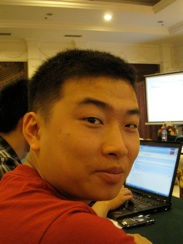 Not all the talks were
in English, however, as some of the opening greetings and most of
the first two talks were by Chinese presenters, in Chinese.
Fortunately, a very helpful student named Chengkun Wu, from the
National University of Defense Technology, was assigned to translate
for me, and he did a great job of giving me a sense of what was
being said and of helping to orient me around Changsha during my
stay. Chengkun is going to Manchester this fall to pursue his
graduate studies, and must be one of the top students at his
university. I enjoyed his company, and Keith Marzullo and I
met with him and a number of his colleagues the following evening to
talk about how we think someone becomes a successful
researcher. My main emphasis was to learn that once you have
proven your ability to do really well in coursework and
examinations, those do not count any further. You need to play
with problems, understand what works and doesn’t in others’
solutions, and invent new ways to do things, even though they may
not work. I suspect this is not a lesson that has been
diligently taught in a country with a Confucian tradition where exam
taking is still most valued.
Not all the talks were
in English, however, as some of the opening greetings and most of
the first two talks were by Chinese presenters, in Chinese.
Fortunately, a very helpful student named Chengkun Wu, from the
National University of Defense Technology, was assigned to translate
for me, and he did a great job of giving me a sense of what was
being said and of helping to orient me around Changsha during my
stay. Chengkun is going to Manchester this fall to pursue his
graduate studies, and must be one of the top students at his
university. I enjoyed his company, and Keith Marzullo and I
met with him and a number of his colleagues the following evening to
talk about how we think someone becomes a successful
researcher. My main emphasis was to learn that once you have
proven your ability to do really well in coursework and
examinations, those do not count any further. You need to play
with problems, understand what works and doesn’t in others’
solutions, and invent new ways to do things, even though they may
not work. I suspect this is not a lesson that has been
diligently taught in a country with a Confucian tradition where exam
taking is still most valued. At
the conference banquet on Thursday night, I was astonished when one
of the Chinese organizers (at the right in the picture) sat in with
the traditional orchestra to play the Erhu, a two-stringed
violin-like instrument, but without a finger board. His
playing was amazing. When he started, I had my back turned, talking
with a colleague, and I at first thought I was hearing the
expressive nuances of a human voice singing a plaintive song.
He told me that he has been playing since childhood, and left me
with a much increased appreciation for this instrument. I had
only heard it before being played very badly by an elderly man in
Harvard Square.
At
the conference banquet on Thursday night, I was astonished when one
of the Chinese organizers (at the right in the picture) sat in with
the traditional orchestra to play the Erhu, a two-stringed
violin-like instrument, but without a finger board. His
playing was amazing. When he started, I had my back turned, talking
with a colleague, and I at first thought I was hearing the
expressive nuances of a human voice singing a plaintive song.
He told me that he has been playing since childhood, and left me
with a much increased appreciation for this instrument. I had
only heard it before being played very badly by an elderly man in
Harvard Square.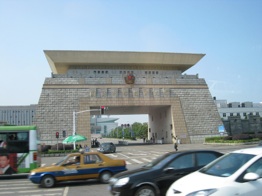 The
following day, which was all presented in Chinese, we were whisked
off to visit the supercomputer center at the National University of
Defense Technology (NUDT), went through the Han Tombs exhibit at the
Hunan Provincial Museum, an exhibition of ancient artifacts from a
BC-era tomb, then had lunch at a restaurant run by Mao’s relatives,
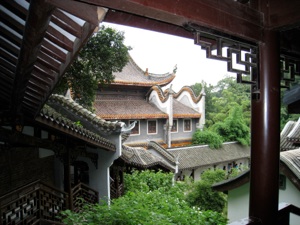
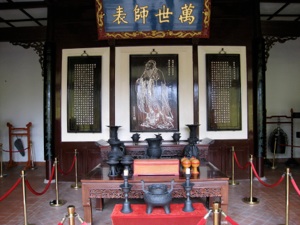
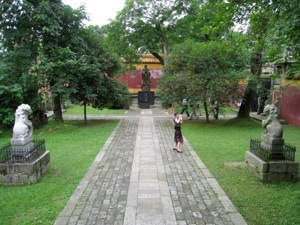
and finally toured the Yuelu Academy, said to be the oldest
continually operating university in the world, dating to 976 AD.
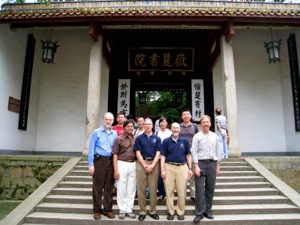
The
following day, which was all presented in Chinese, we were whisked
off to visit the supercomputer center at the National University of
Defense Technology (NUDT), went through the Han Tombs exhibit at the
Hunan Provincial Museum, an exhibition of ancient artifacts from a
BC-era tomb, then had lunch at a restaurant run by Mao’s relatives,
and finally toured the Yuelu Academy, said to be the oldest
continually operating university in the world, dating to 976 AD. The visit started by having to put
plastic bag booties on our shoes, which was an impossible challenge
for my number 12 sized shoes. We then looked at a very typical
large computer room full of racks of electronics, which meant little
to me. I had recently been at the San Diego Supercomputer
Center, which to outward appearances seems very similar. Our
hosts were proud of having built not only the interconnect systems
of their machine but, in some versions, even their own domestic
processor. There was an exhibit of backplane and interconnect
technologies, and in one corner of the clean room we could see
people soldering new (or repair) boards. I wonder if burning
flux is good in a clean room. I can understand the practical
benefits of a strong supercomputer program, especially in designing
military technologies, but this did get a lot more concerted
attention than I am accustomed to in most US universities.
The visit started by having to put
plastic bag booties on our shoes, which was an impossible challenge
for my number 12 sized shoes. We then looked at a very typical
large computer room full of racks of electronics, which meant little
to me. I had recently been at the San Diego Supercomputer
Center, which to outward appearances seems very similar. Our
hosts were proud of having built not only the interconnect systems
of their machine but, in some versions, even their own domestic
processor. There was an exhibit of backplane and interconnect
technologies, and in one corner of the clean room we could see
people soldering new (or repair) boards. I wonder if burning
flux is good in a clean room. I can understand the practical
benefits of a strong supercomputer program, especially in designing
military technologies, but this did get a lot more concerted
attention than I am accustomed to in most US universities.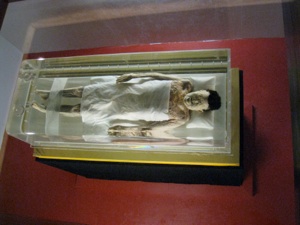 The
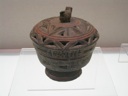
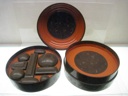
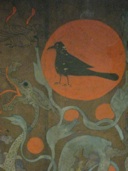
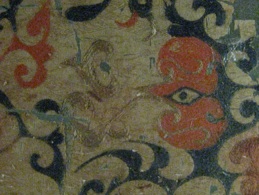
tomb of Xin Zui, the Marquess of Dai, who died about 160 BC, along
with the tombs of her husband, the Marquis, and their son, form a
spectacular treasure from the time of the Han dynasty. They showcase
beautiful pottery, weapons, an exercise tutorial, Egyptian-like
shabti figures carved in wood to accompany the dead into the
afterlife as servants, spices, woven baskets, coins and jade disks,
musical instruments, cosmetics jars and cases, table bowls,
spectacular embroidered silks, bamboo tablets with tiny but precise
writing, and a series of caskets. The pièce de résistance is the
mummified body of the Marquess herself, preserved in anoxic water
when her tomb flooded soon after her burial. Needless to say,
I found the artifacts much more pleasing than the mummy!
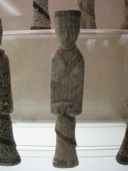
The
tomb of Xin Zui, the Marquess of Dai, who died about 160 BC, along
with the tombs of her husband, the Marquis, and their son, form a
spectacular treasure from the time of the Han dynasty. They showcase
beautiful pottery, weapons, an exercise tutorial, Egyptian-like
shabti figures carved in wood to accompany the dead into the
afterlife as servants, spices, woven baskets, coins and jade disks,
musical instruments, cosmetics jars and cases, table bowls,
spectacular embroidered silks, bamboo tablets with tiny but precise
writing, and a series of caskets. The pièce de résistance is the
mummified body of the Marquess herself, preserved in anoxic water
when her tomb flooded soon after her burial. Needless to say,
I found the artifacts much more pleasing than the mummy!
|
 |
 |
 |

 |
 |
|
 |
 |
|
 |
 |
|
 |
  |
 Ch'ang-sha
1925
Ch'ang-sha
1925