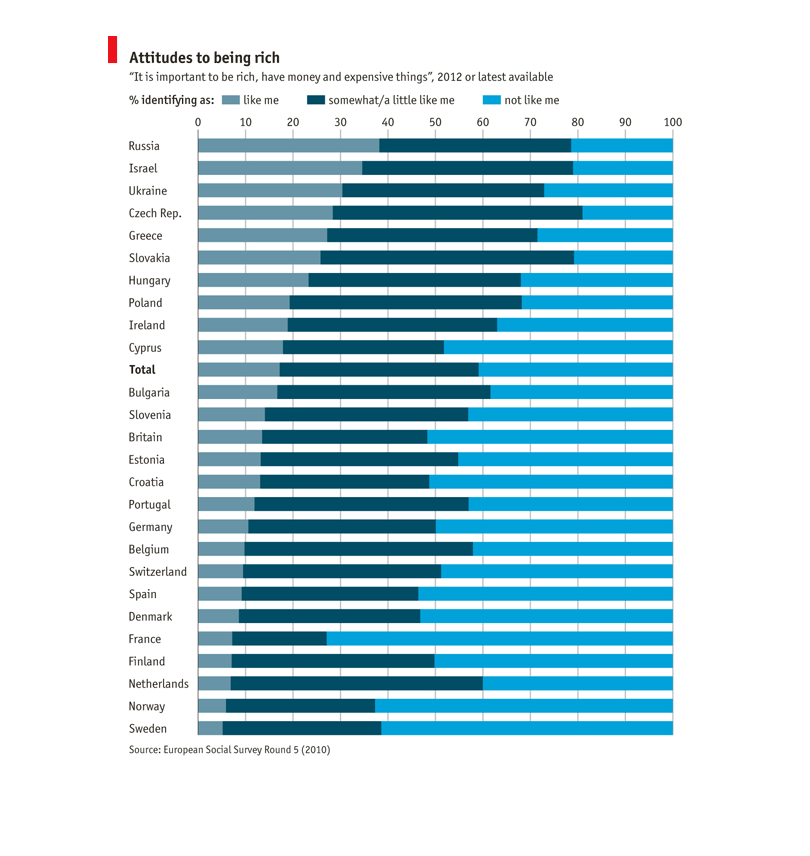
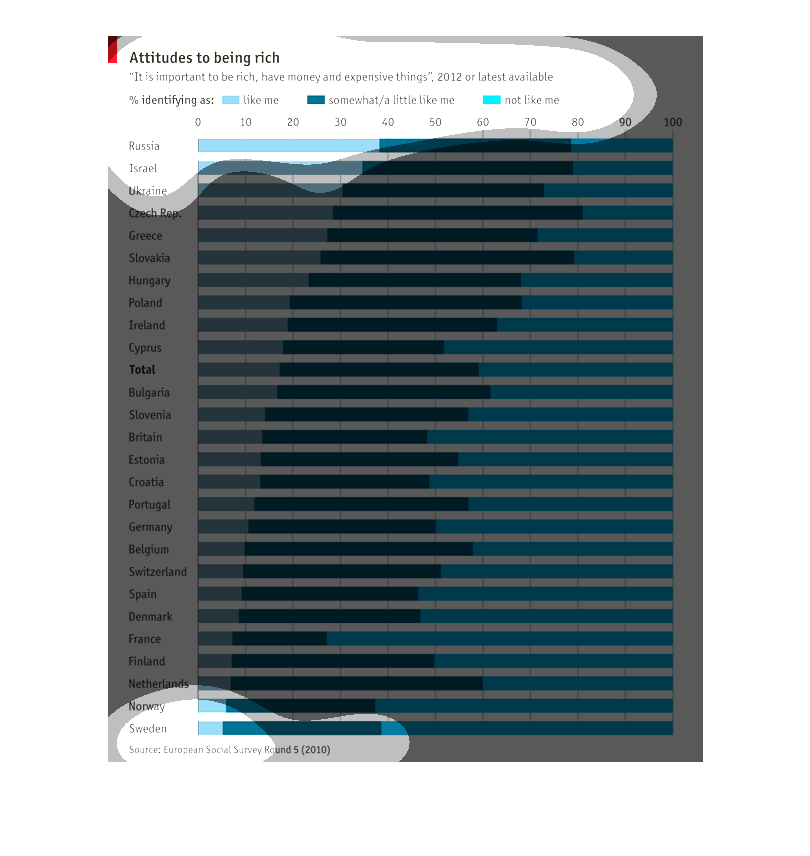
This graph represents attitudes towards the rich based on country. They categorize based on
"like me," "somewhat like me," and "not at all like me." It shows how each country feels towards
the rich.
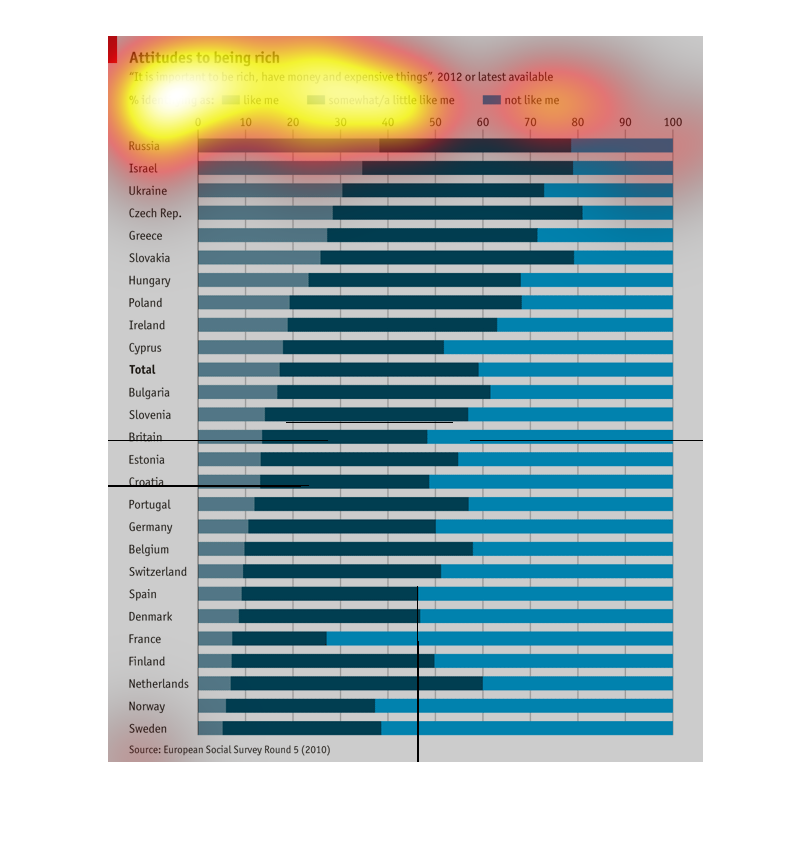
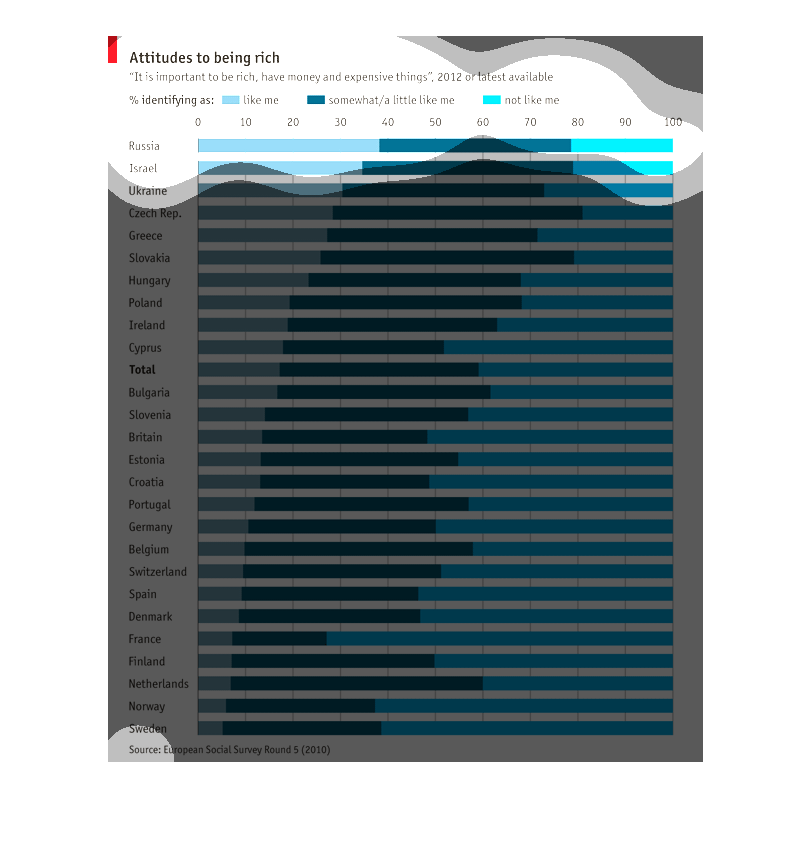
Attitudes to being rich are on this chart. The attitudes of over 15 countries are expressed
here. When asked if it is important to be rich, have money, and expensive things, Russia identified
the most.
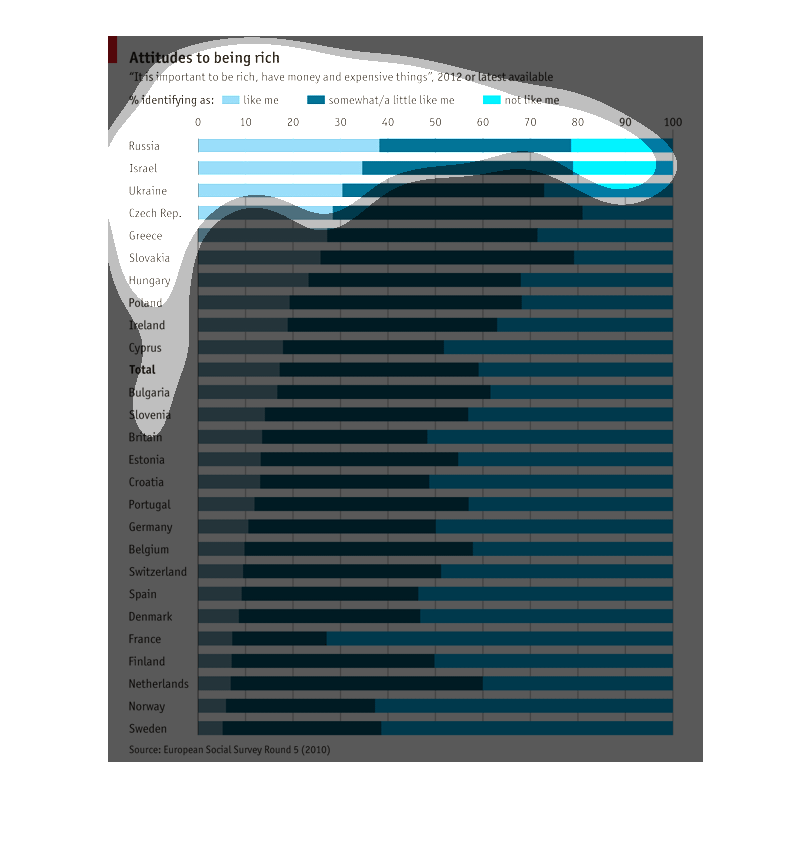
This chart shows the attitudes towards being rich and how important it is to be rich, this
is from 2012. The chart shows the percentage that identified themselves, medium blue is like
me, dark blue, somewhat like me, light blue, not like me. The top of the chart shows it to
be somewhat even in those countries, by the bottom of the chart, they were not identifying
at all with being rich and it was mostly not like me.
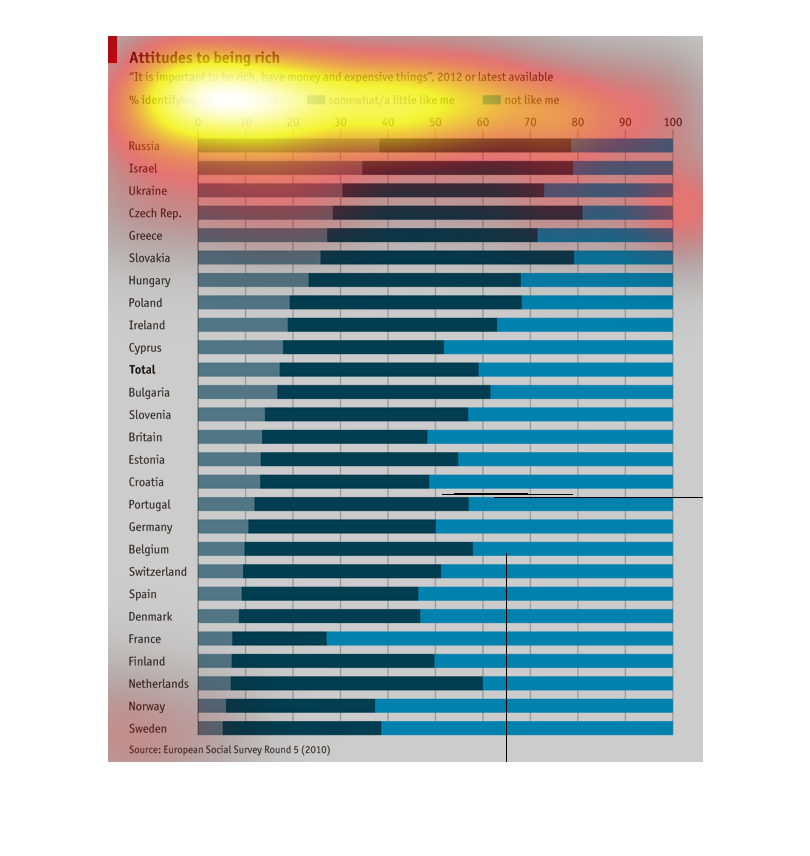
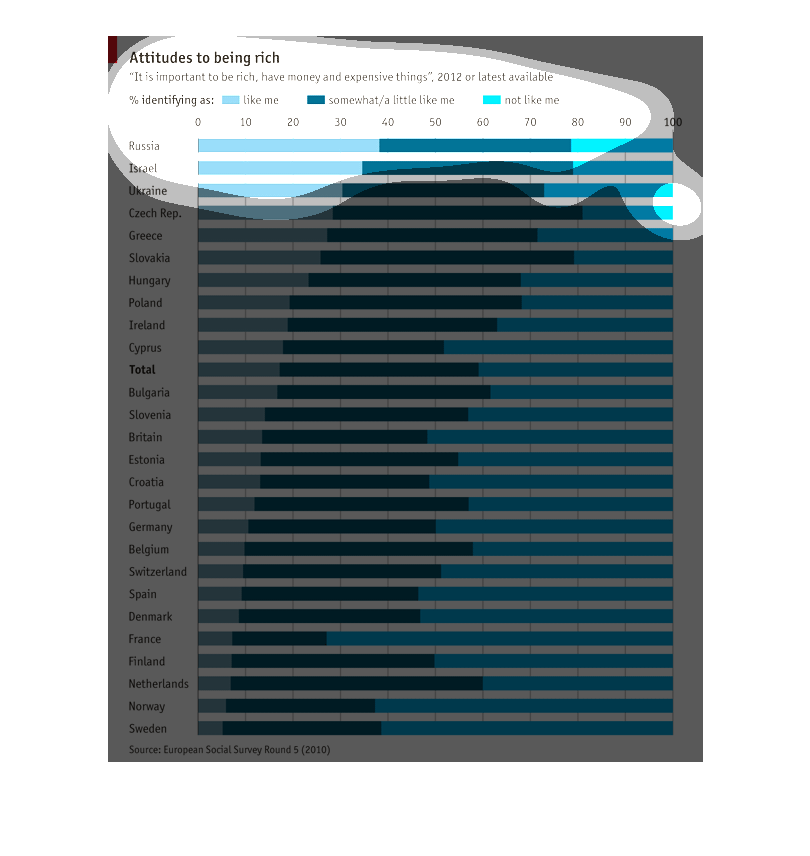
This chart depicts how important it is to respondents in different countries how important
it is to them to be rich. The country in which it is most important is Russia and the least
is in Sweden.
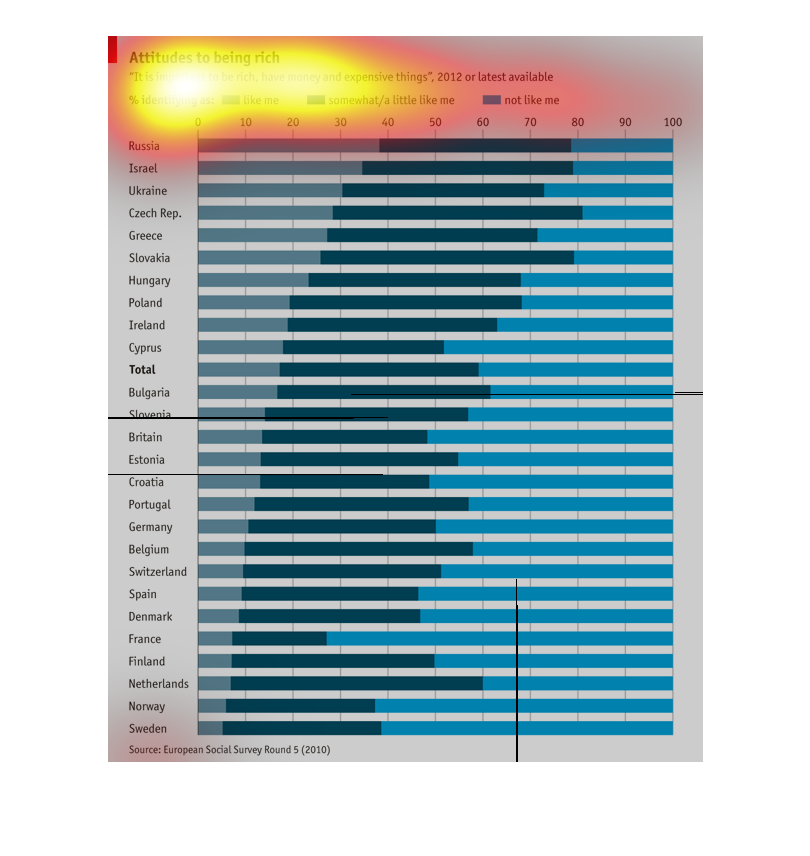
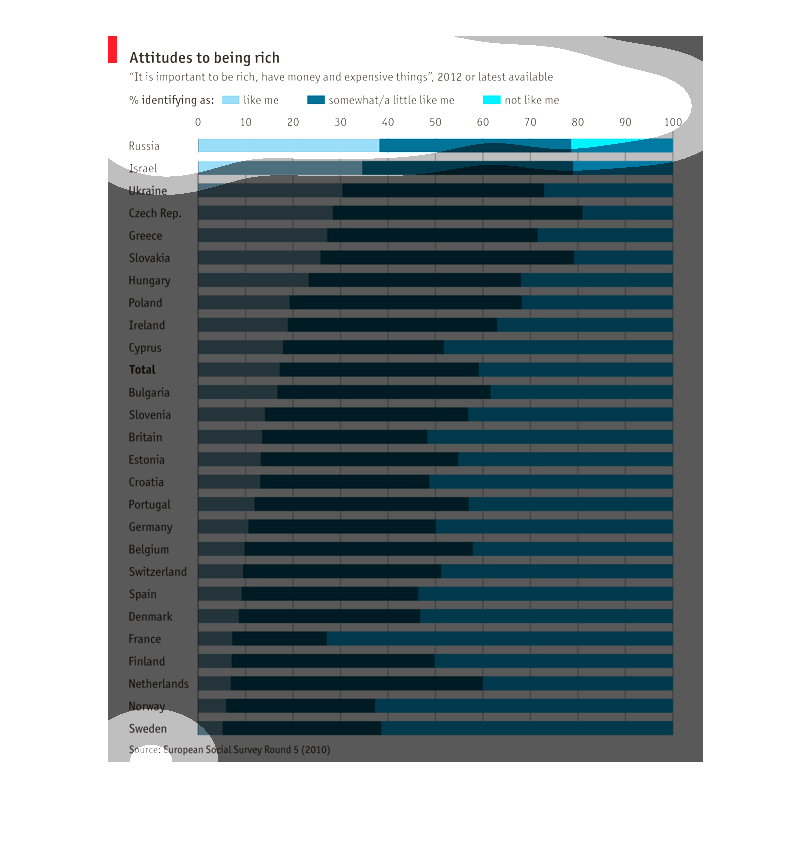
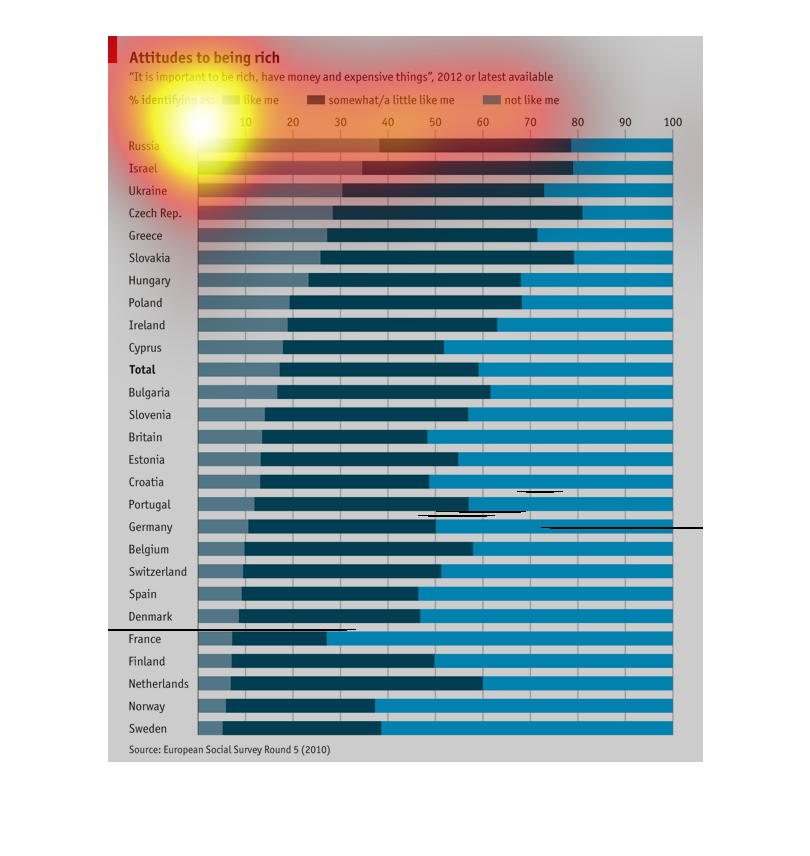
This graph illustrates individual's attitudes towards money and having expensive material
items, in various countries.  Overall, it is estimated that of the individuals surveyed, less
than 20% state that they have a high desire to be rich and have expensive things, approximately
40% of those interviewed sat that they have a high desire to be rich and have expensive things,
and approximately 40% stated that they have no interest in being rich of have expensive items.
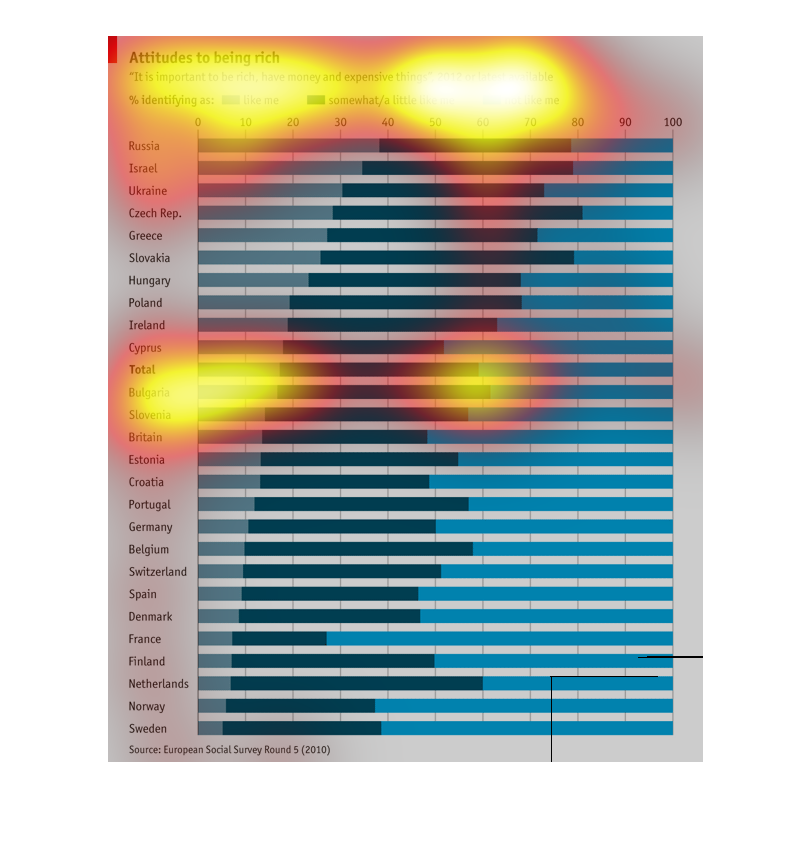
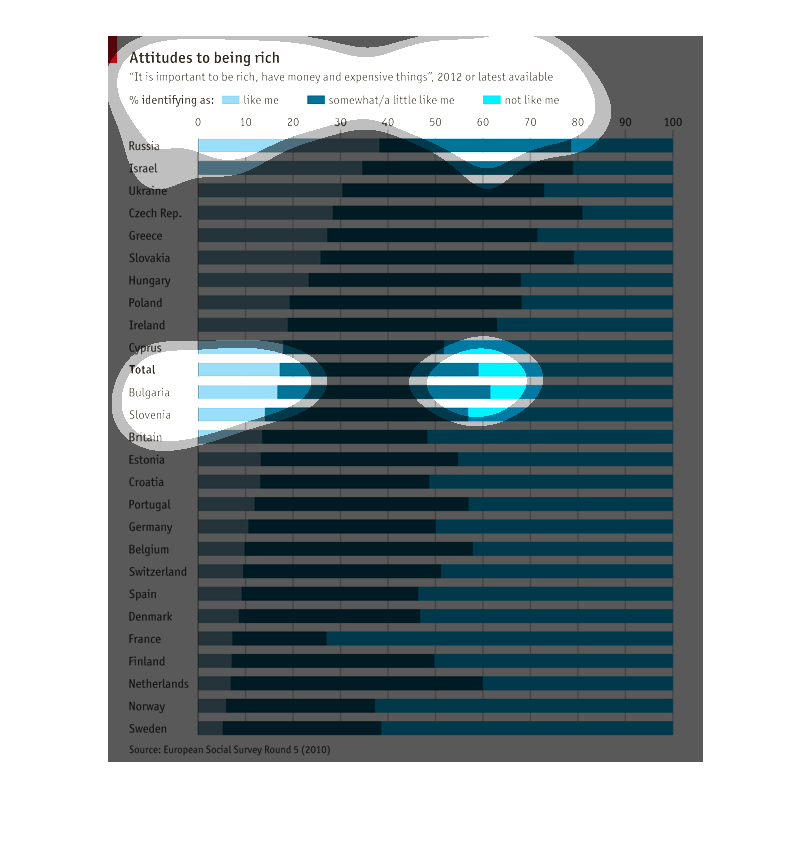
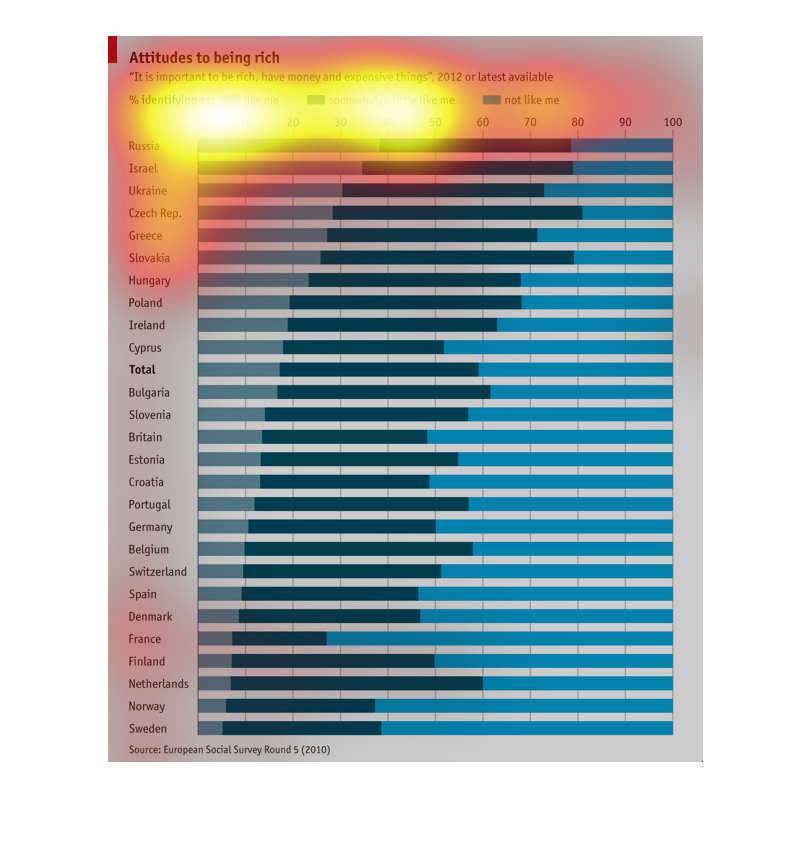
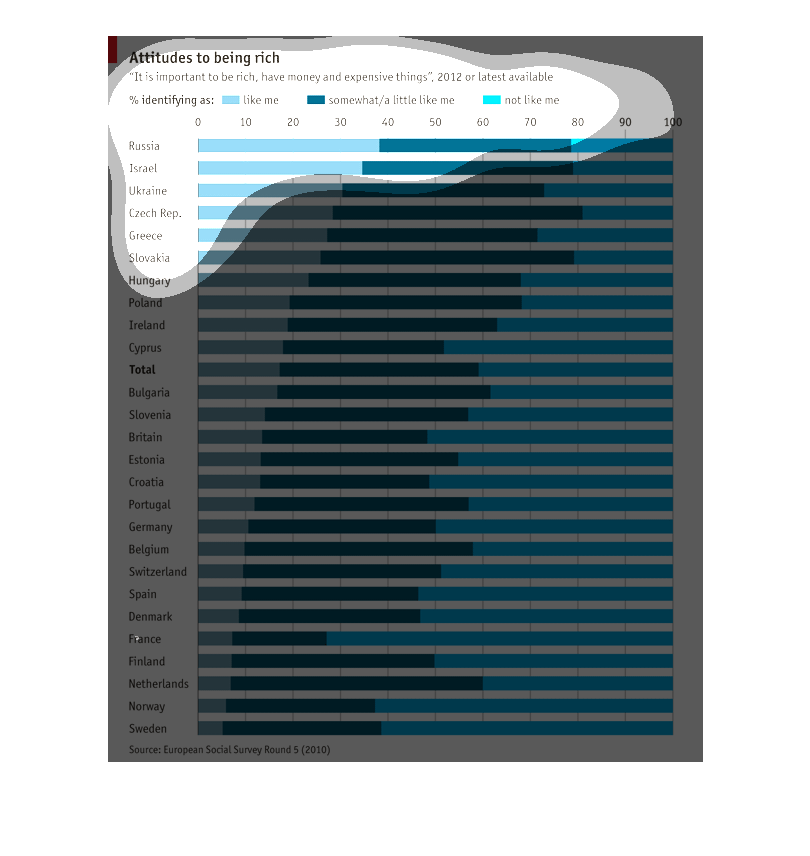
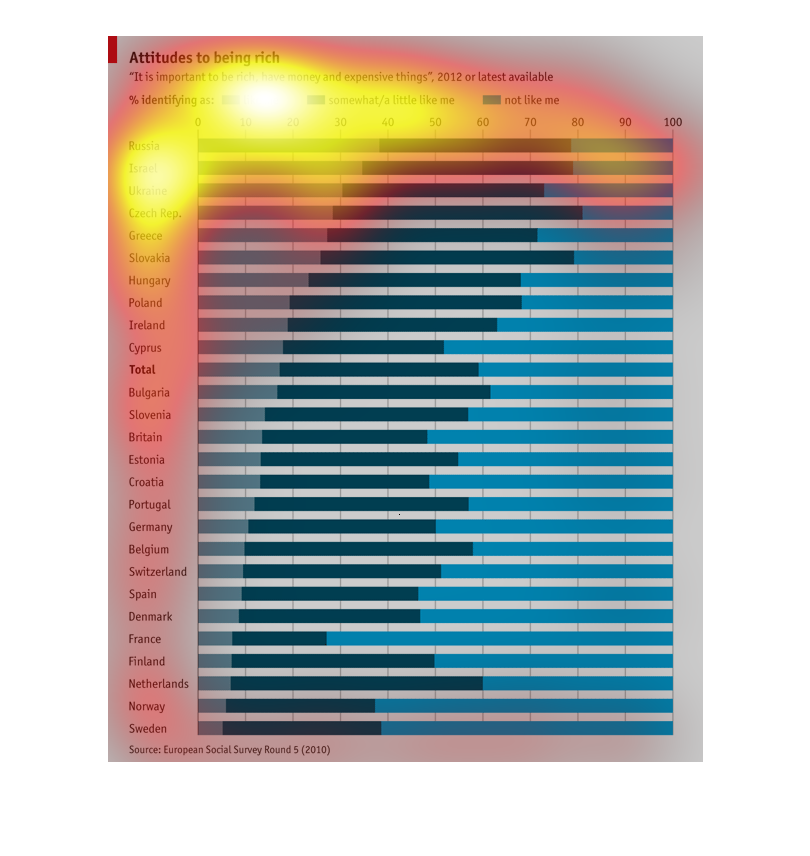
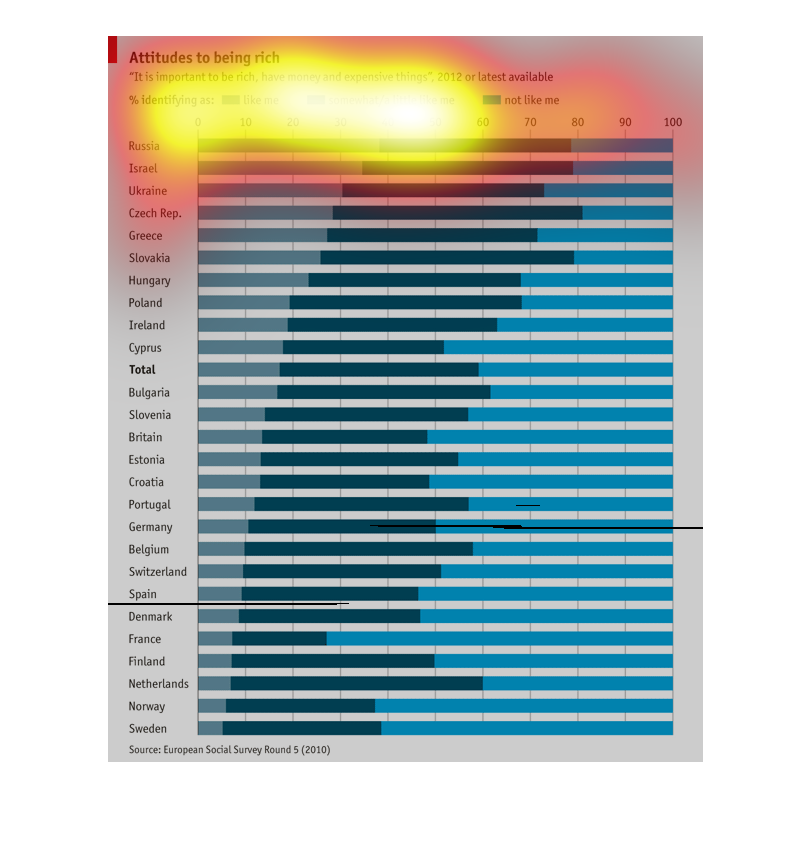
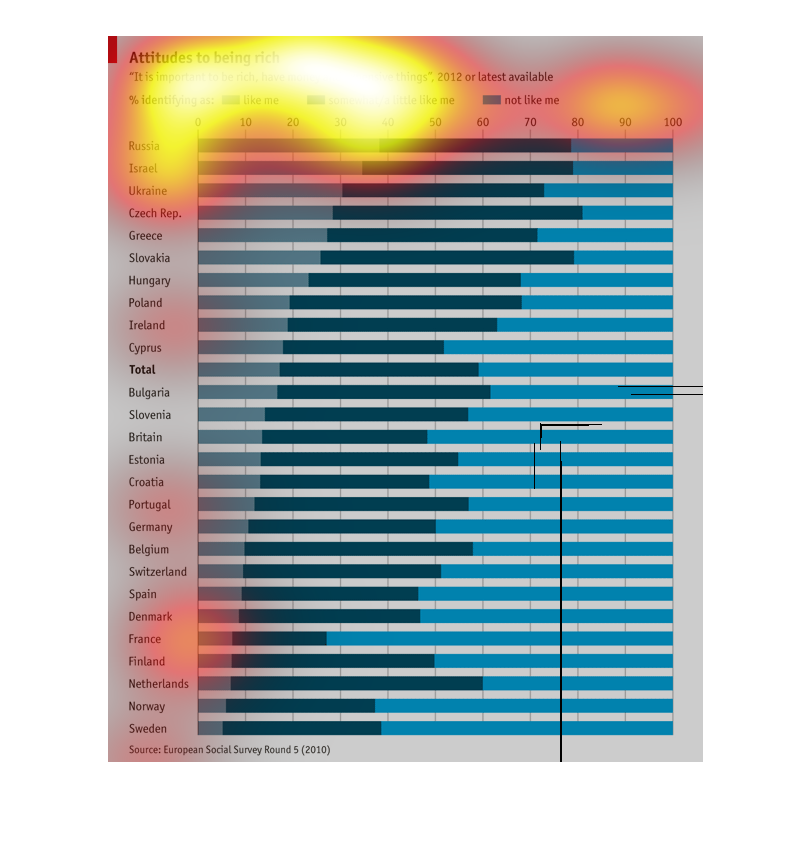
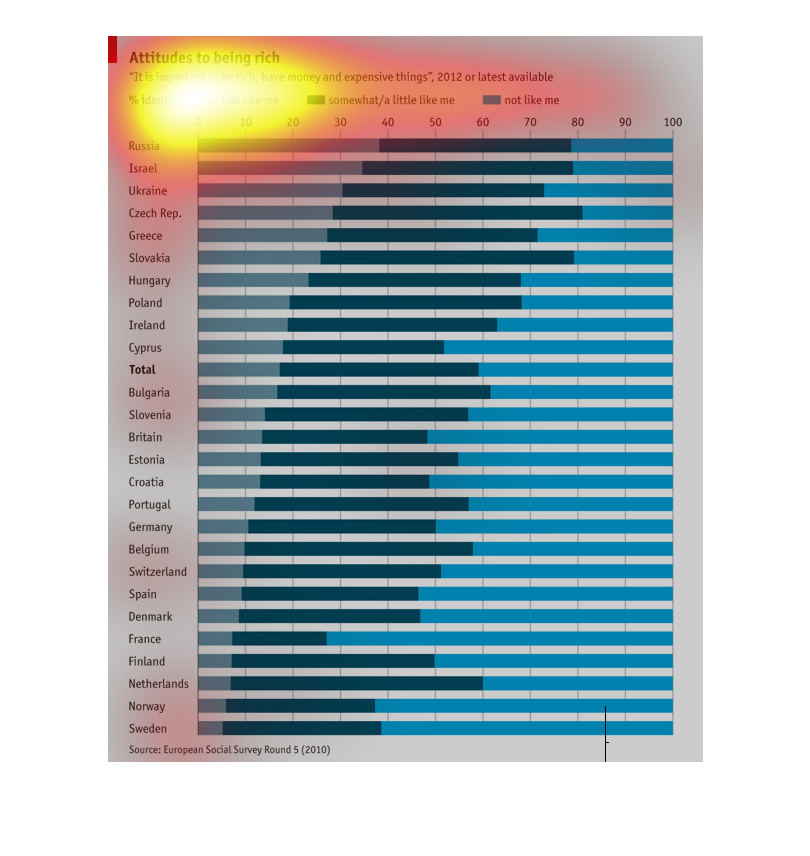
This heat map shows how important it is to be rich in the opinion of different countries in
2012 or latest data available. The information includes opinions from Russia, Israel, Ukraine
plus many others.
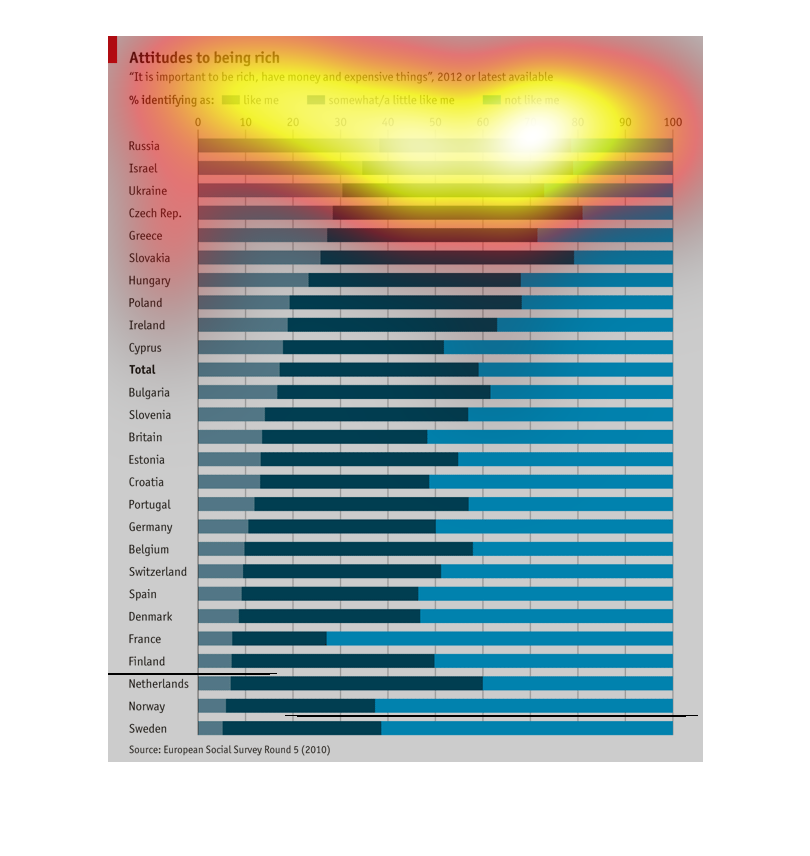
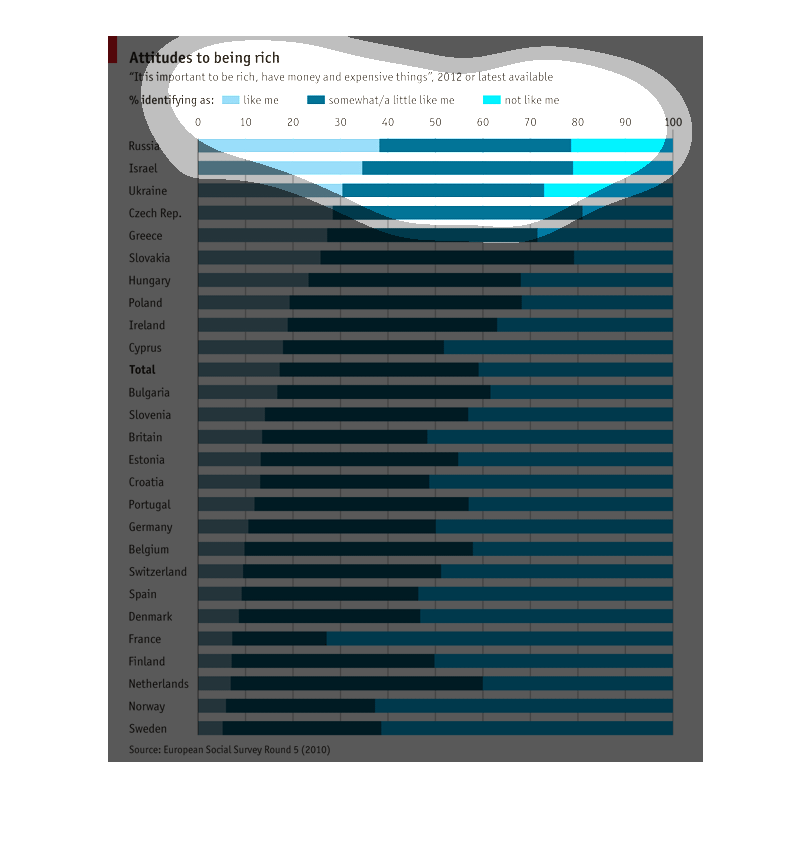
The title of this graph is located in the upper left-hand corner and is called, Attitudes
to being rich.  Countries on this graph are listed in a column on the left-hand side of the
page.  Data in this graph seems to be from 2012.
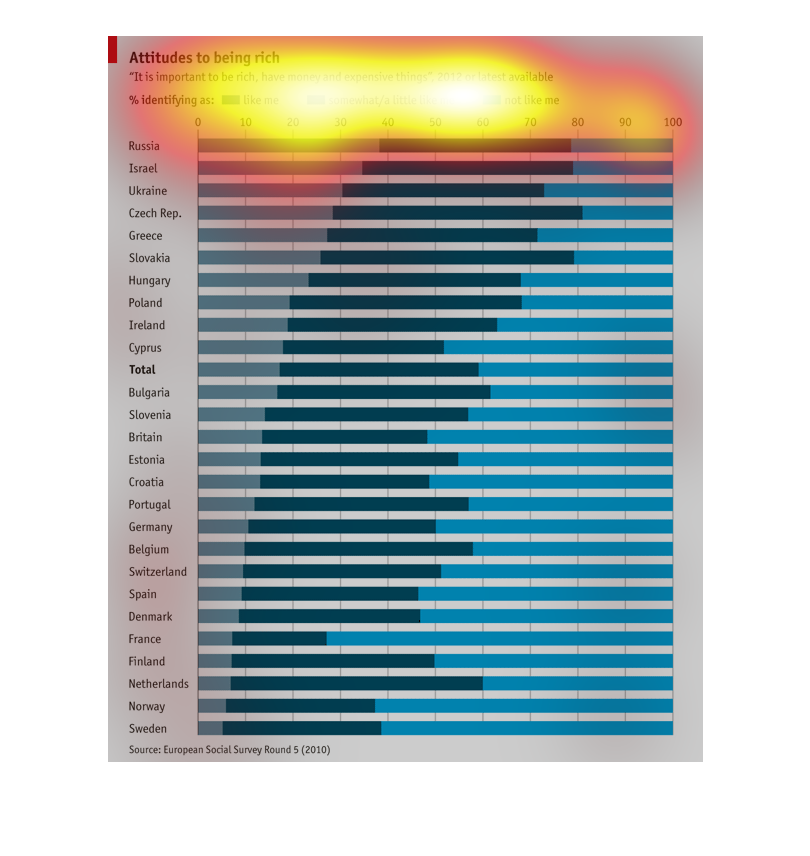
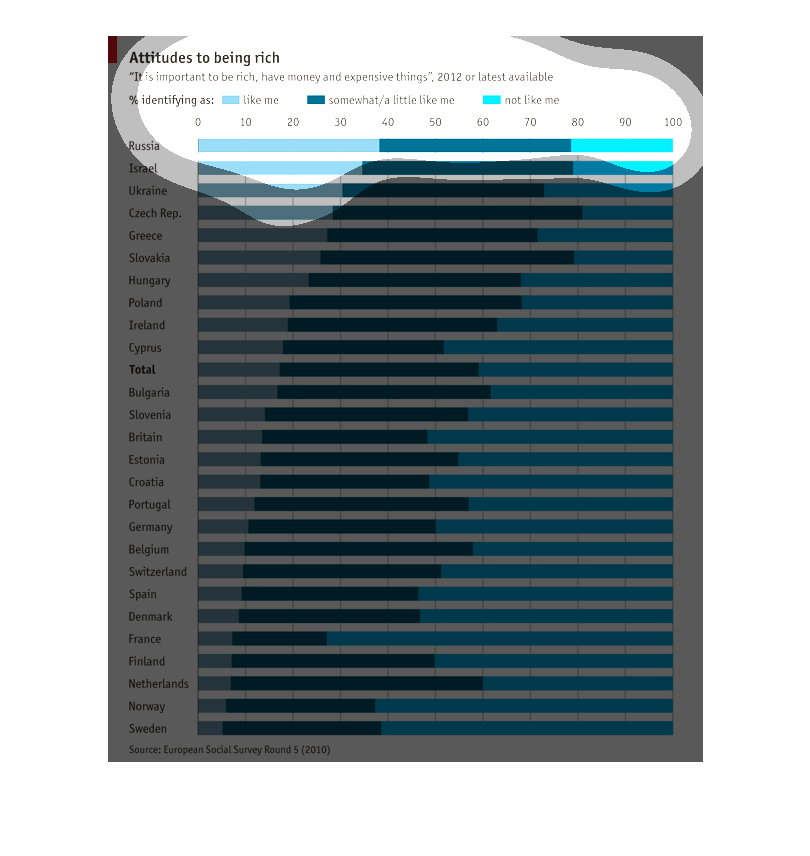
A chart with several countries listed out that describe their attitudes towards wanting wealth
and being wealthy. The median blue is "like me", the dark blue is"somewhat" and the light
blue is "not like me". These colors are bars next to the country's names.
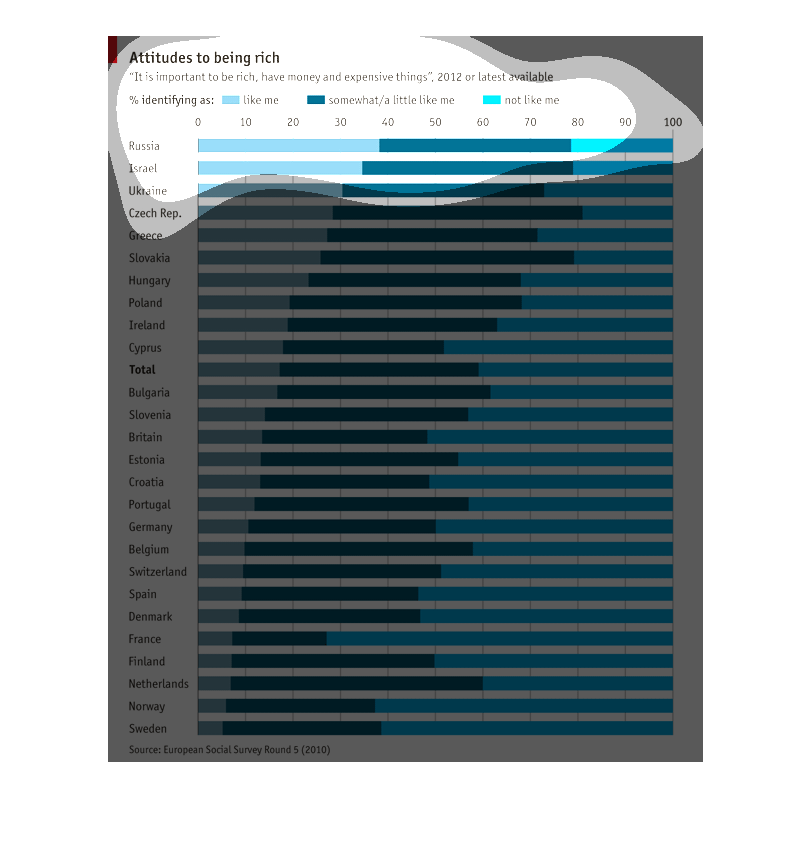
This is a chart representing the attitudes to being rich or the thought that "it is important
for me to be rich" which I am assuming is being taken from survey data. The top of the page
states the data is from 2012 or earlier and it is listed by country. This is despite the fact
that the source at the bottom of the chart states it is from the European Social Survey Round
5 (2010). Russia, Isreal and the Ukraine seem to top the list of respondents who believe that
statement sounds like them, and Sweden, Norway and the Netherlands are at the bottom of that
list. The list is categorized in shades of blue based on whether respondents said it sounded
like them, somewhat like them, or not at all like them.
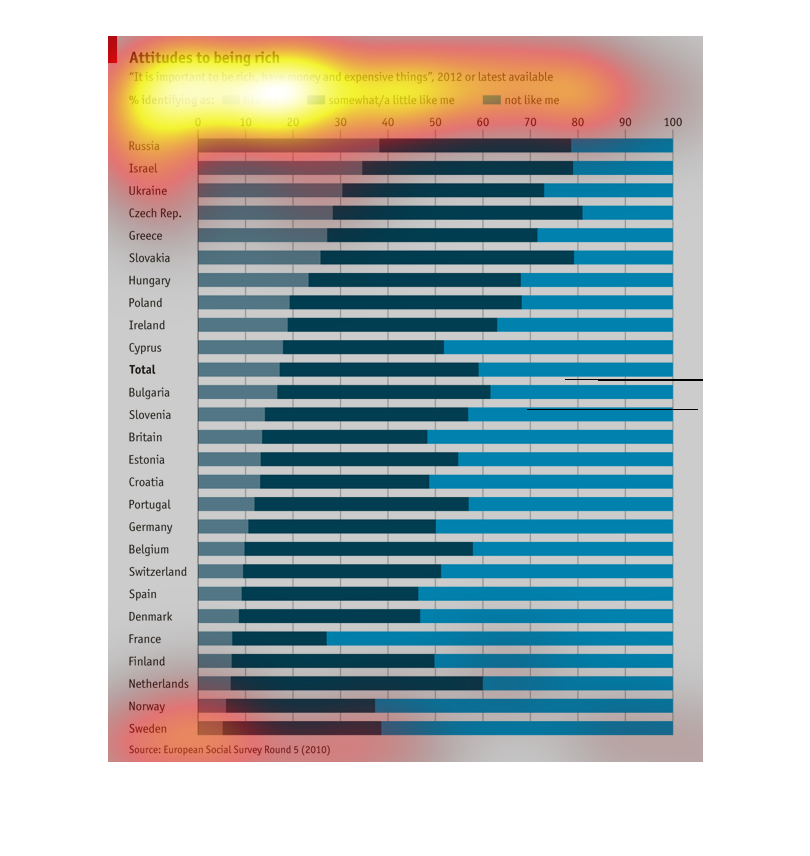
This chart describes the attitudes of being rich. It contains a phrase about being rich and
what that means to people and takes the percentages identifying as being rich like me, somewhat/
a little like me, or not like me.
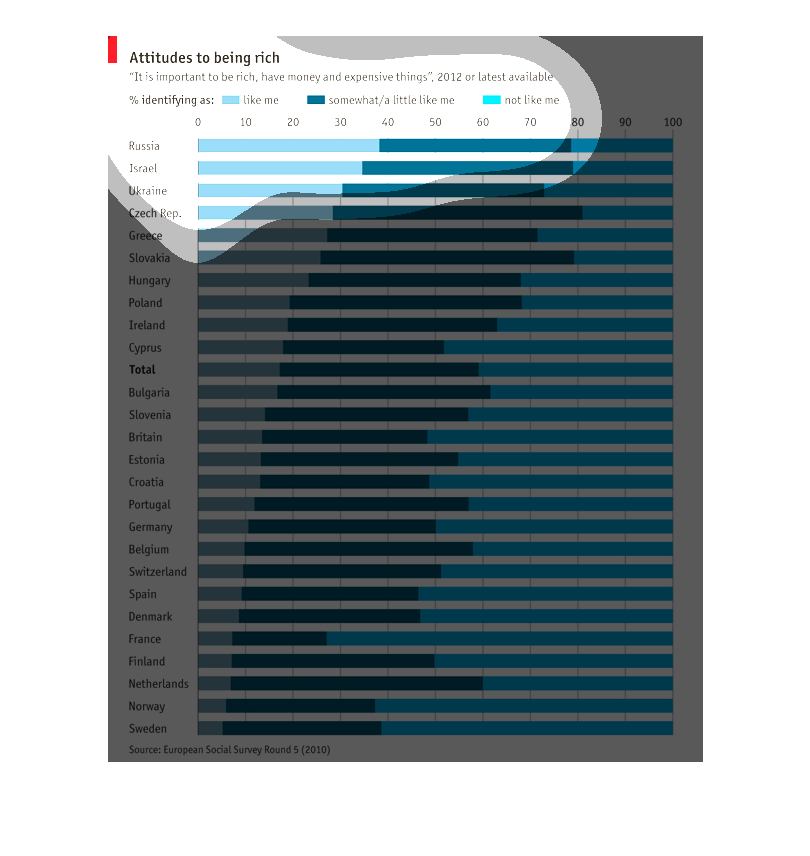
The chart looks at attitudes of populations from various nations on being rich, specifically
the percentage of those who identify a person is rich like them, somewhat like them or not
at all like them. It ranges from Russia perceiving the most amount of people like them, and
Sweden perceiving least like others are like them.
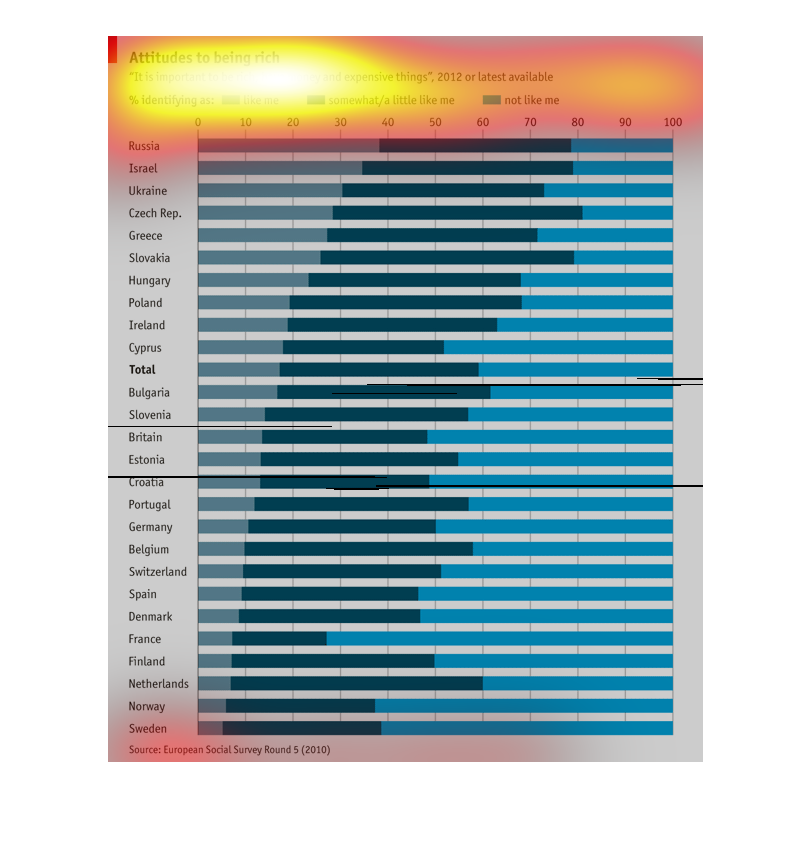
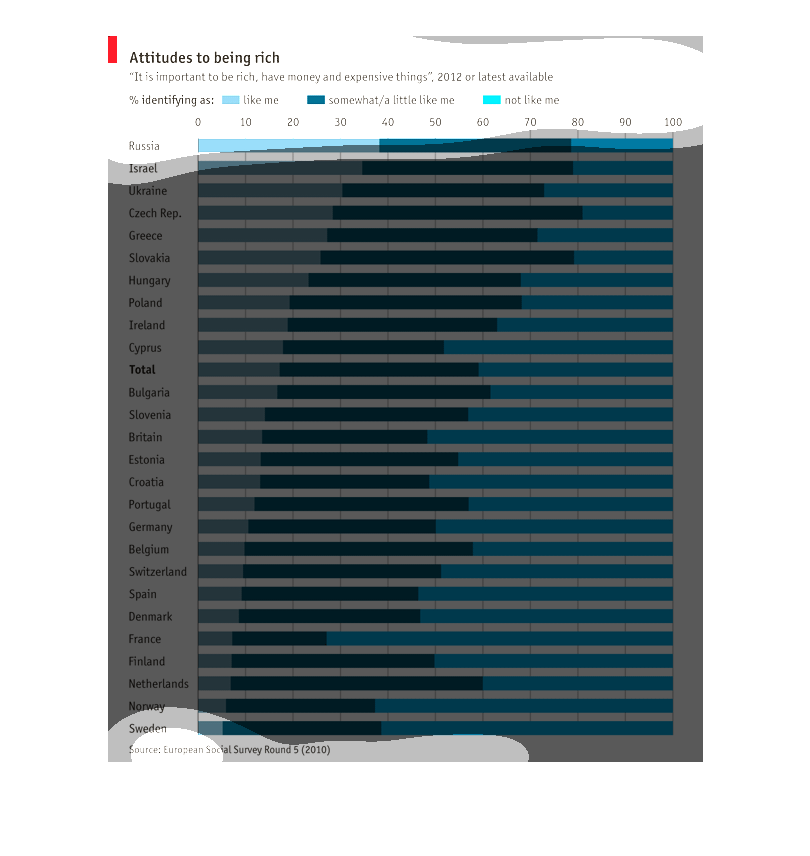
THis chart apparently shows European attitudes toward the possibility of being rich.  The
chart seems to show a positive relationship toward feeling about being rich in most of the
countries of Europe.
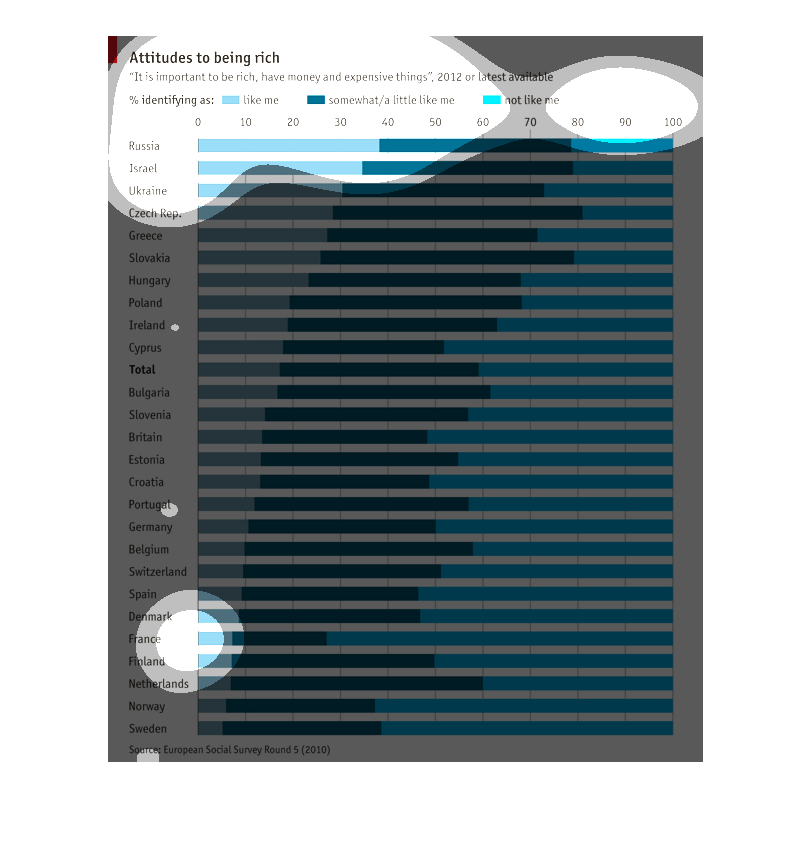
The graph displays how people in each country view people that are wealthy, rich, or in the
highest social class. All countries show how people see them selves as being similar to the
wealth or not the same at all.
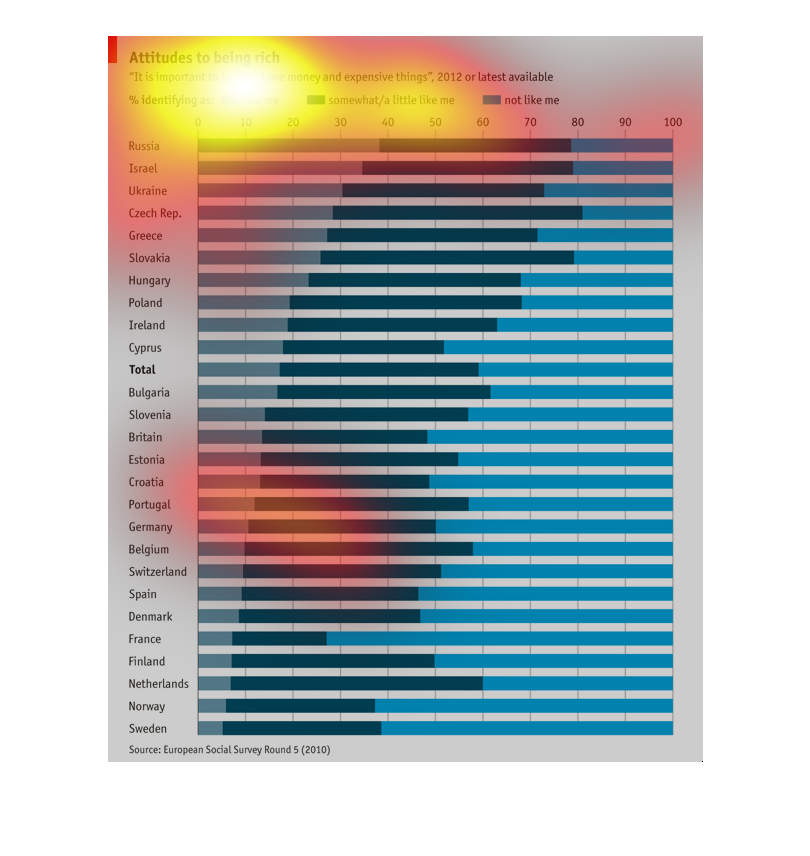
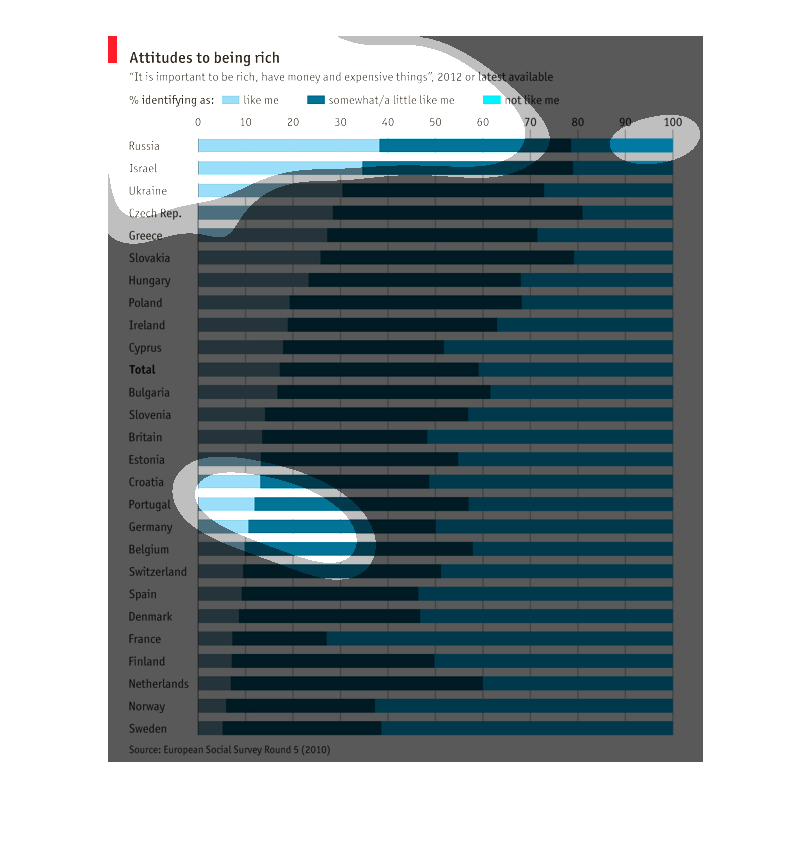
This graph describes people's attitudes towards wealth and how important that is to them by
country. The image shows in most nordic countries people do not care about wealth.
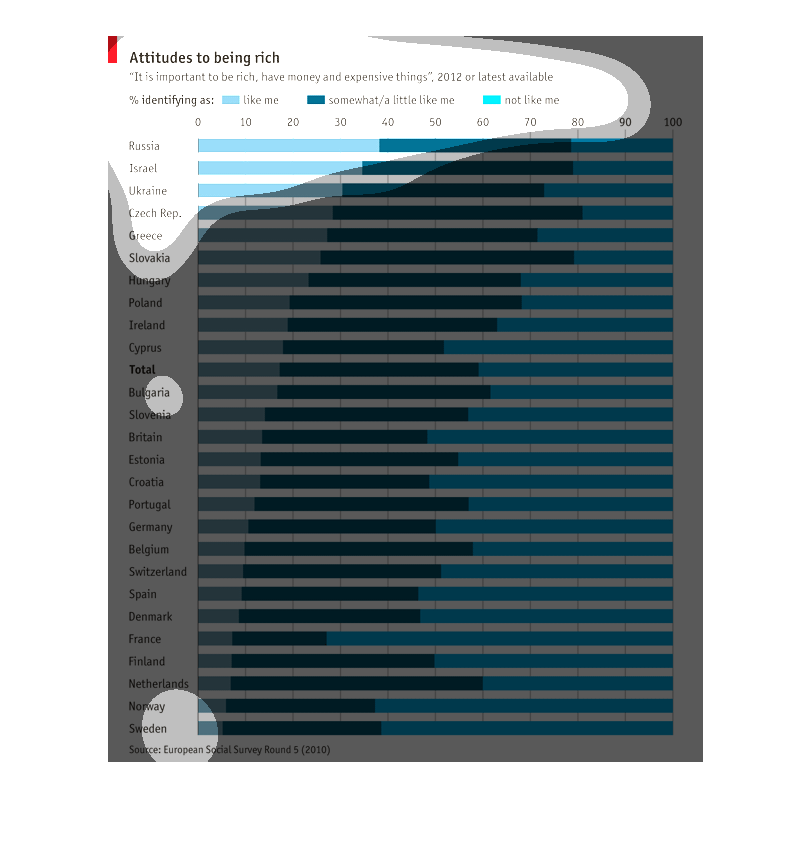
Measures different countries attitude towards the wealthy, whether the average person feels
the rich are like them, somewhat like them, or not like them at all. Central Europe and Scandinavian
countries appear to be the countries who feel the most that the rich are not like them.  Eastern
European, Mediterranean countries, and Israel feel that they are somewhat like the average
person.