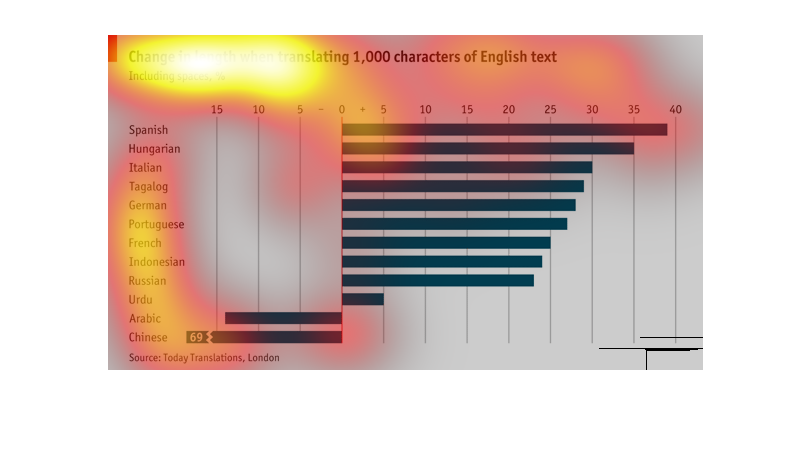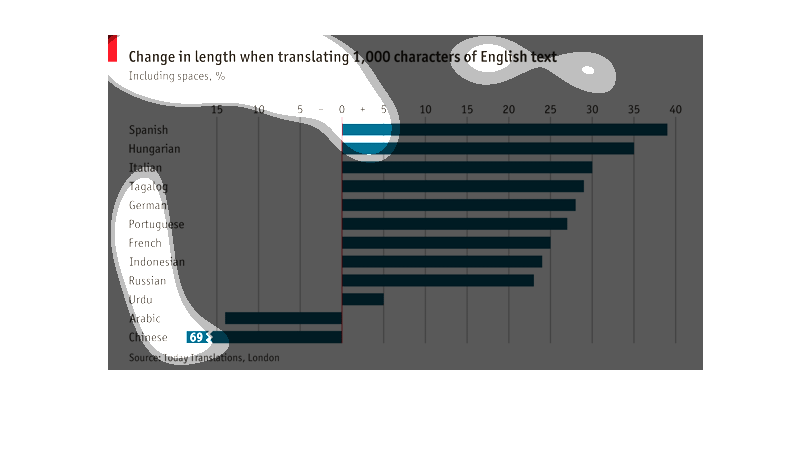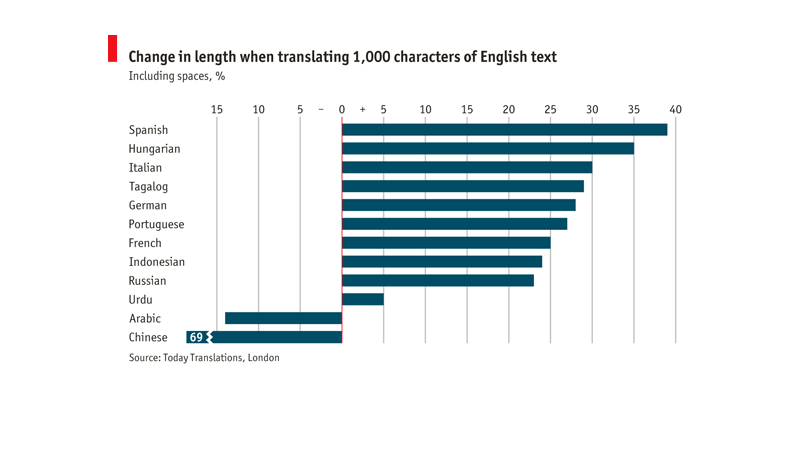
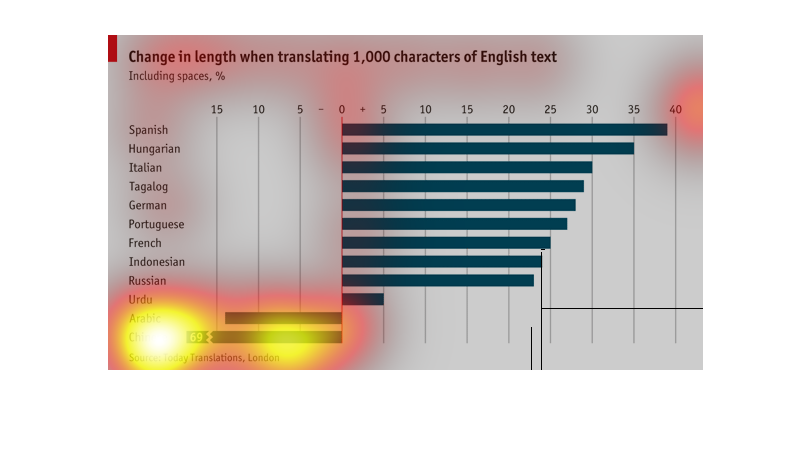
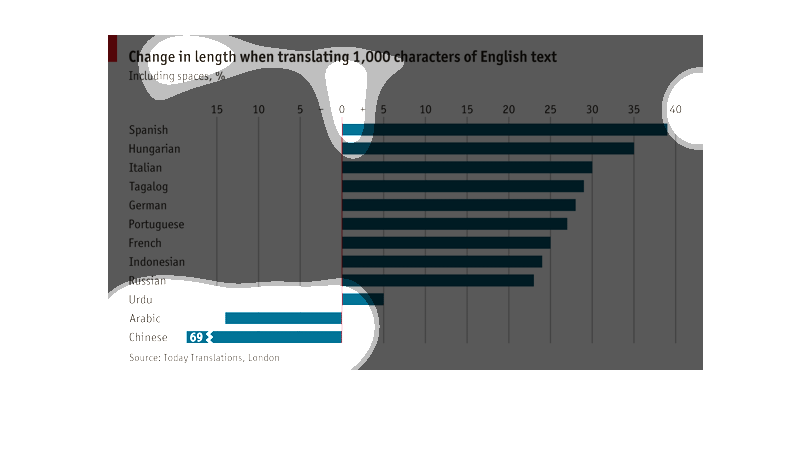
Change in length when translating 1000 characters of English text including spaces.  This
graph is showing how long a given text of 1000 characters would be when translating from English
to other languages.  It appears the vast majority of the languages listed would be longer
by a great deal - the exceptions being:  Urdu, Arabic and Chinese.    Essentially this means
that those languages consist of fewer words and that each word has multiple meanings.  Hebrew
is not on this list, but has similar characteristics.
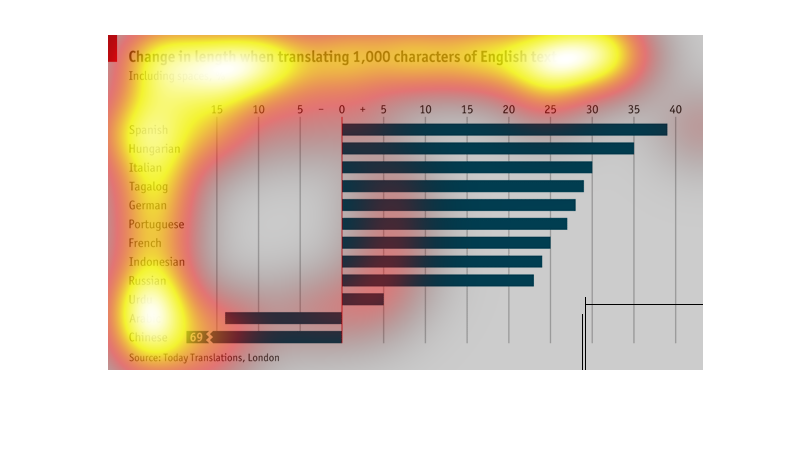
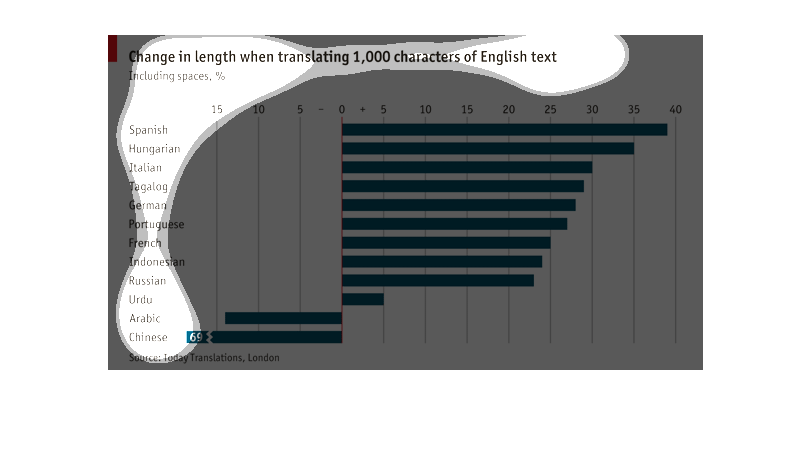
The plot hinges around 0, where the right side shows languages where the expression length
grows when translating from English. The left side shows languages where the expression length
shrinks when translating from English.
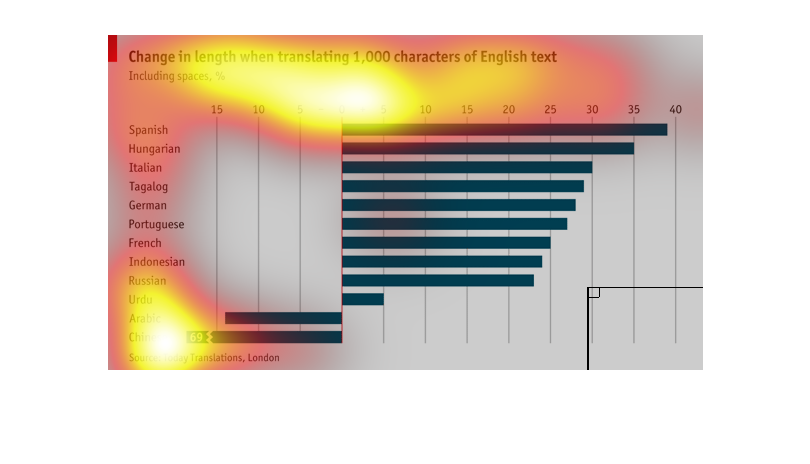
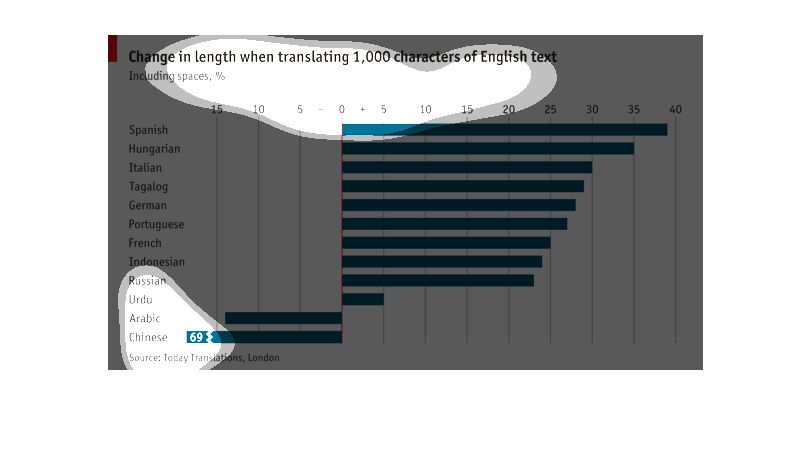
this is a graft that shows you how it changes in length when translating 1000 characters of
English into another language. it lists the languages on the left and it shows you  how many
characters each language it would be on the graph at the right


The chart represents the change in length when translating 1,000 characters of English text
into other languages.  According to the chart, Spanish sees the larges growth of characters
at nearly 40 percent, while Chinese sees the fewest at minus 69 percent.

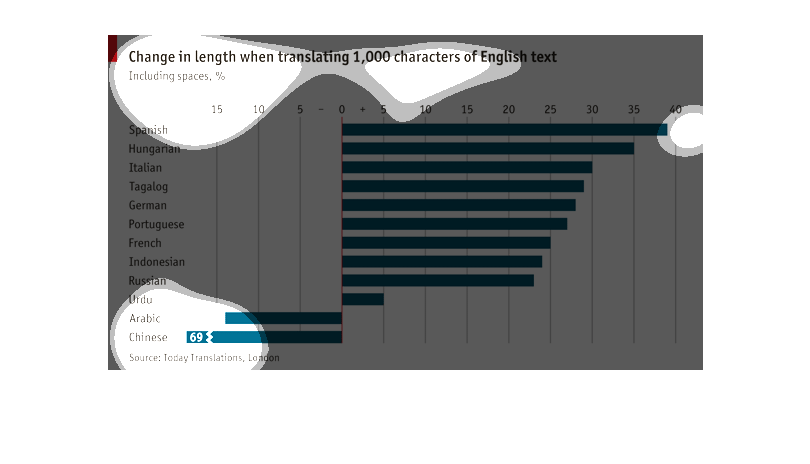
This chart shows changes in the length of the text when translating 1000 English characters
to various languages. The text length was reduced when translating to Arabic and Chinese.
This chart depicts the change of length in 1000 characters of English text when translating
from a different language, this includes spaces. Based off of the information given you can
tell that it is a bar graph and that, Spanish, Hungarian, and Italian are the most lengthy
translations of all.
Something definitely wrong with this clicking thing, this is aggravating as heck!! lol  Sorry.
 I see blue lines to the right and black words it appears to the left side.
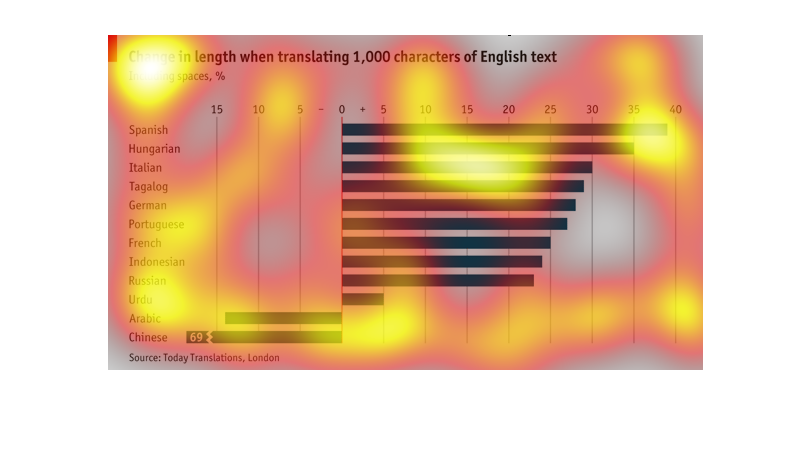
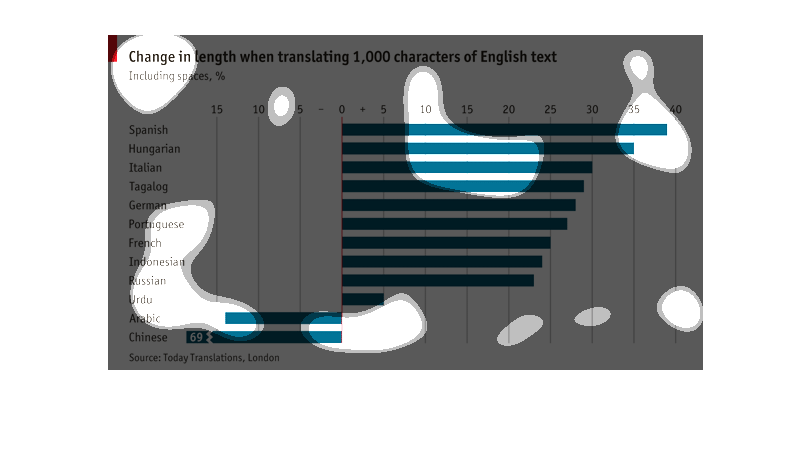
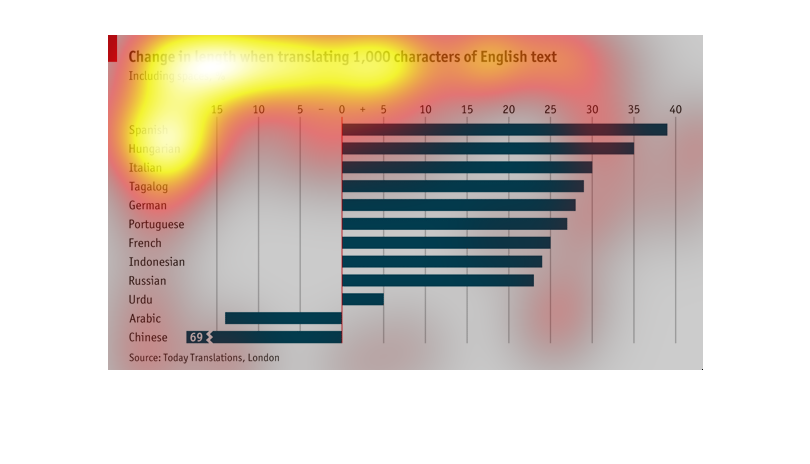
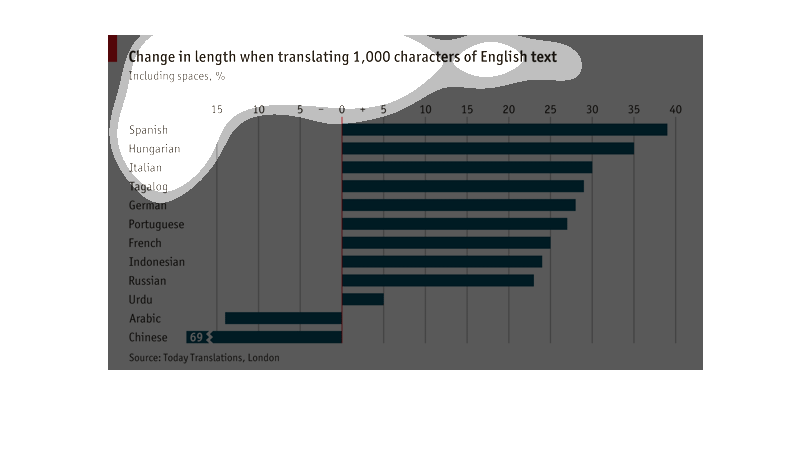
The image shows change in length when translating 1,000 characters of English text into different
languages. Spanish is in the lead at almost 40%, while Chinese and Arabic are at the bottom.
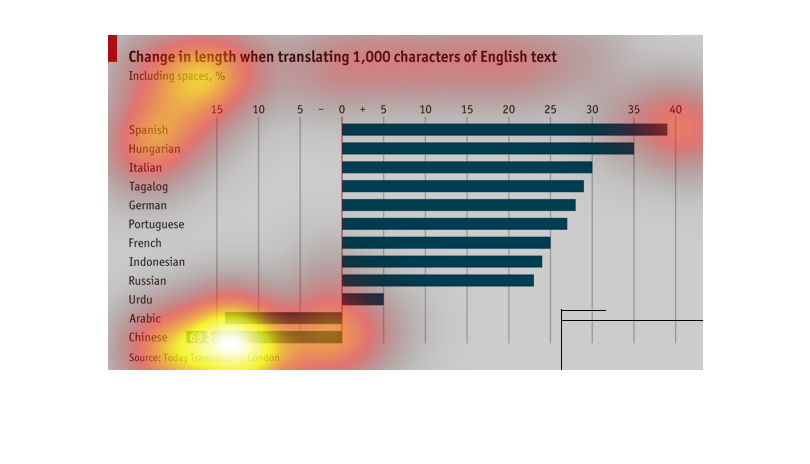
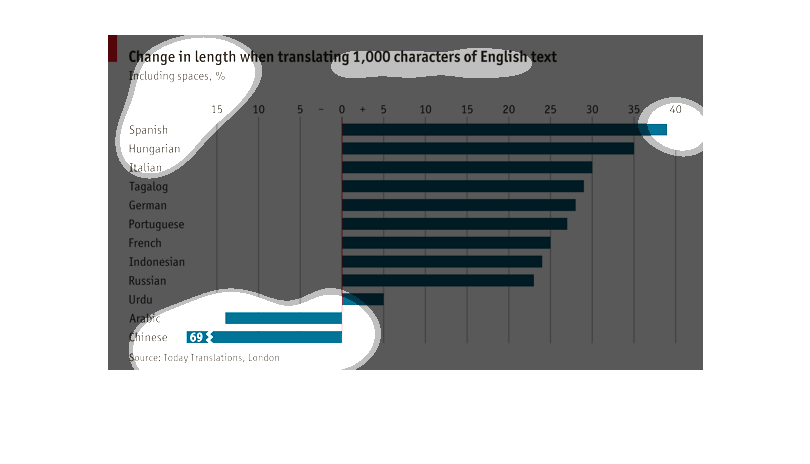
The graph is a bar graph concerning changes in length, which is an unclear topic. It appears
to concern a comparison across languages, mostly romance languages but also Russian and Arabic
(and others).
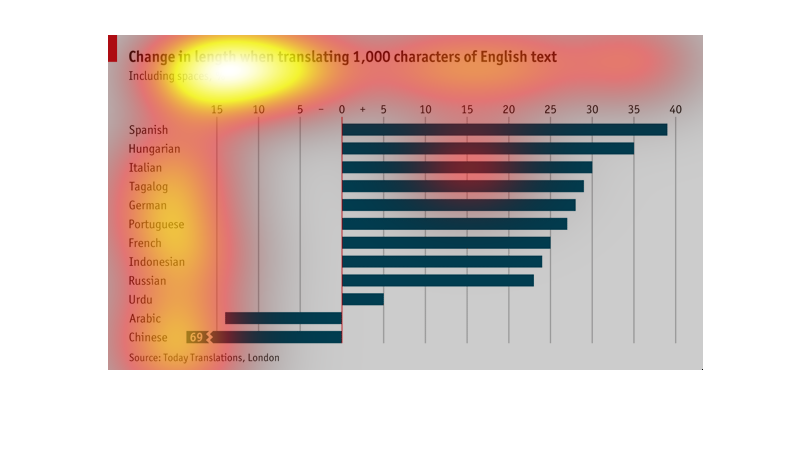
This chart is titled change in length when translating 1000 characters of English text. The
greatest increase change in length is when translated to Spanish, Hungarian, and Italian.
The greatest decrease in length is when translated to Chinese and Arabic.
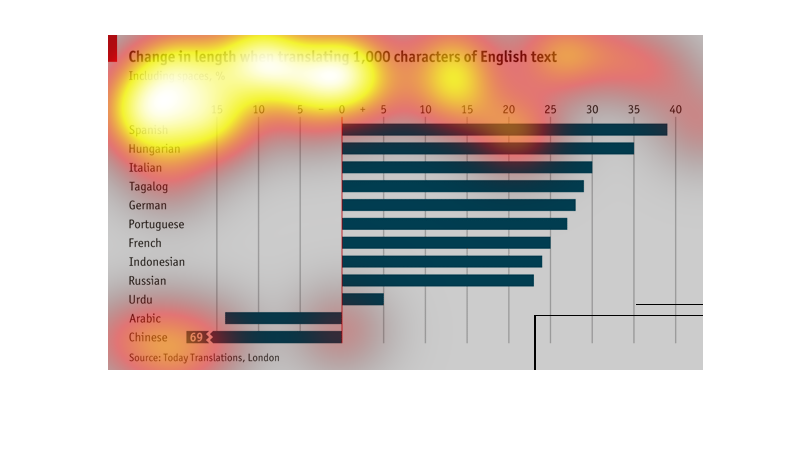
This chart gathers information on the change in length when translating 1,000 characters of
English text.  Source of the information comes from Today Translations, London.
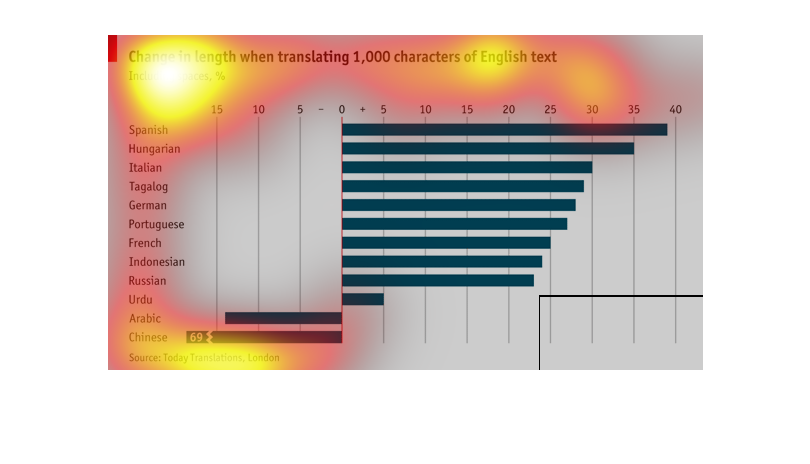
This chart shows the change in length when translating 1,000 characters of English text. Some
of the languages listed are: Spanish, Hungarian, Italian, Taglog. German, and Portuguese.
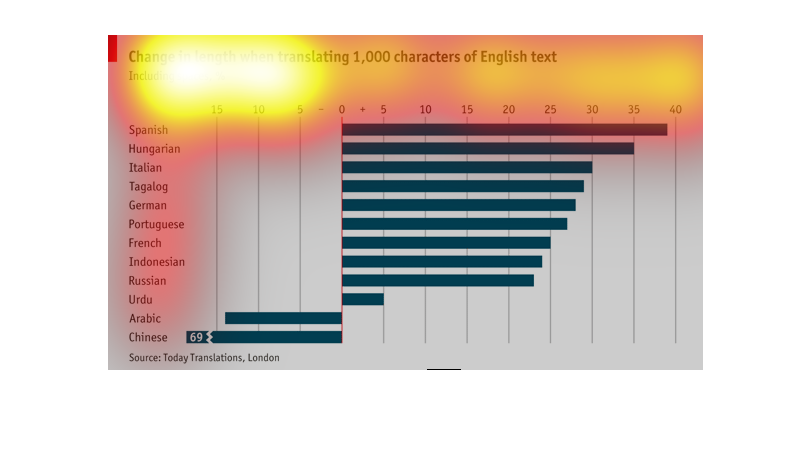
This chart is about the change of length when translating 1,000 characters of English text.
It compares how people translating from different languages use a different amount of characters
in their translations. For instance, the Spanish language uses the most characters.
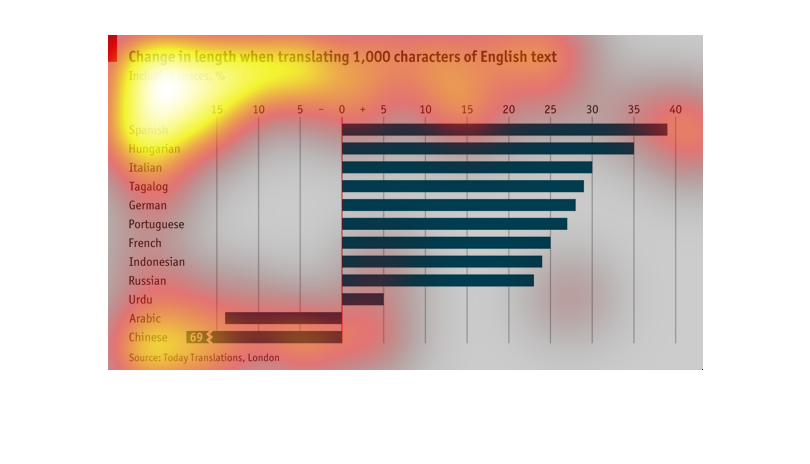
This graph describes the change in length of a passage of text when translated from English
to another language. Latin-based languages that use the same alphabet as English result in
a larger increase than languages that use different symbols.