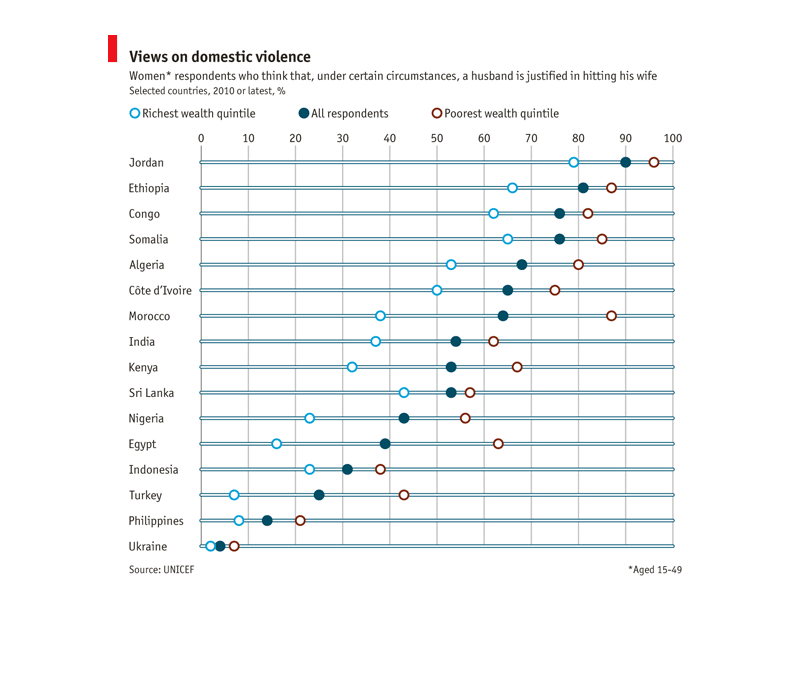
This is a graph that describes the relationship of domestic violence of when a women thinks
that there are certain reasons that justify a man hitting his wife.  It compares the rates
by different countries around the world and by wealth.
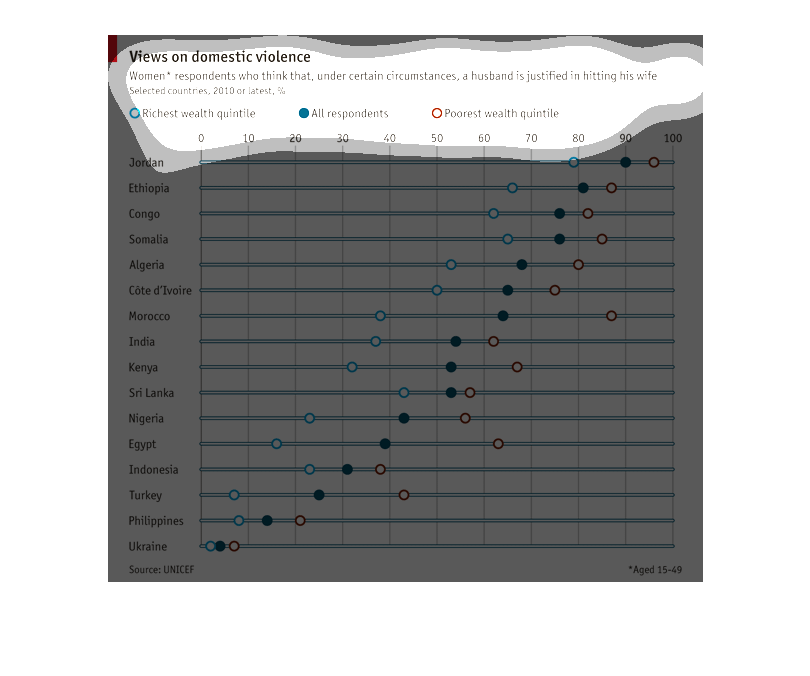
This graph details the views of a group of women on domestic violence in European countries,
and how that view varies between economic classes and age groups.  Specifically, it shows
how many of these women, within different groups, think that a husband is justified in hitting
his wife in certain cases.
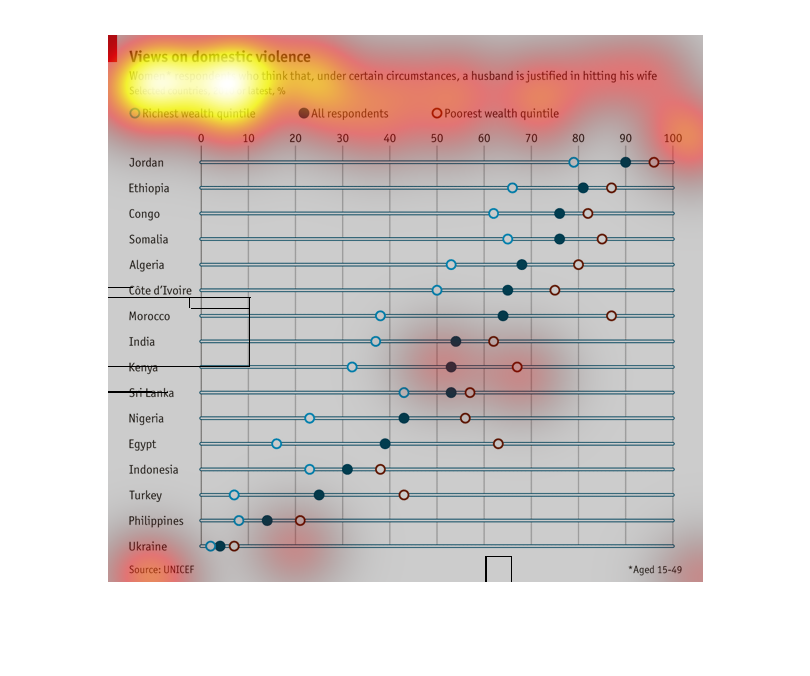
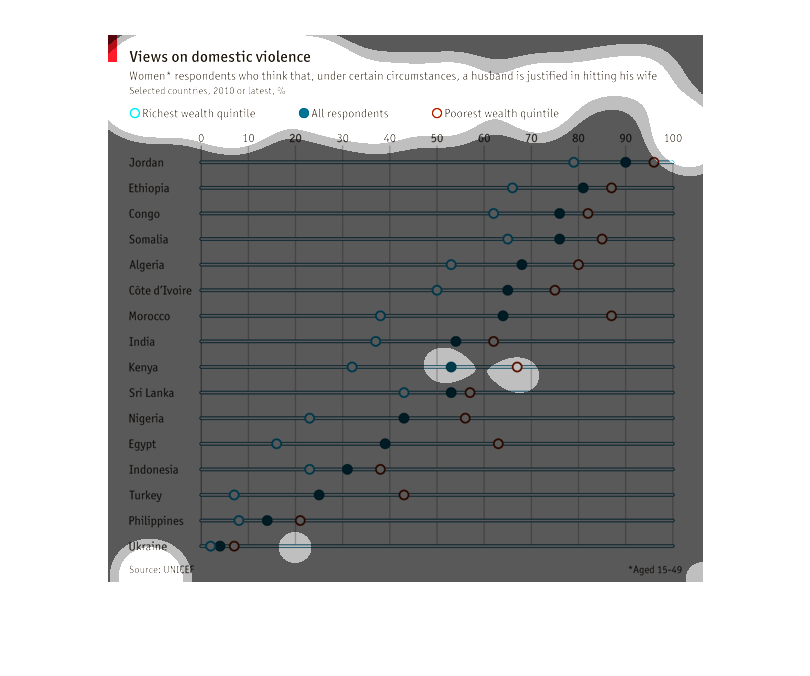
This chart shows: views on domestic violence for women  respondents who think that under certain
circumstances a husband in hitting his wife. Most of the countries listed are in Africa or
Southeast Asia.
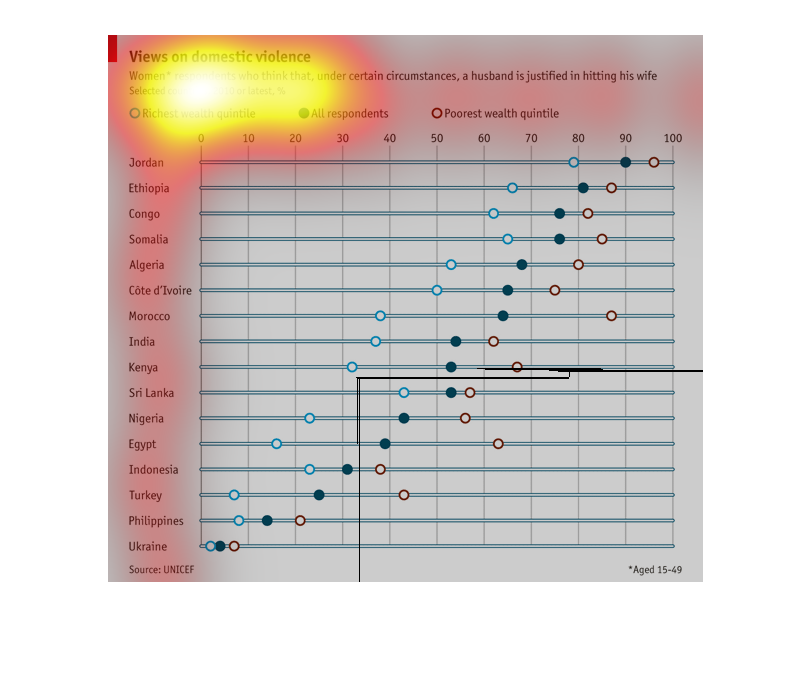
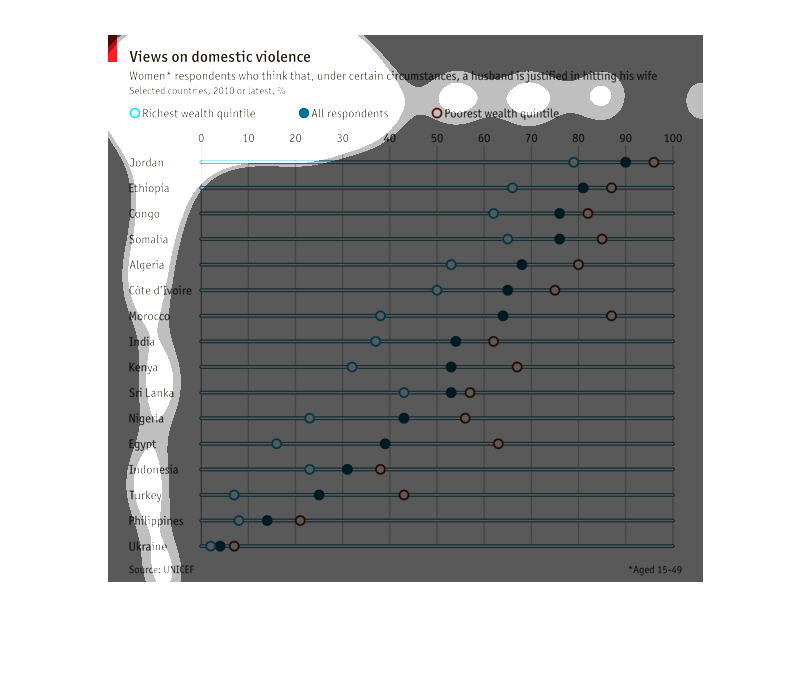
Unicef presents this graph on attitudes about domestic violence a variety of countries. While
the bars on this graph are the same length representing 100 percent of those interviewed,
the bars  are marked with a black line where the average responses fit. A red circle represents
the responses of the rich and a black circle the responses of the poor. The countries are
arranged on the vertical axis from the lowest to the highest.
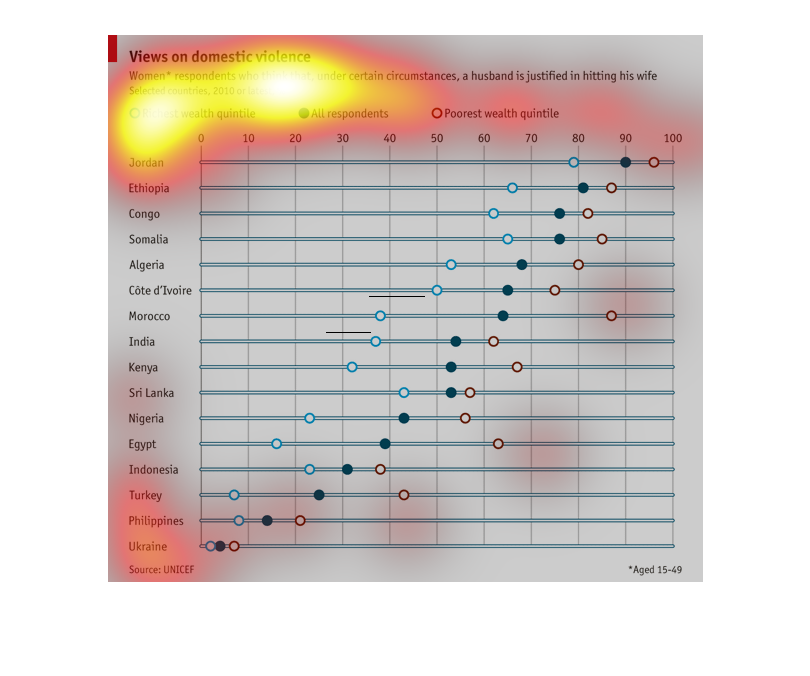
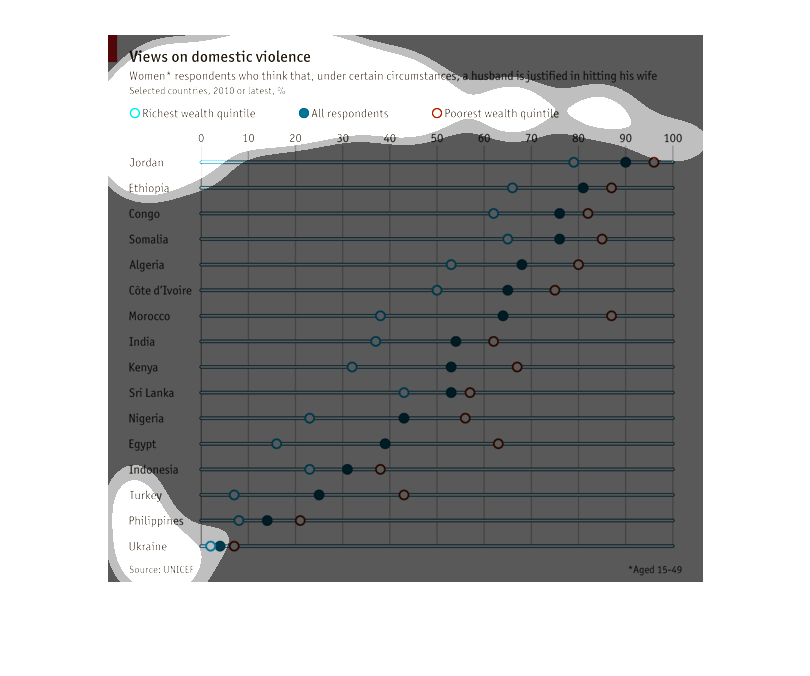
This chart graphs the different views on domestic violence worldwide between women wealthy
affluence, and women of poorest wealth, as well as women in the middle, across different countries.
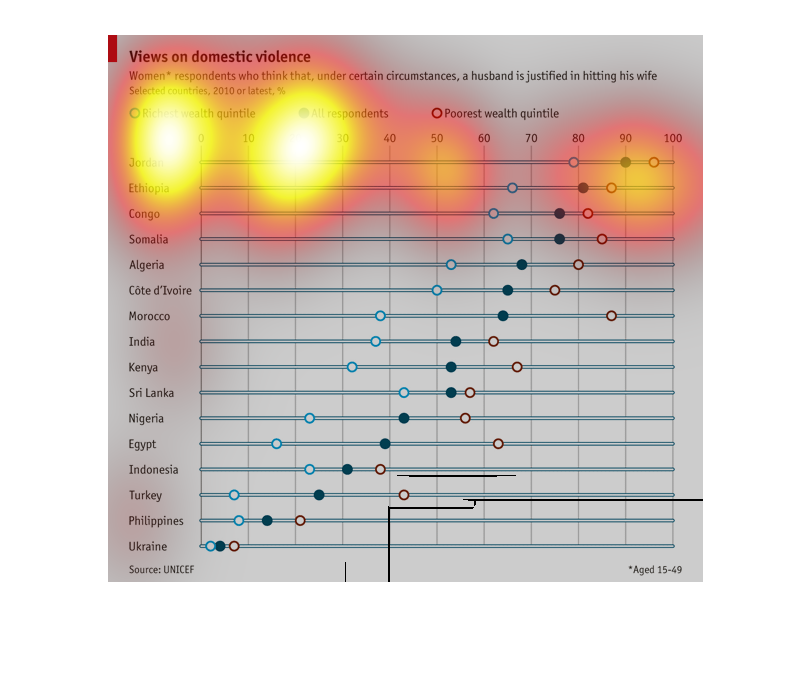
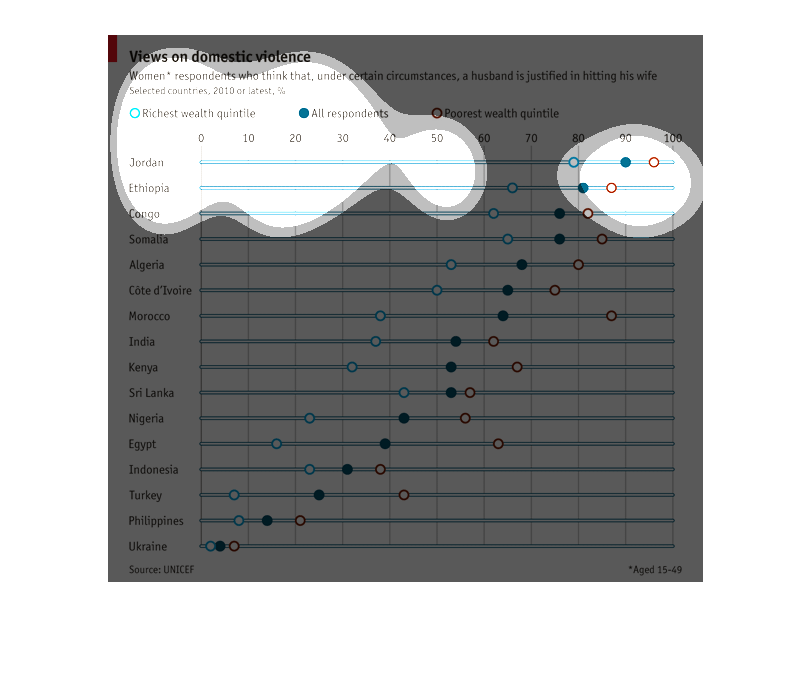
Opinions of domestic abuse by country is broken down into economic states of households in
different countries, establishing the trend that richer households generally have less tolerant
views on domestic abuse.
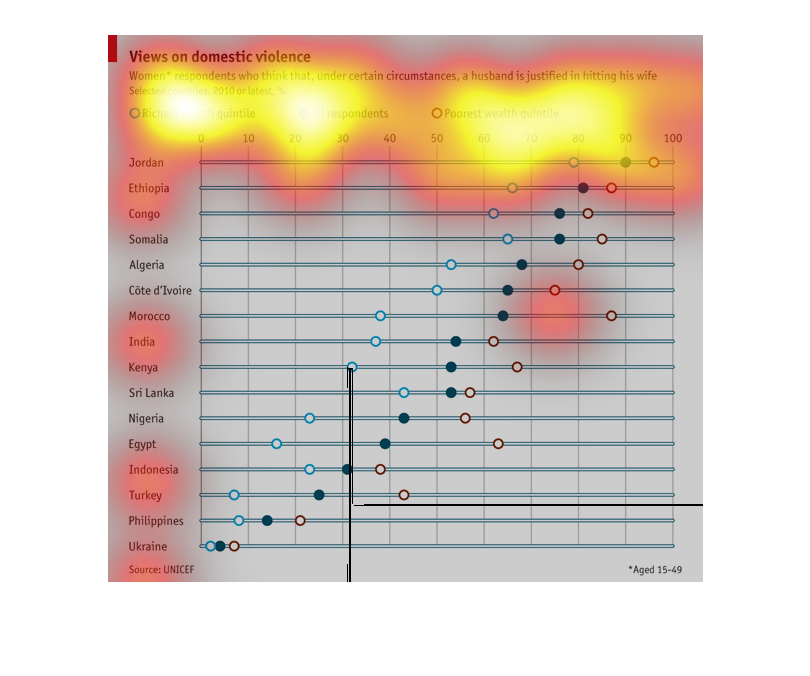
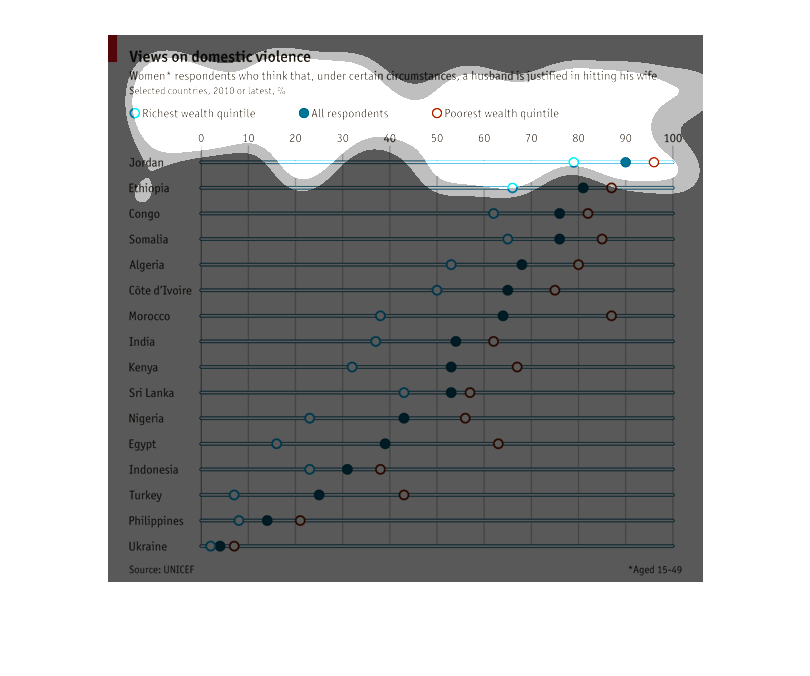
This chart shows the result of women surveyed who think that it is acceptable for a husband
to hit his spouse across different income levels and countries.
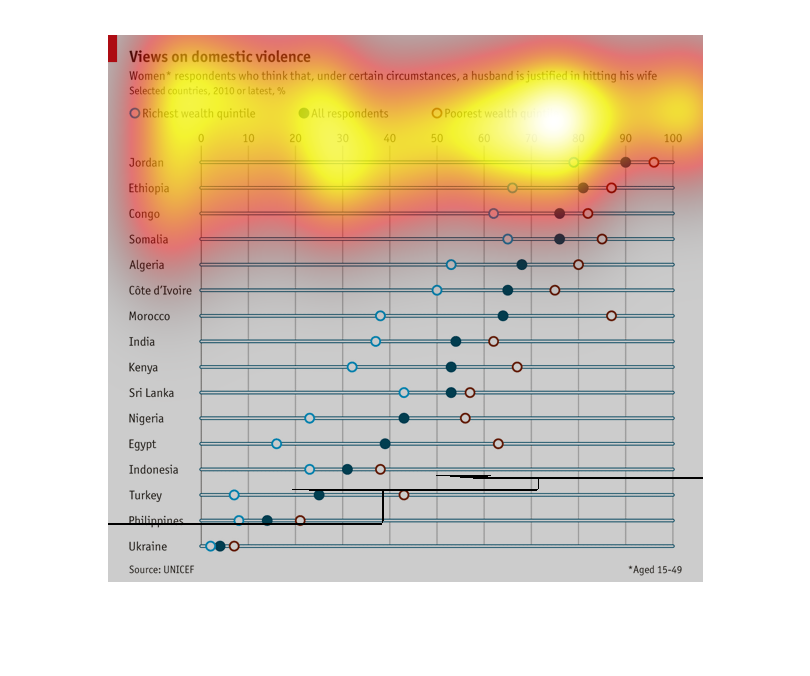
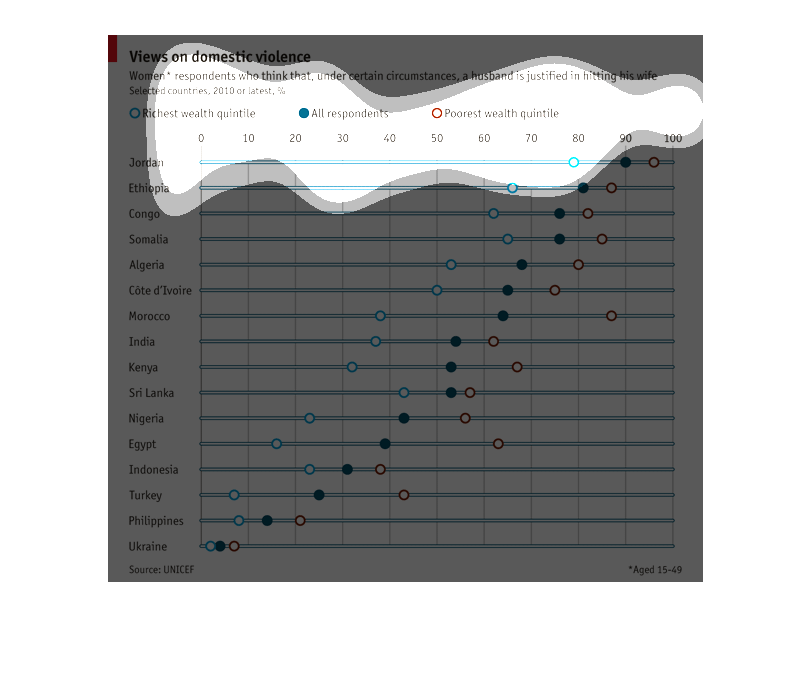
This graphic describes the result of a survey taken among women who were asked if there are
any circumstances in which it's ok for a husband to hit his wife. The data is separated according
to the richest, the poorest, and the average of all the data. The takeaway message from this
graphic is that, among all countries surveyed, more prosperous households are more likely
to hold the belief that it's not ok for a husband to ever his wife.
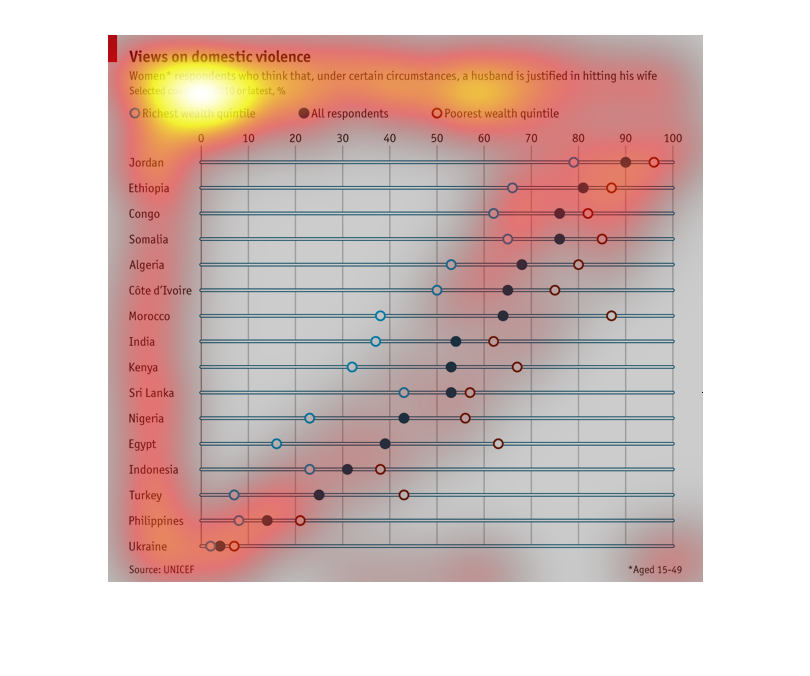
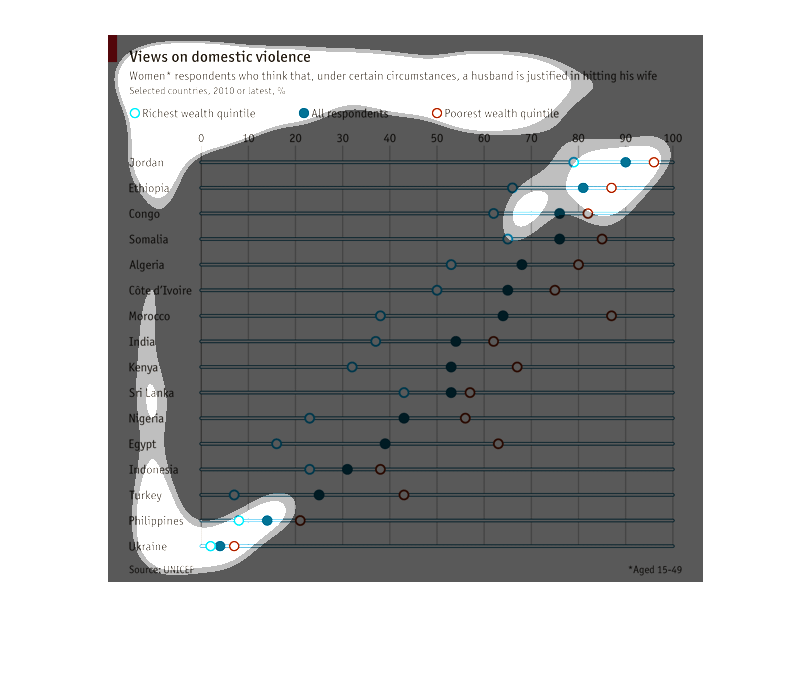
The image provides information on the views of domestic violence. Specifically if a woman
thinks that under certain circumstances a husband is justified for hitting his wife.
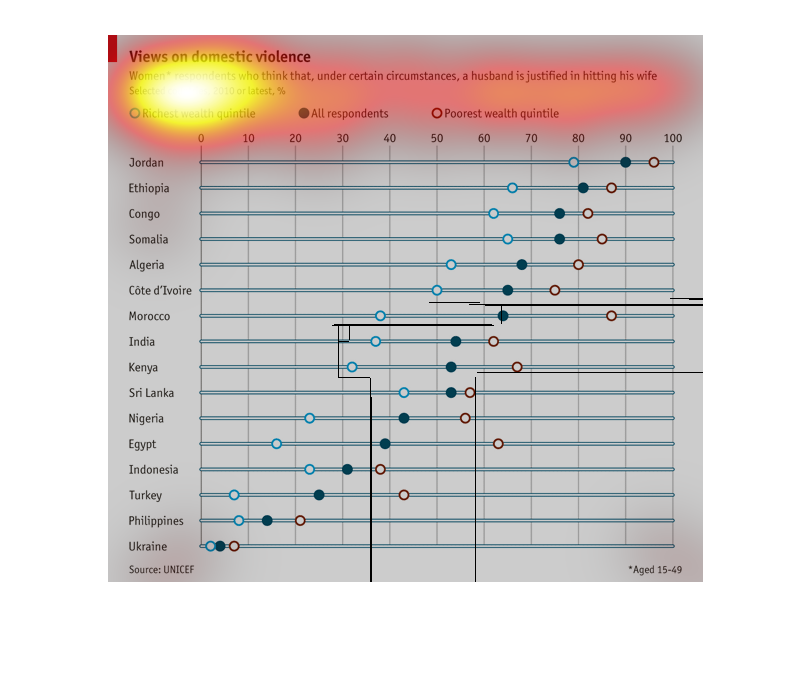
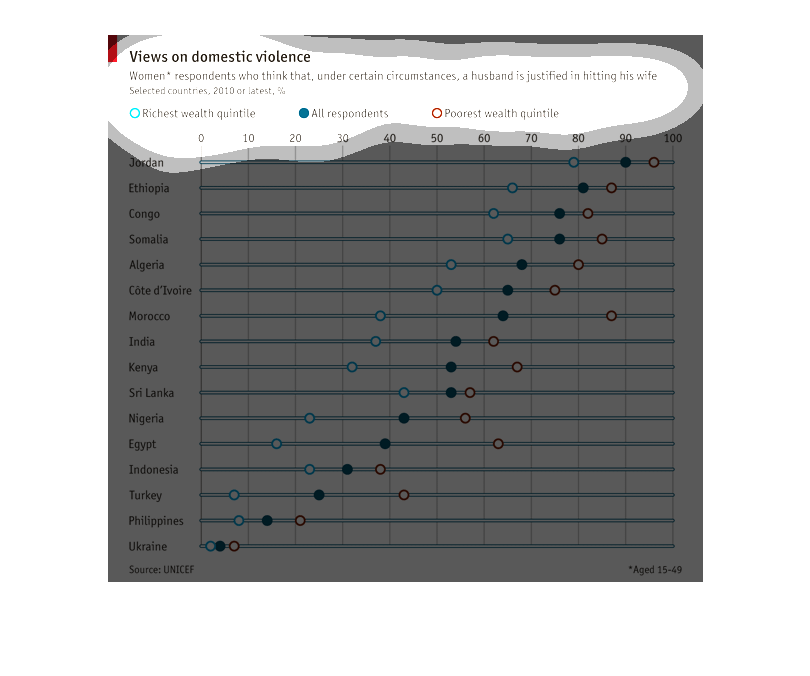
this chart is about views on domestic violence using women respondents who think under certain
circumstances a husband is justified in hitting his wife. categorized by the richest and the
poorest respondents as well as an over all total in select countries.
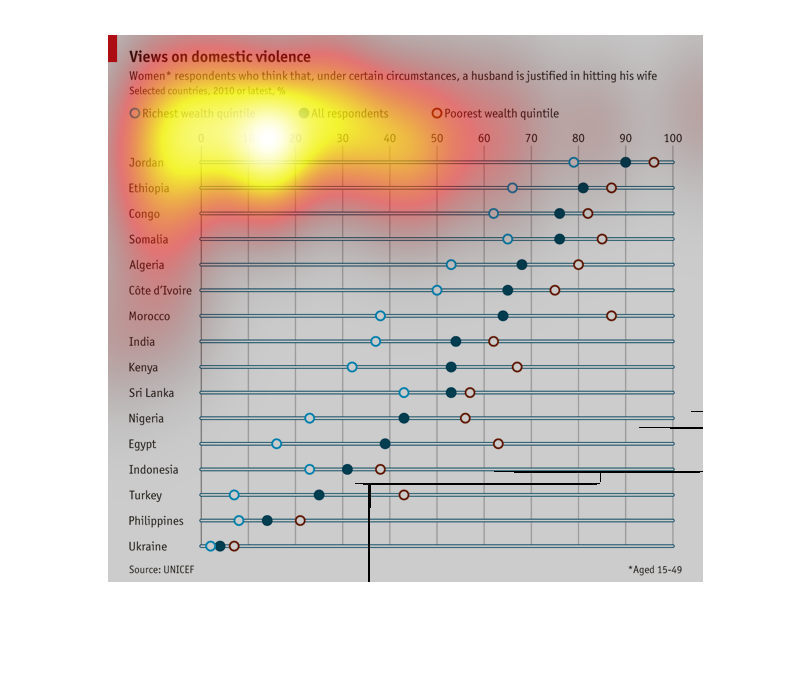
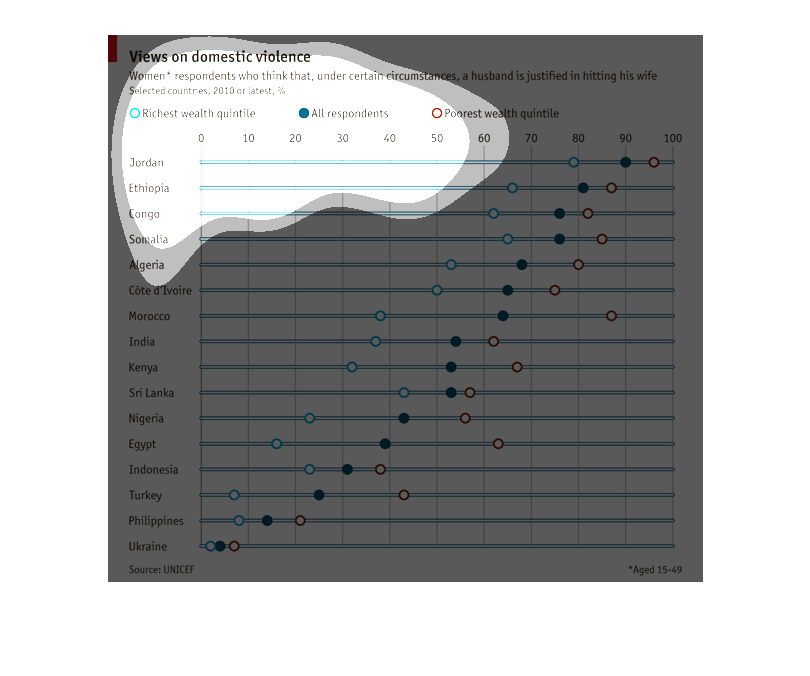
This graph describes views on domestic violence.  Women were surveyed as to whether under
certain circumstances, a husband is justified in hitting his wife.    On the left of the graph
were countries.  On the right were percentages representing all respondents, the poorest wealth
quintile, and the richest wealth quintile.  Only selected countries were used.  Many were
from Africa and the Middle East.  Of those, Jordan had the highest percentage and the Ukraine
had the lowest.
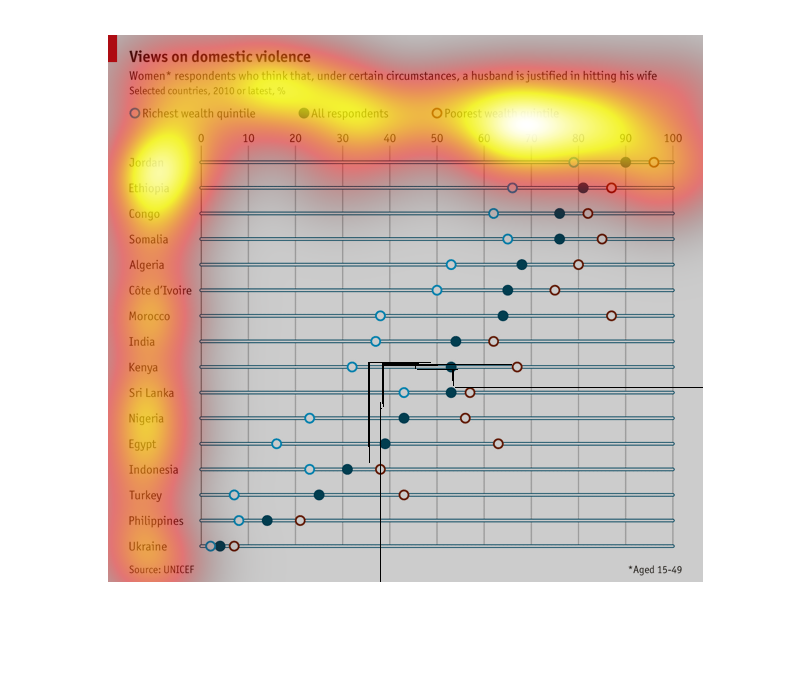
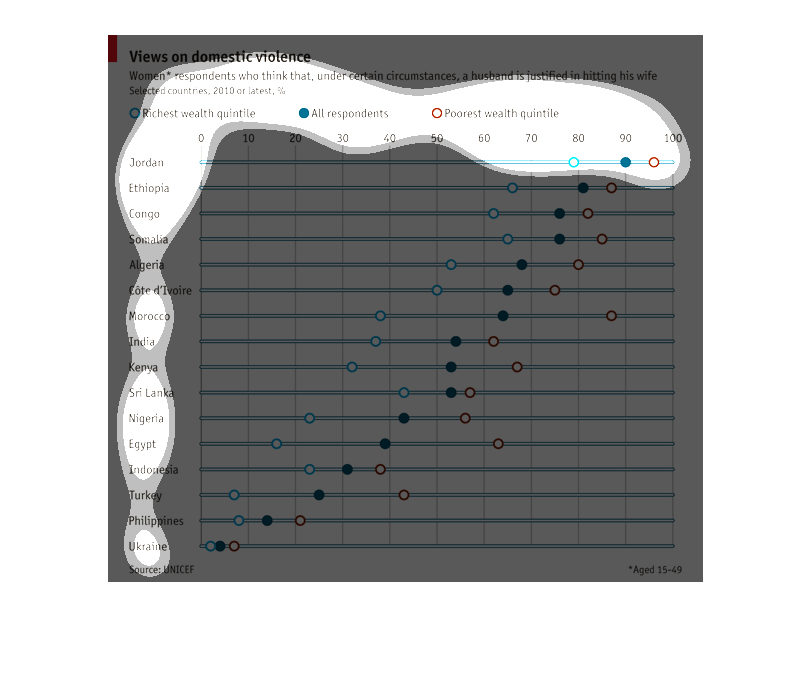
This image is a comparison of domestic violence in relation to the income or wealth of the
people involve and a comparison between different countries.
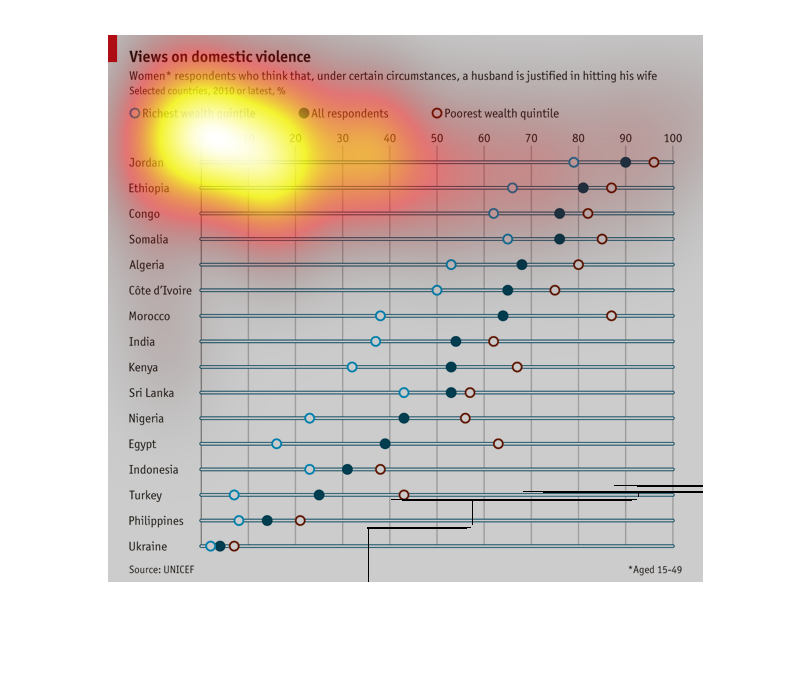
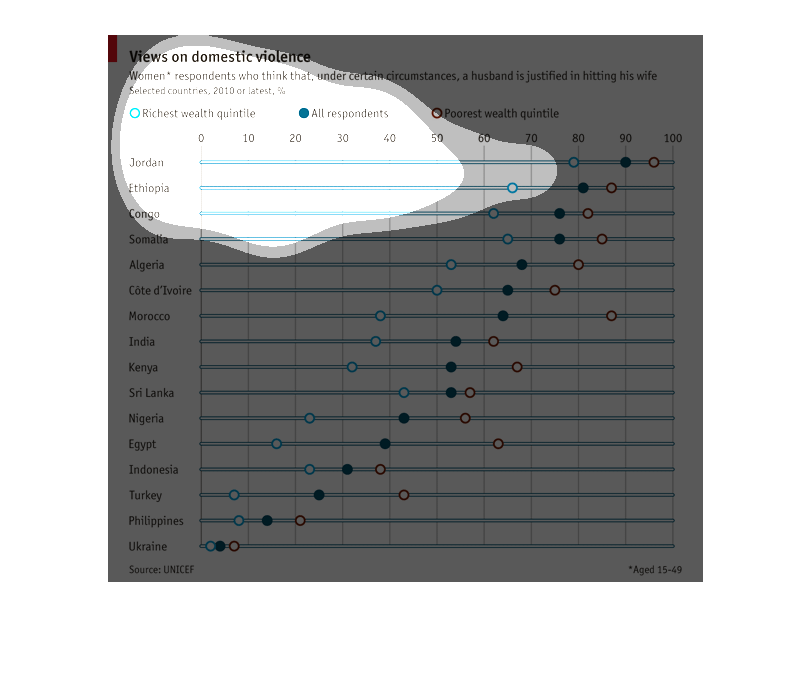
This chart shows the percentage of women who think that a husband is justified in hitting
his wife.  It is based on the country in which they live.  According to the study, Jordanian
women have the highest percentage of women who think that hitting is acceptable and Ukrainian
women have the lowest percentage of women who believe that hitting is acceptable.