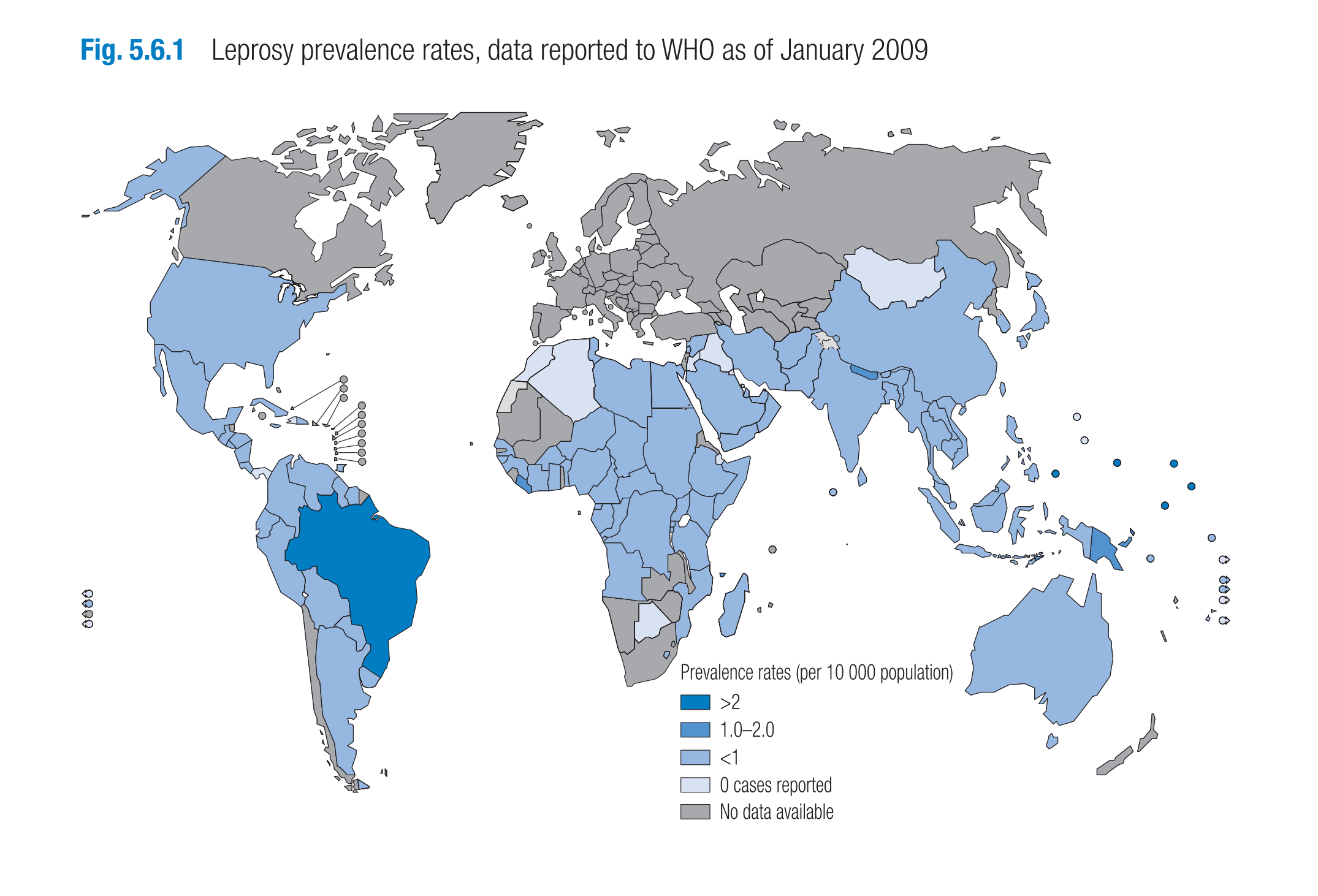
This is a graphic that shows leprosy prevalence rates as per the data reported to WHO for
the year January 2009. It highlights areas where this disease is at high rates.
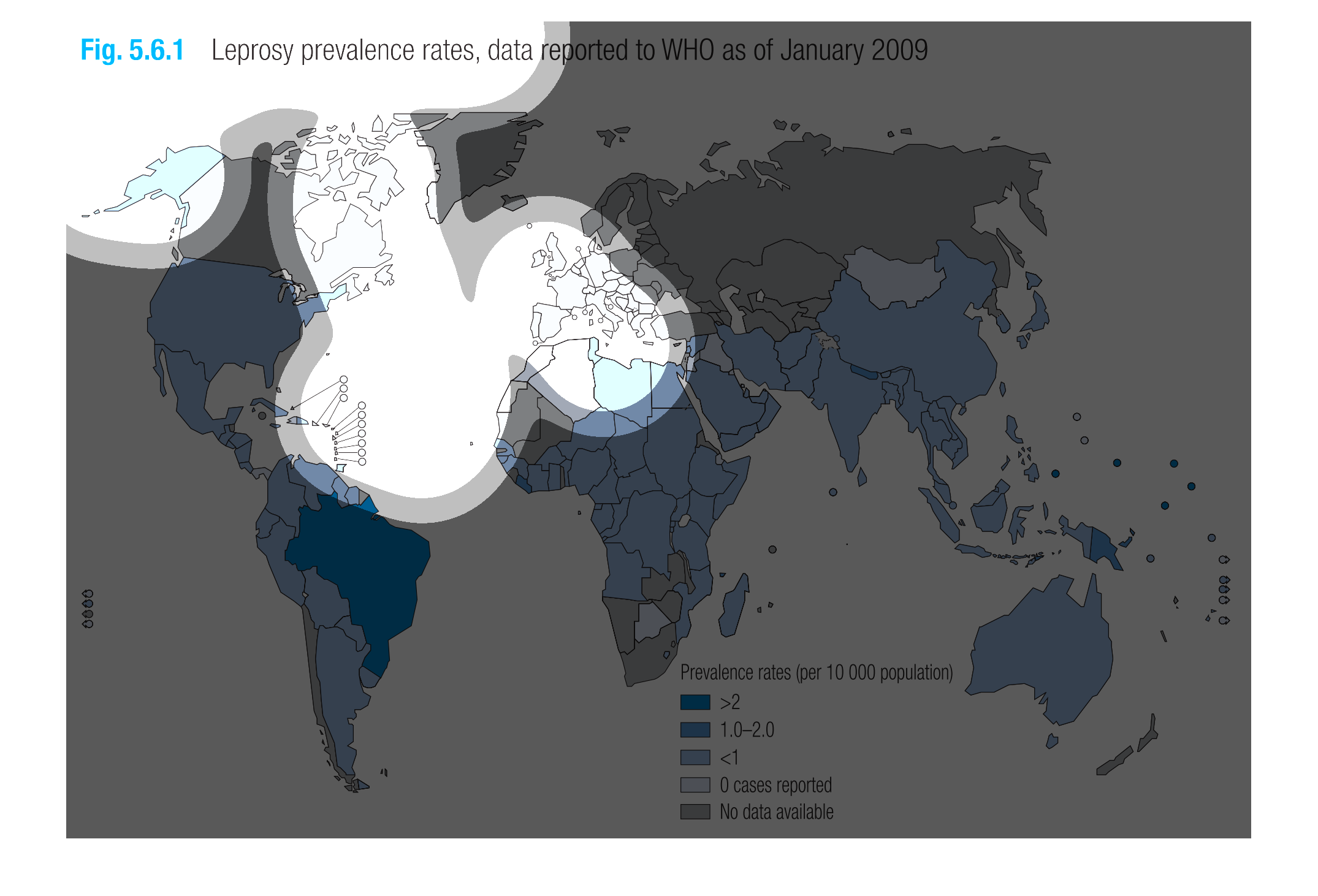
figure 5.6.1 leprosy prevalence rates, data reported to WHO as of January 2009. A shaded world
map showing highest prevalence in south america, only followed by southern asia, united states,
africa and australia at relatively low rates, Europe, canada, and northern asia has no data
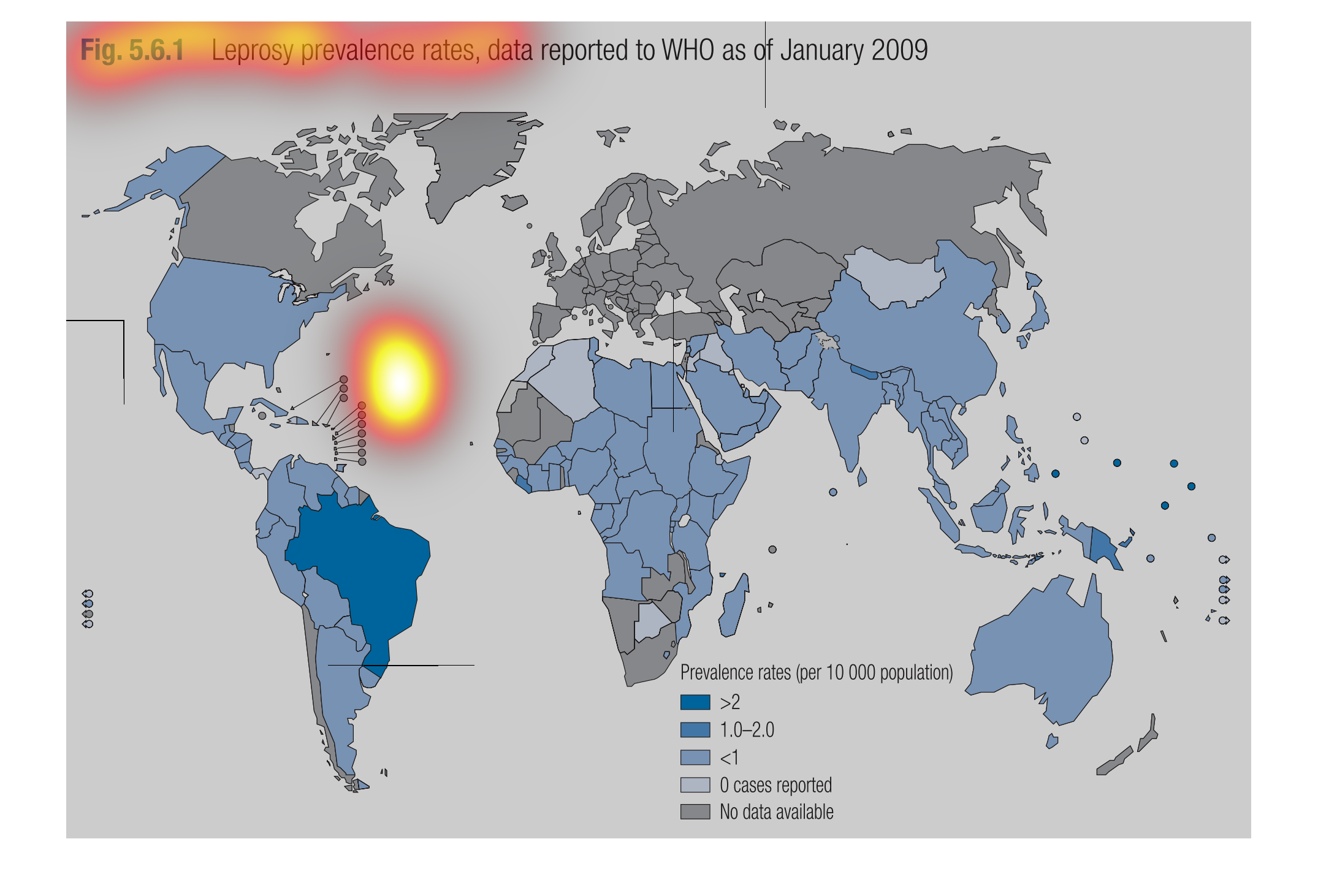
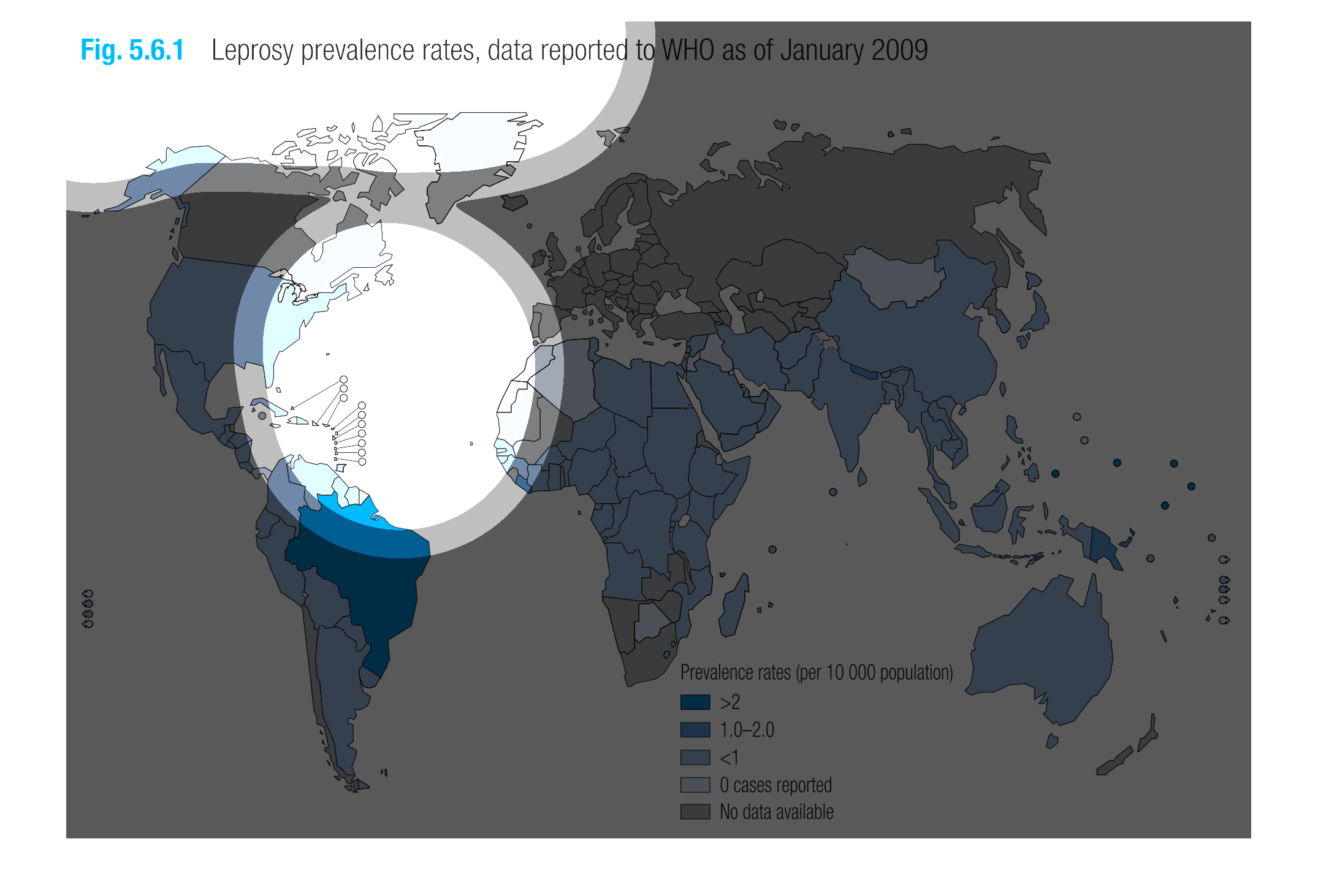
This chart describes leprosy prevalence rates, data reported to WHO as of January 2009. Different
categories are represented by different colors on the chart.
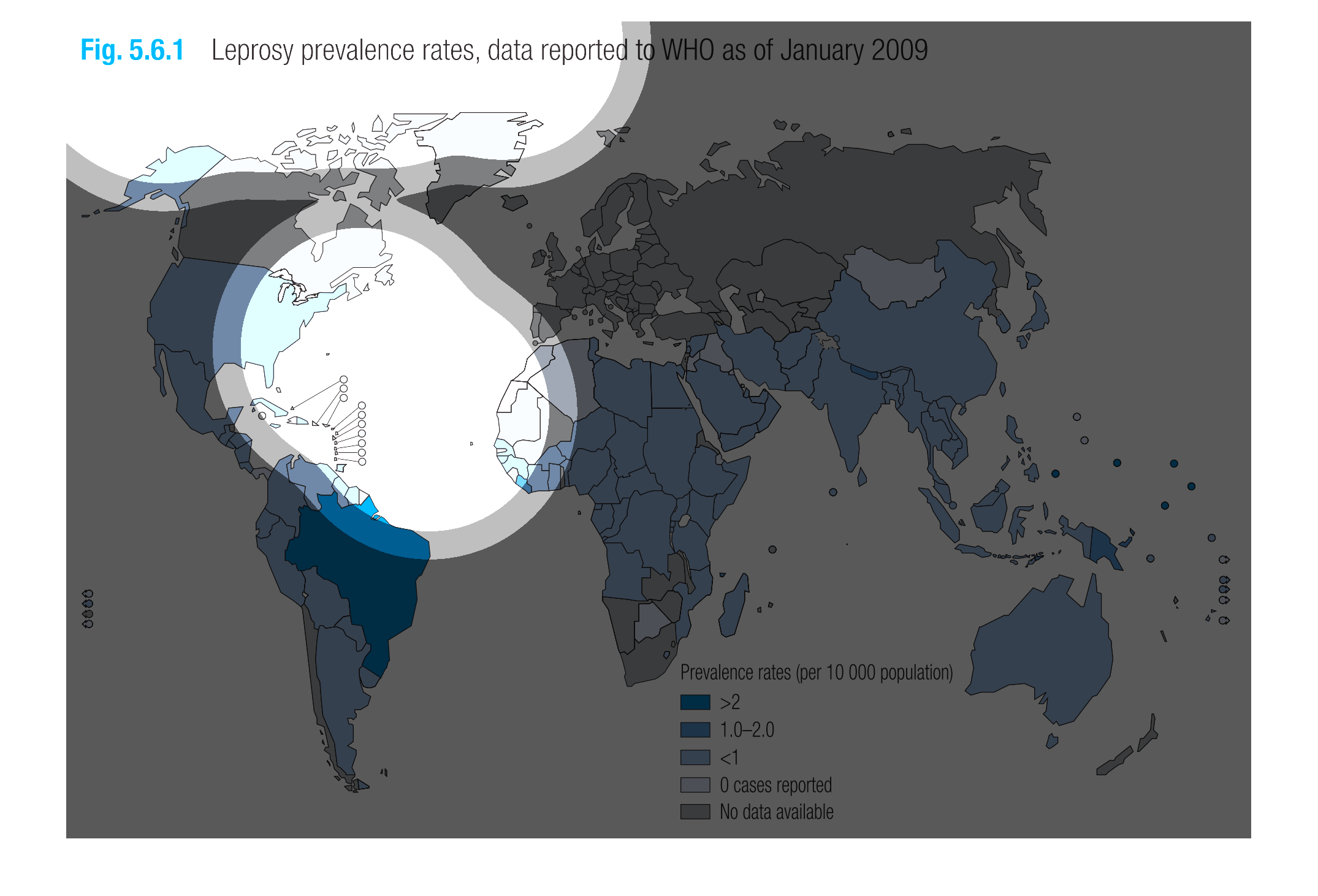
The Americas, South America (brazil more specifically), Africa, Australia, UAE, Yemen, Pakistan,
India, China, Japan, Vietnam, Combodia, Singapore, Indonesia, New Zealand all have above 2
percent leprosy prevalence rates than countries like Russia, Portugal, Spain, France, Italy,
UK, Netherlands, Germany, Scandinavia, Croatia, Turkey, Luxembourg, etc.
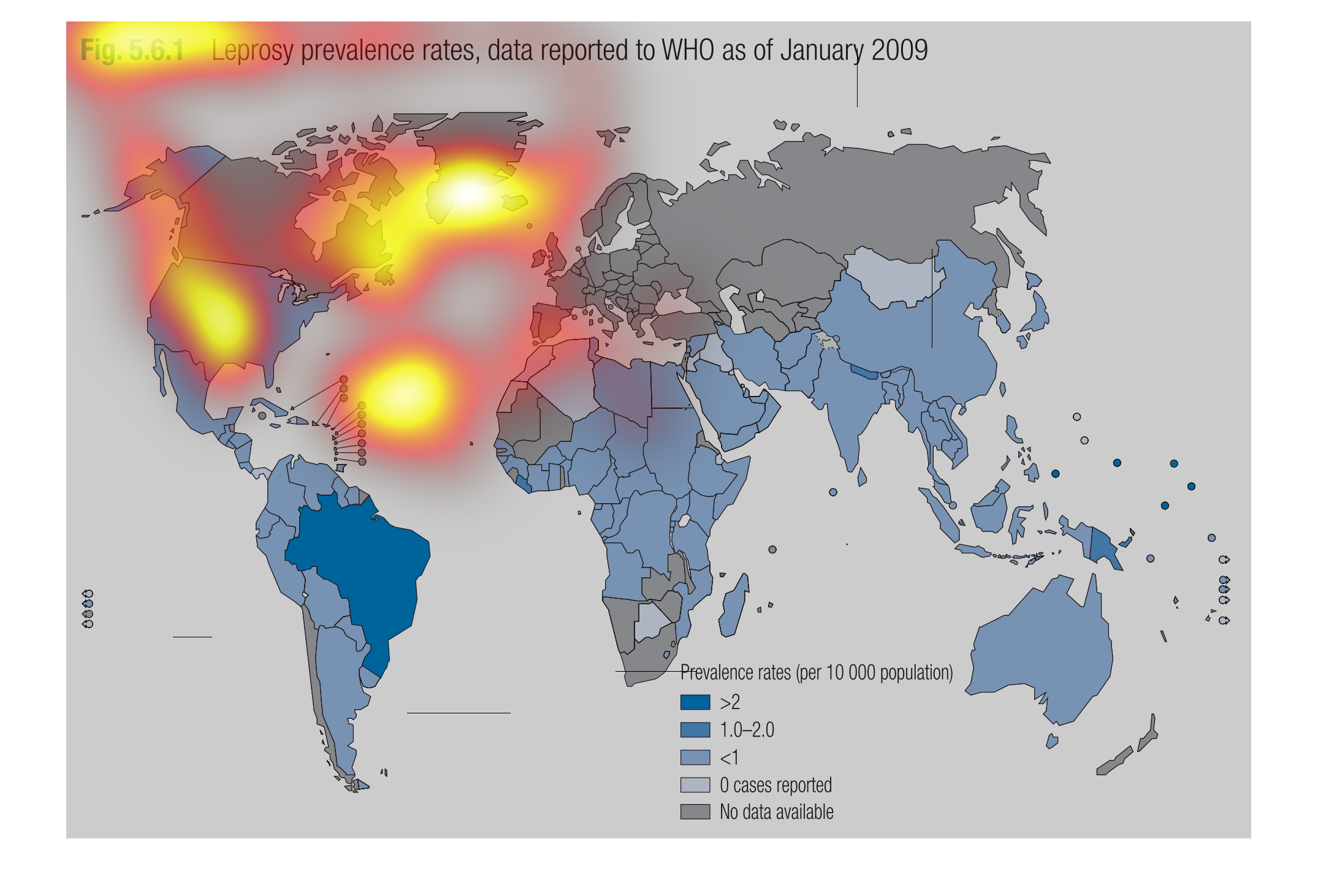
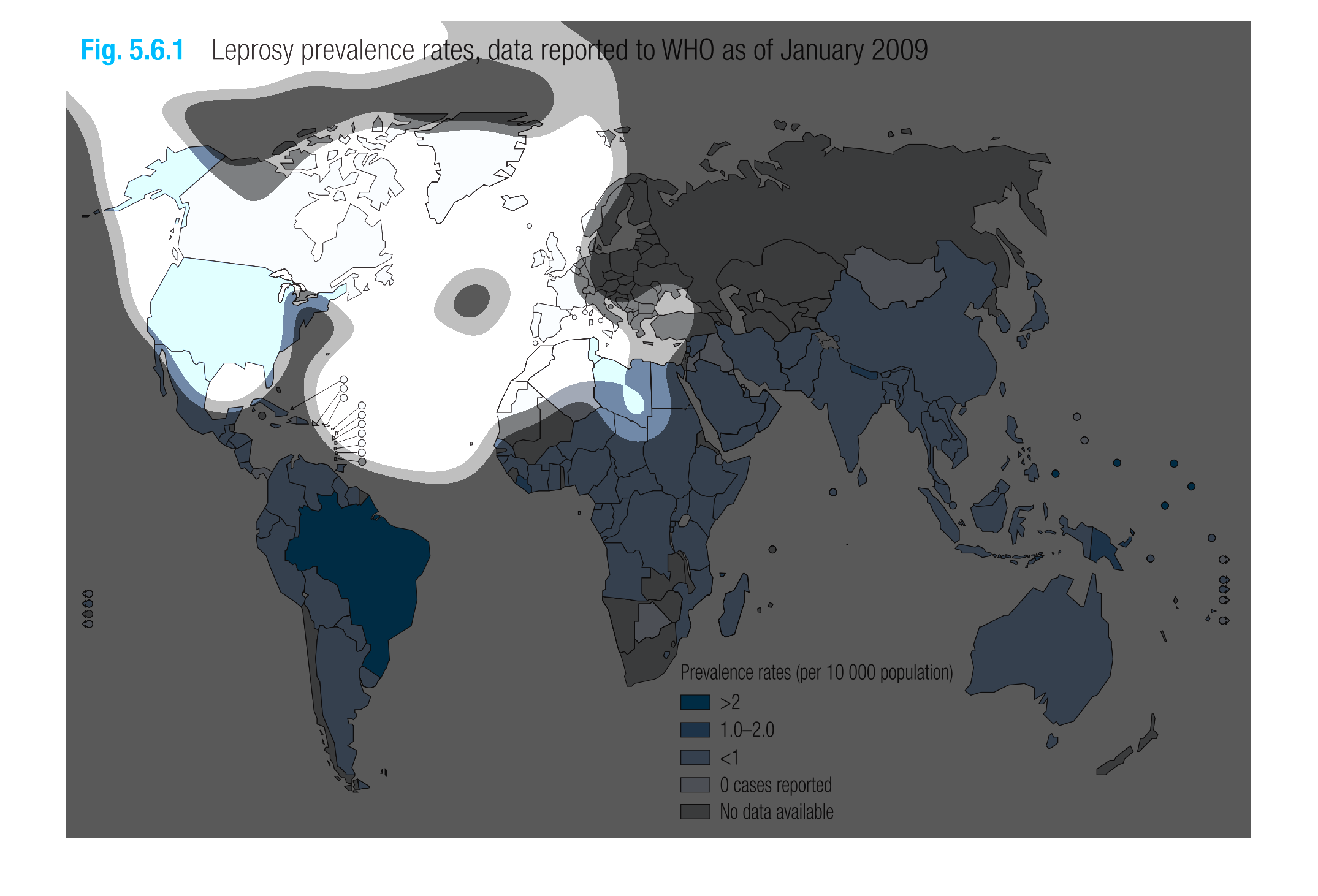
This graph describes leprosy prevalence rates. This data was reported to WHO in 2009. Leprosy
was most prevalent in South America and nearly non-existent in many developed countries.
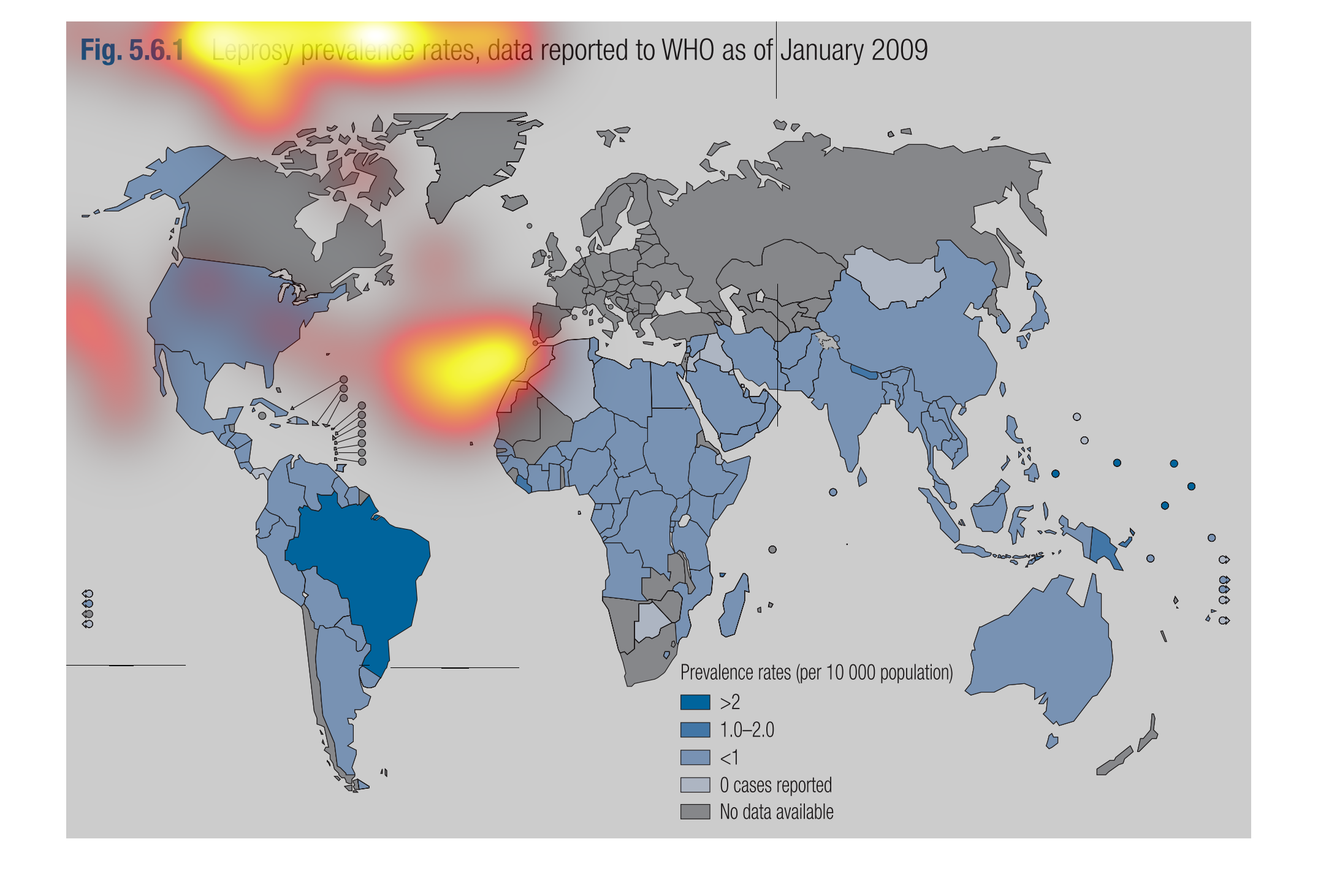
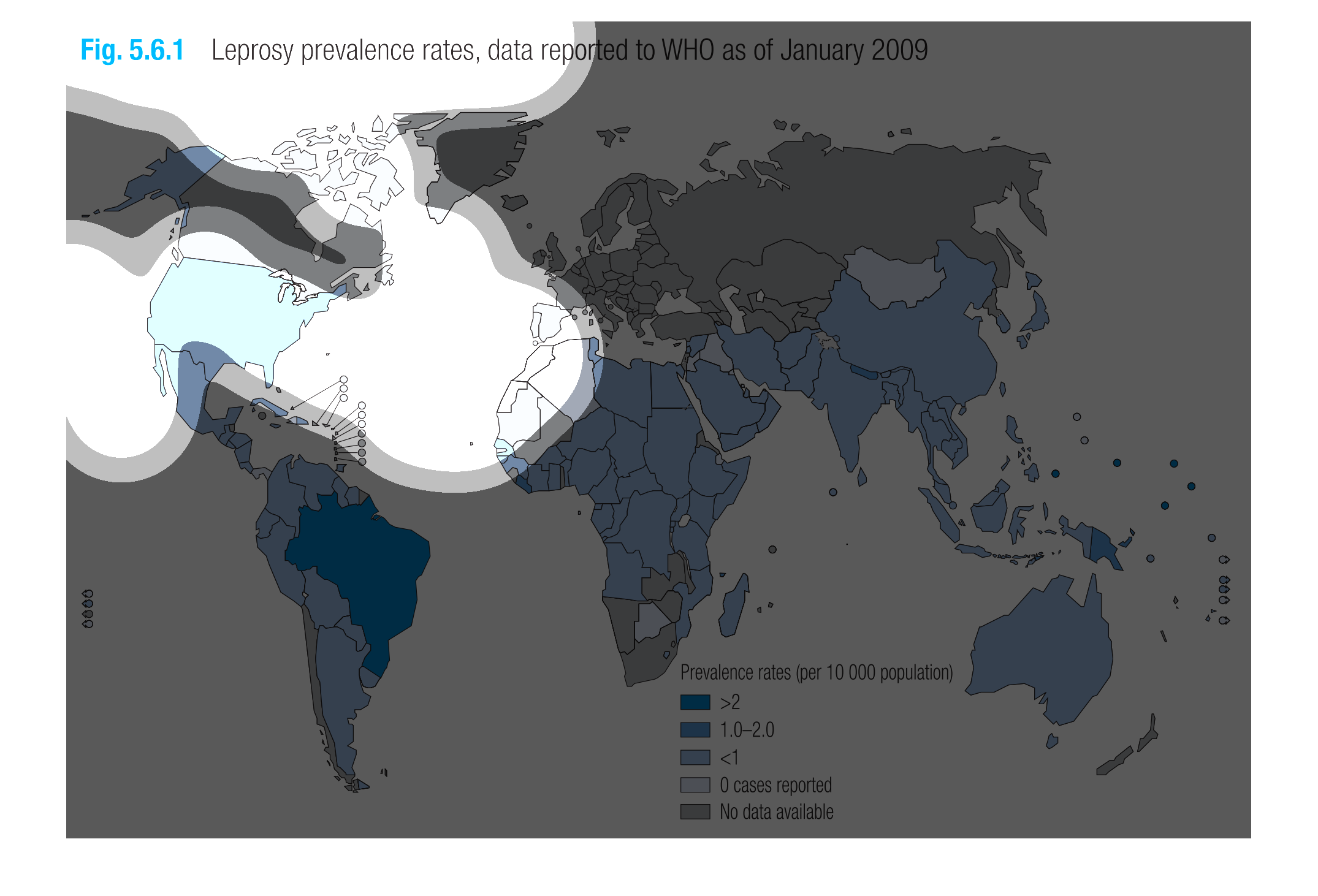
Leprosy prevalence rates reported to WHO as of January 2009.  Image is a map of the world
with Leprosy rates by country.  Each rate is represented by a different color
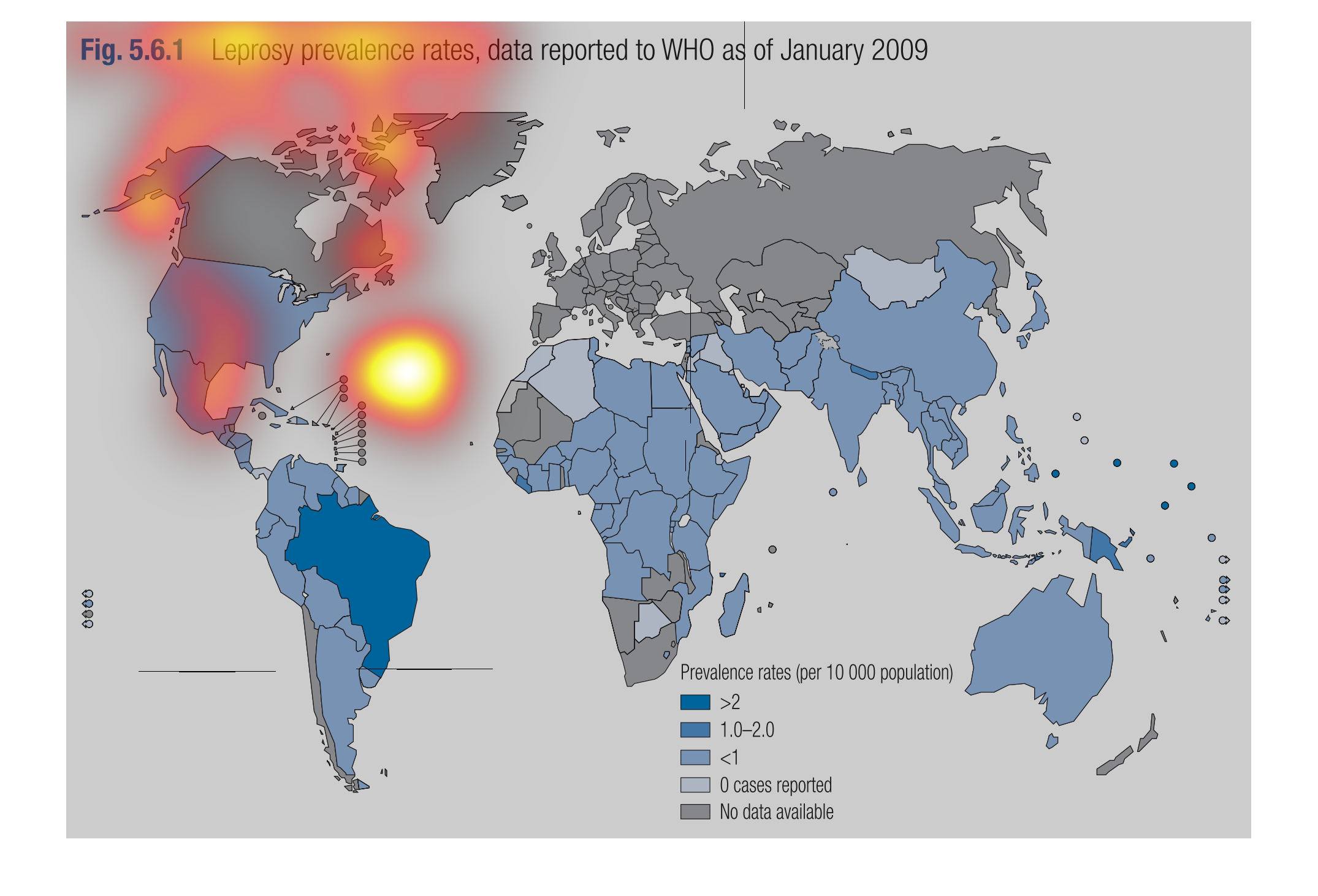
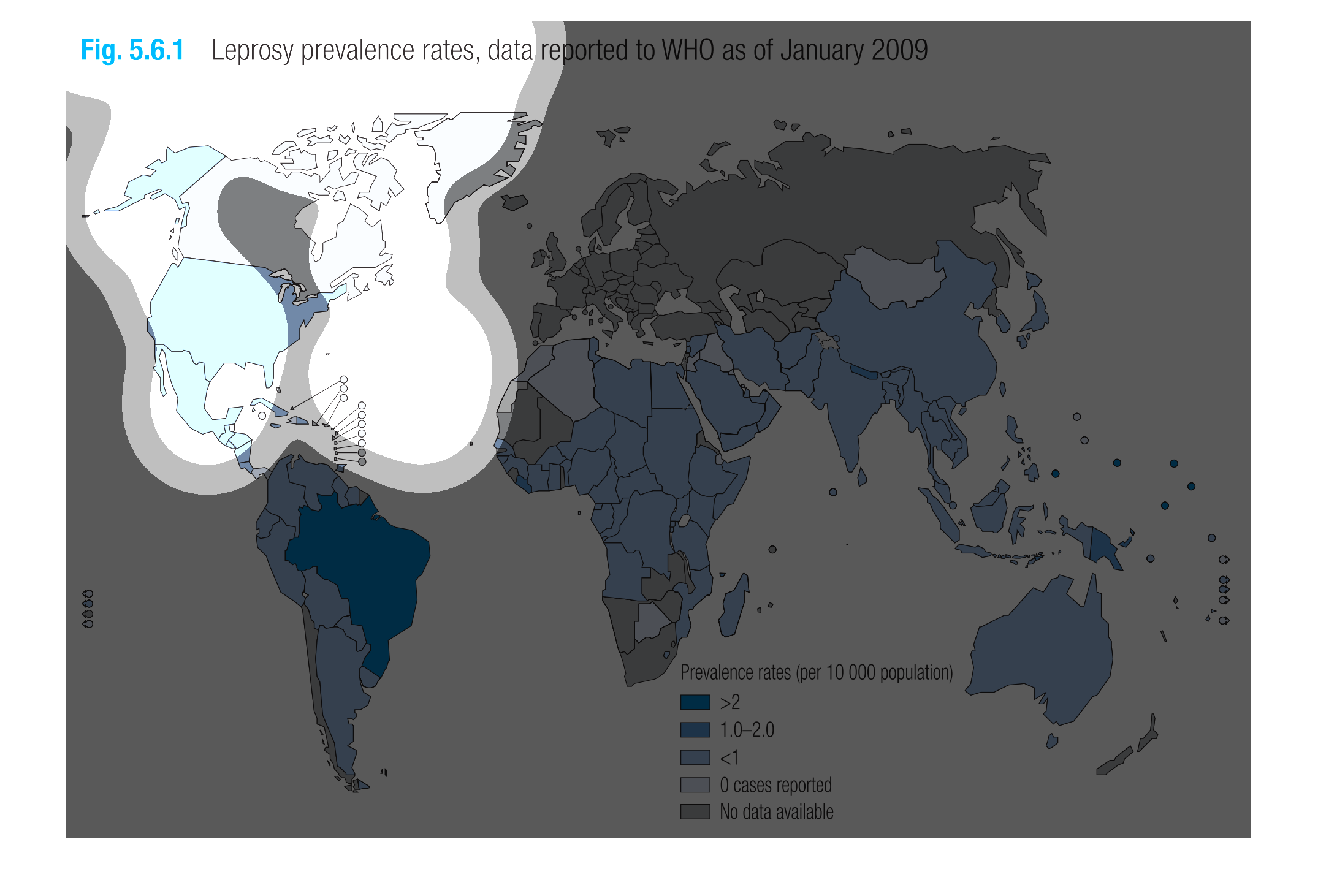
This is an image of a map.  It shows leprosy prevalence rates throughout the world, as reported
to the WHO in January 2009. There is a color key for the different rates at the bottom of
the map.
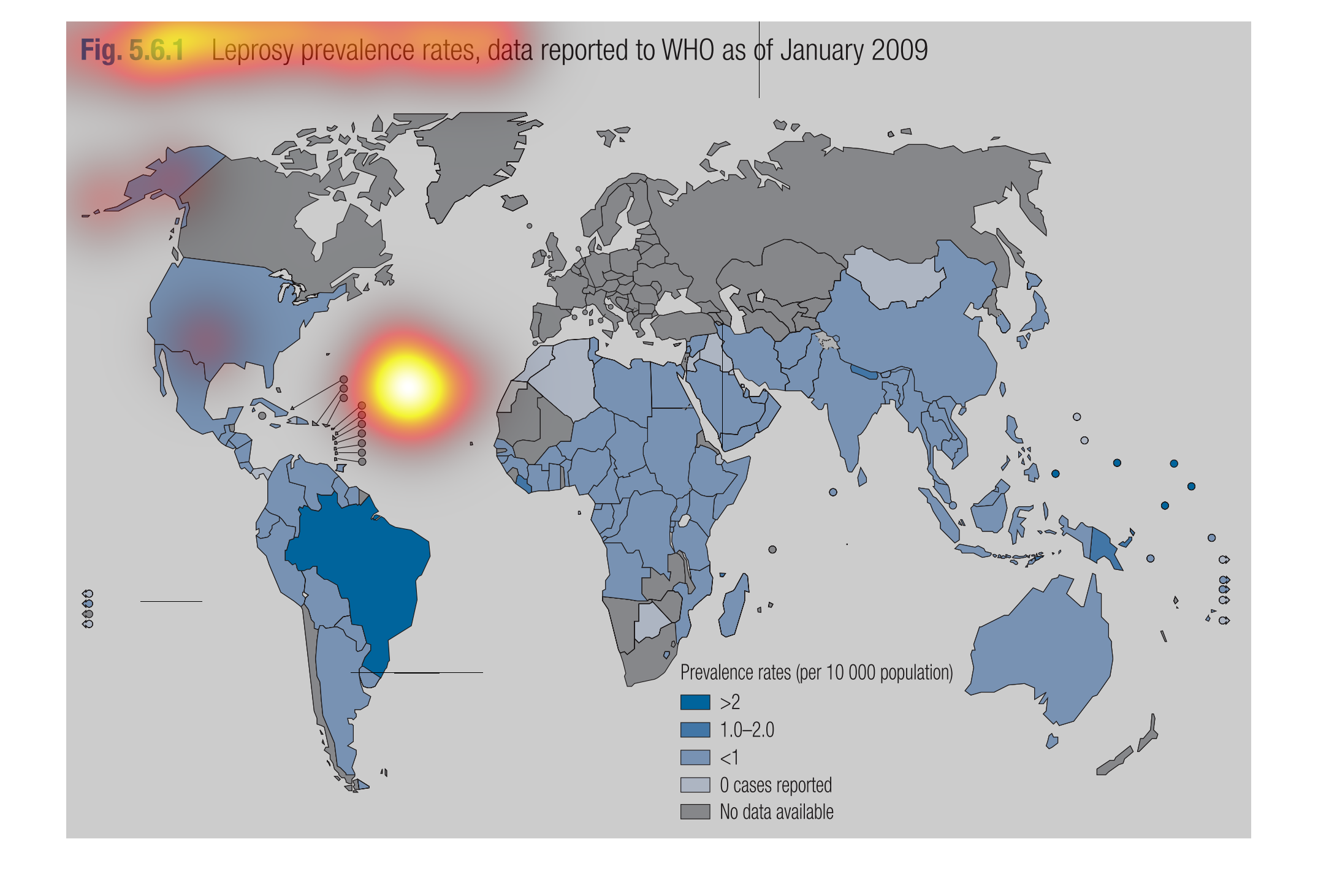
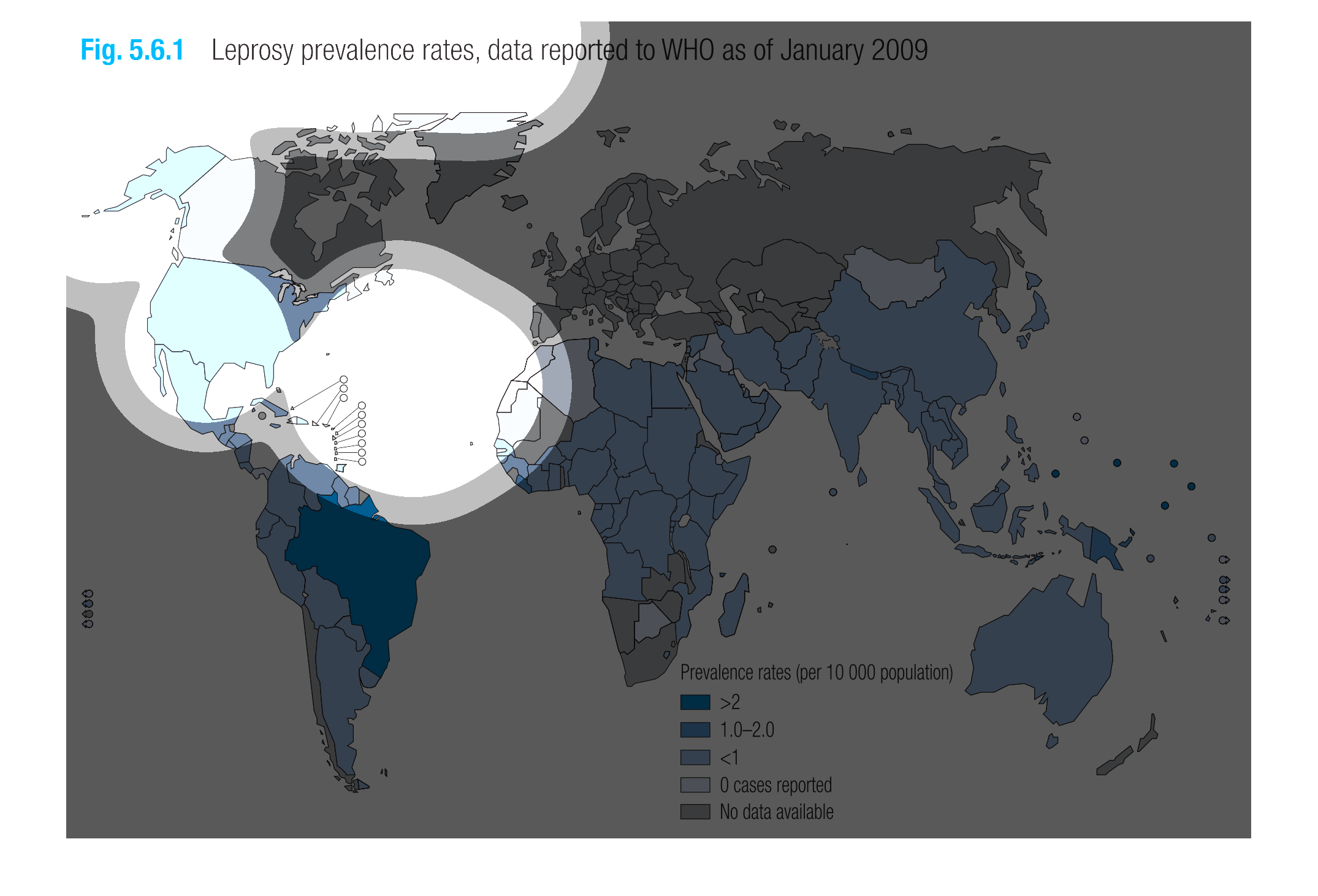
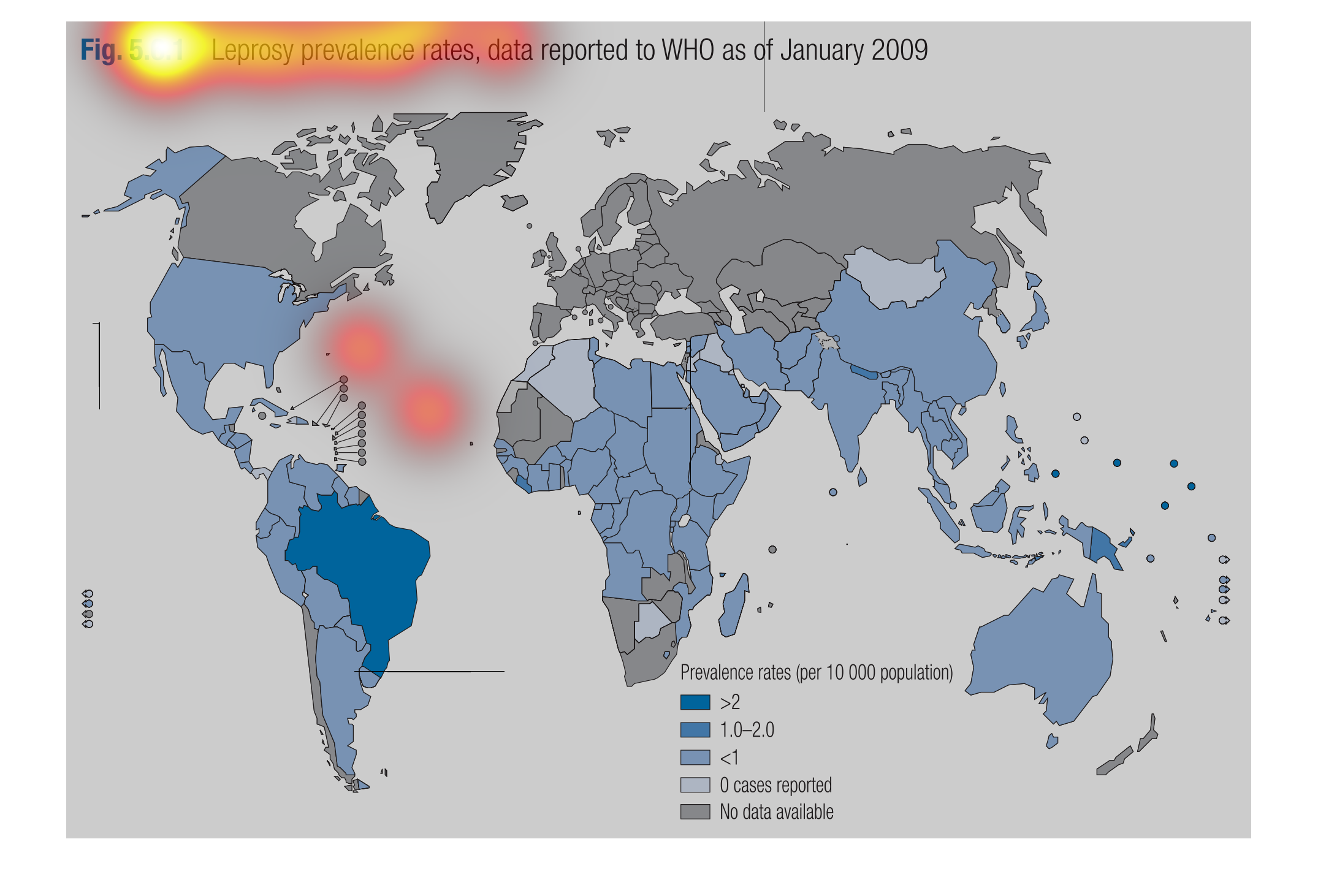
A world map of 2009 showing leprosy prevalence rates across the globe. Brazil has the most
leprosy prevalence on the map. Europe has no data available so it the only continent that's
no highlighted.
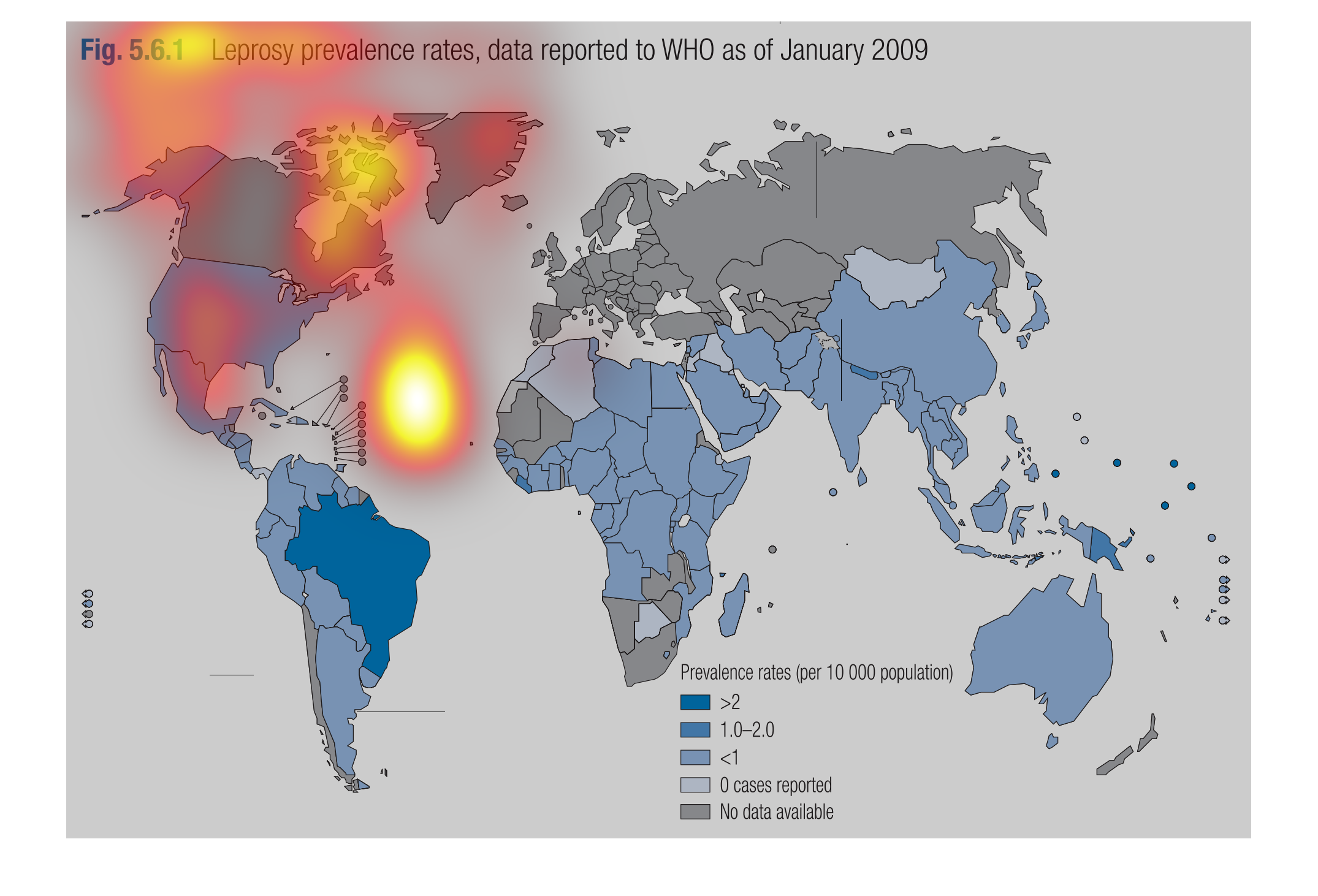
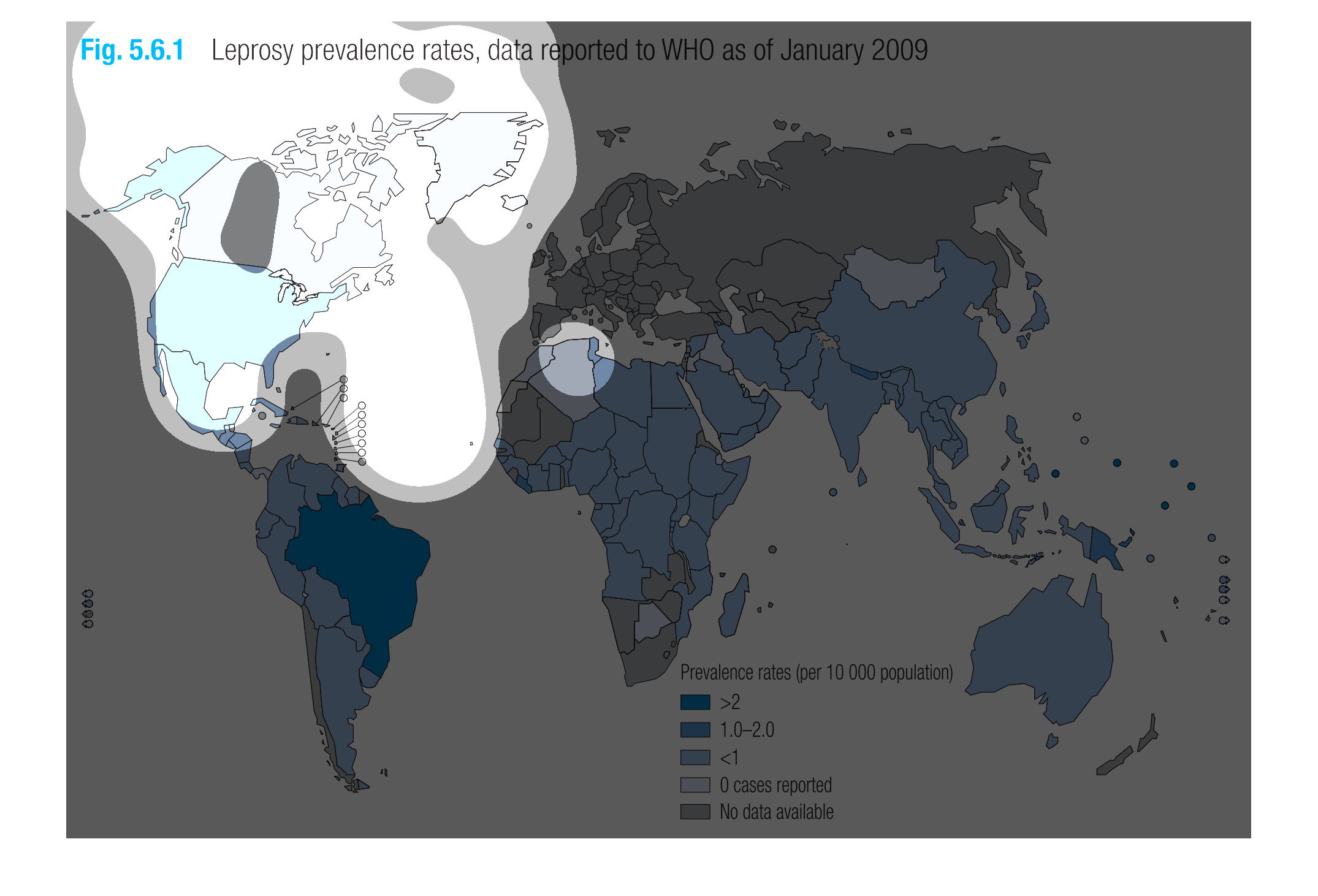
The graph displays the leprosy prevalence rates based on country as of January 2009. Overall,
the highest rates appear in mostly in South America with minor prevalence rates throughout
the rest of the world.
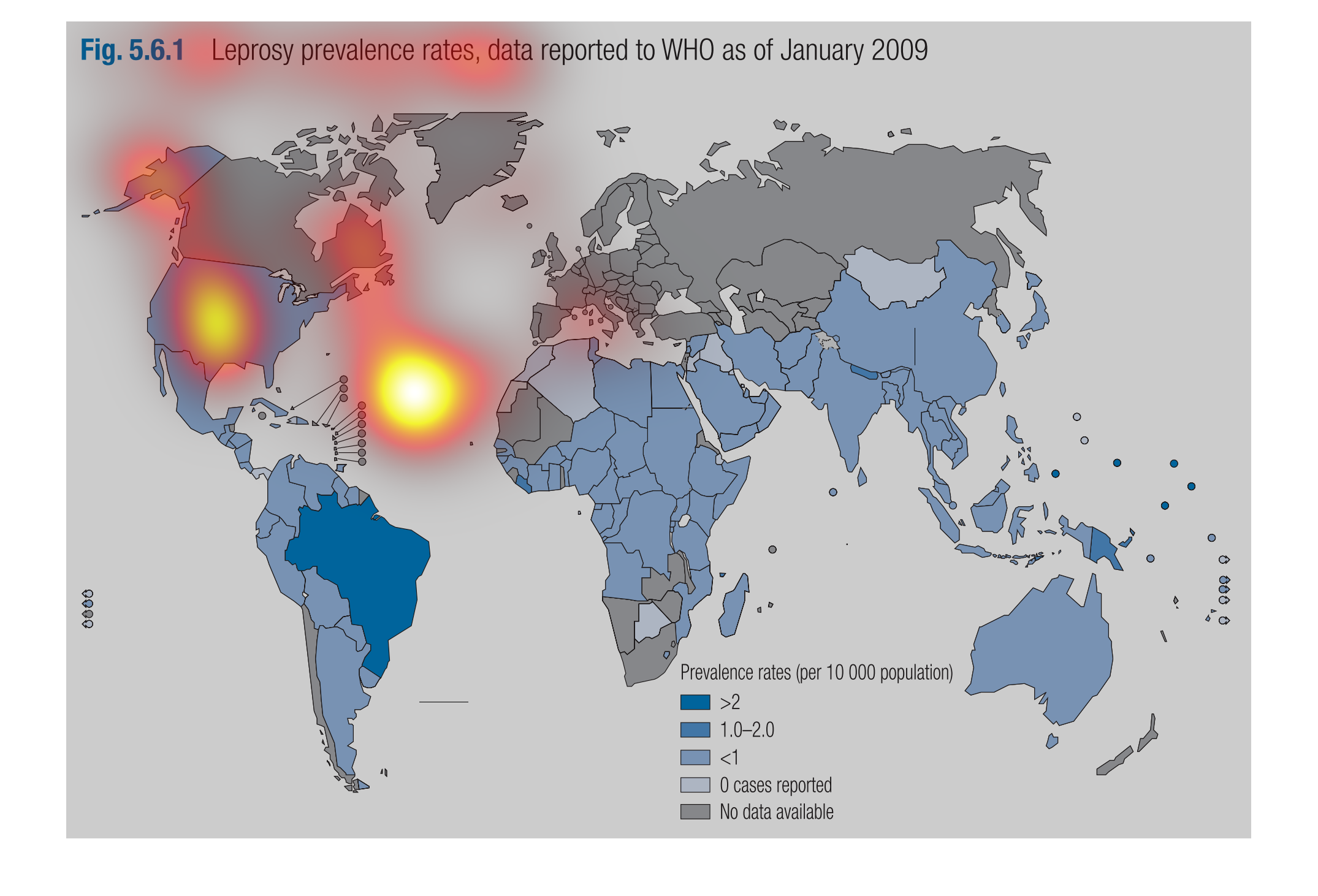
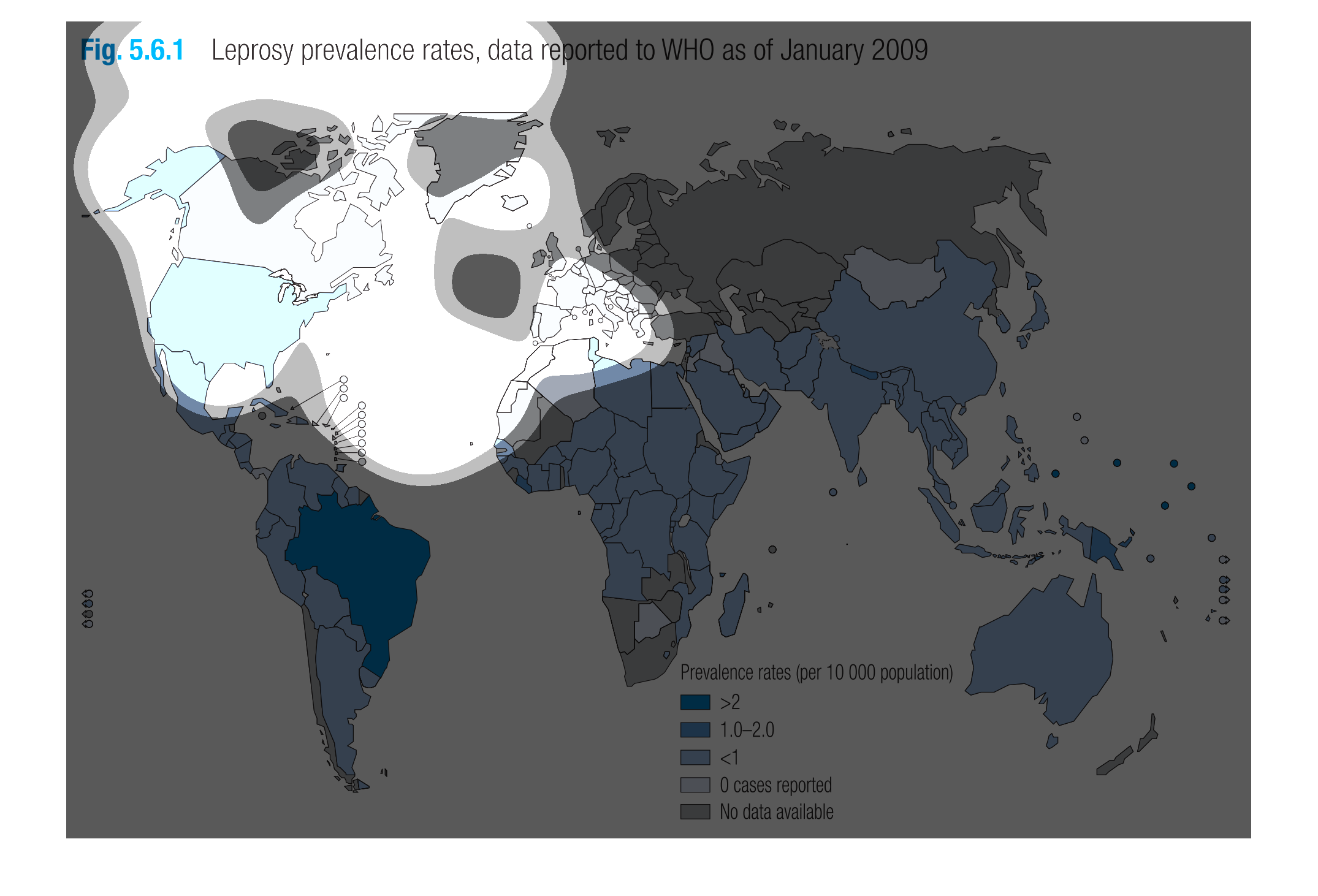
This handmade chart shows the incidence of leprosy to the World Health Organization around
the world. It is fairly common around the world according to the chart