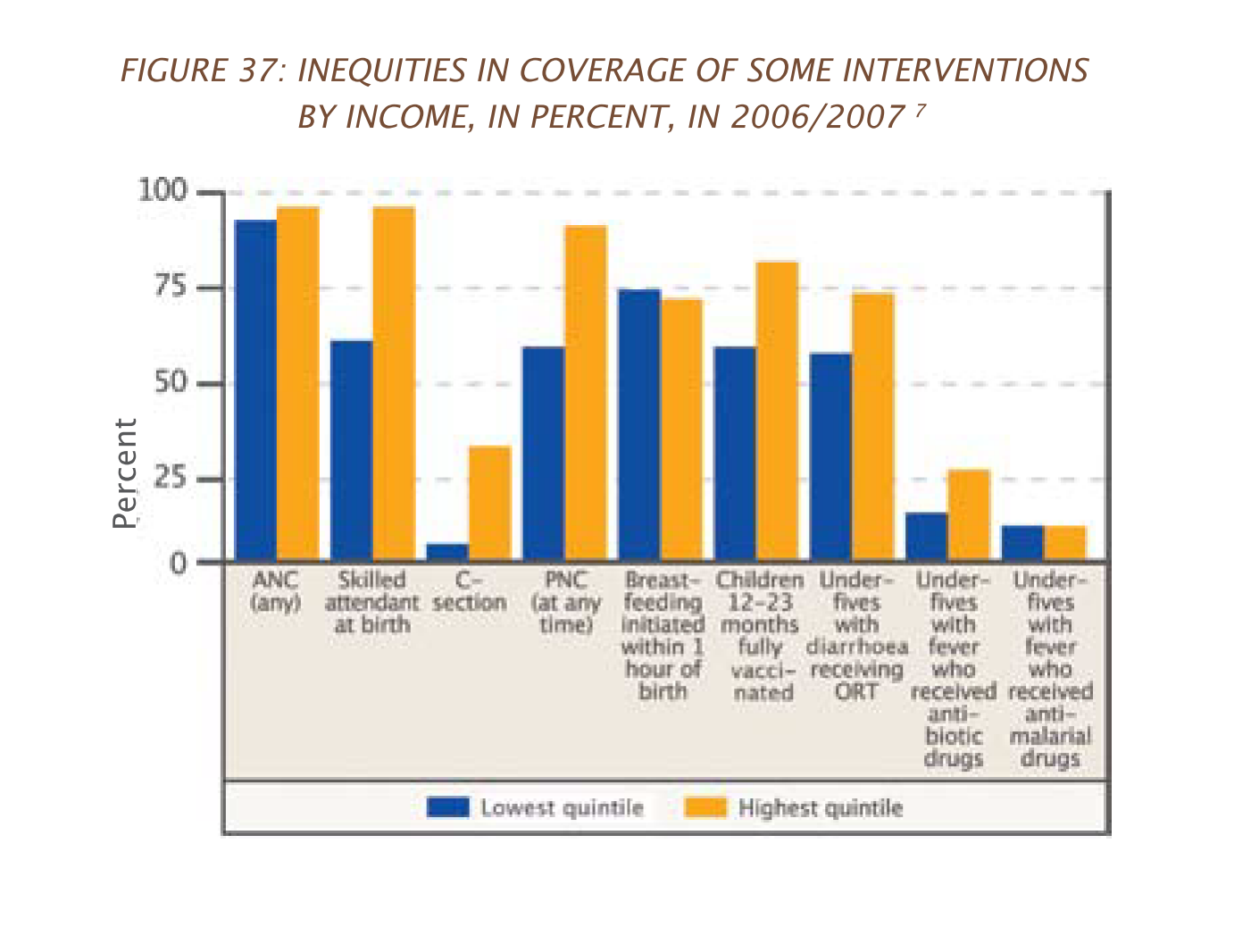
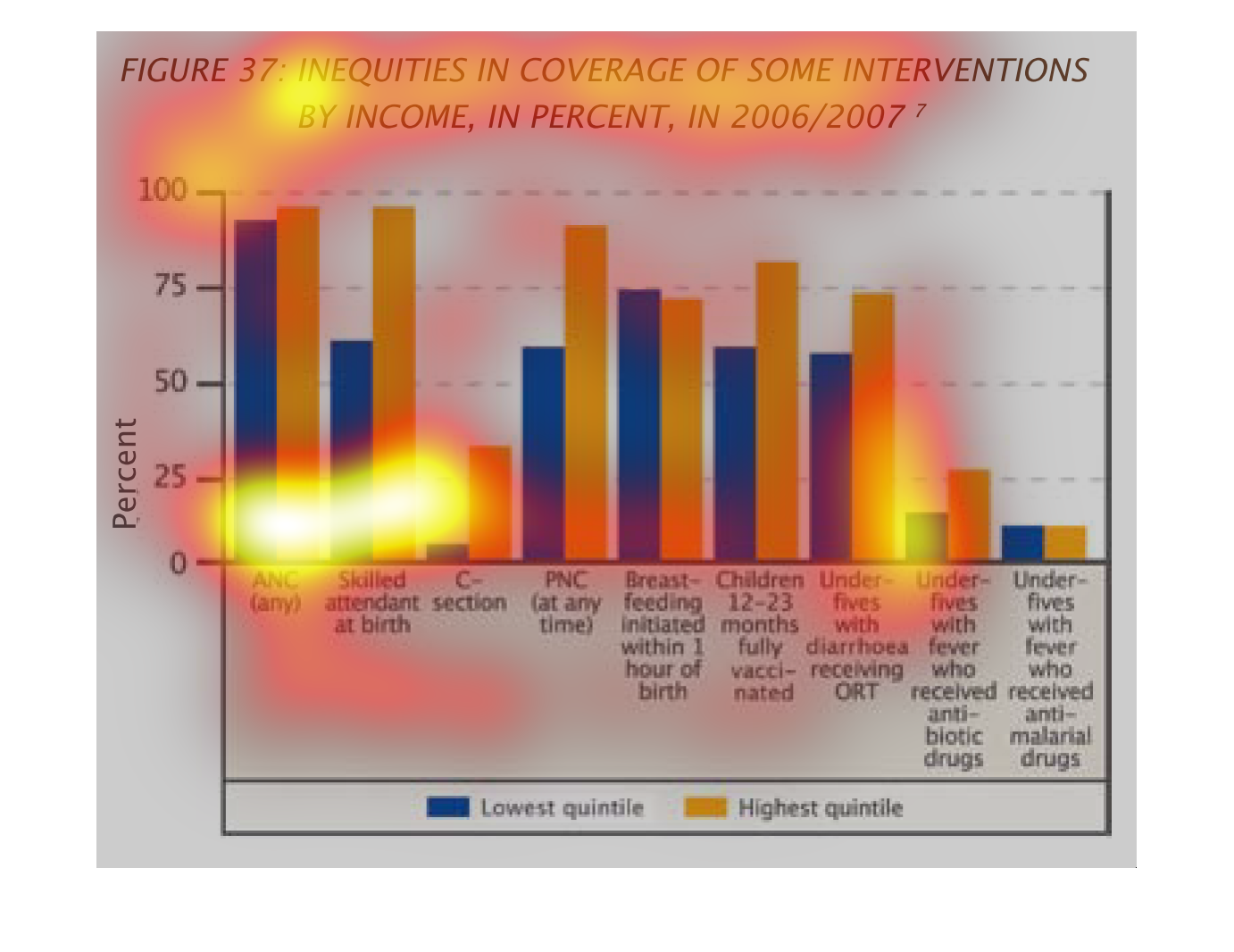
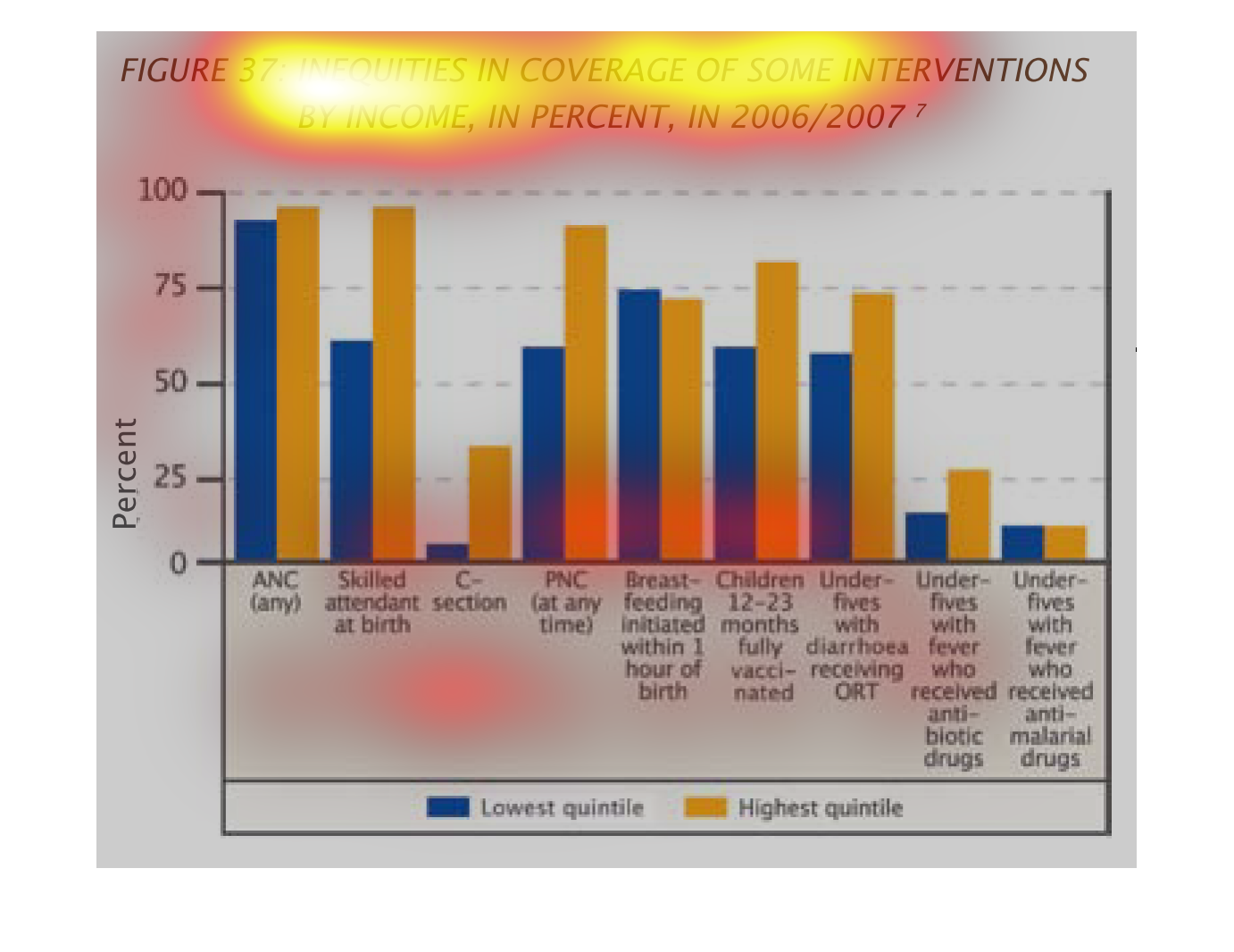
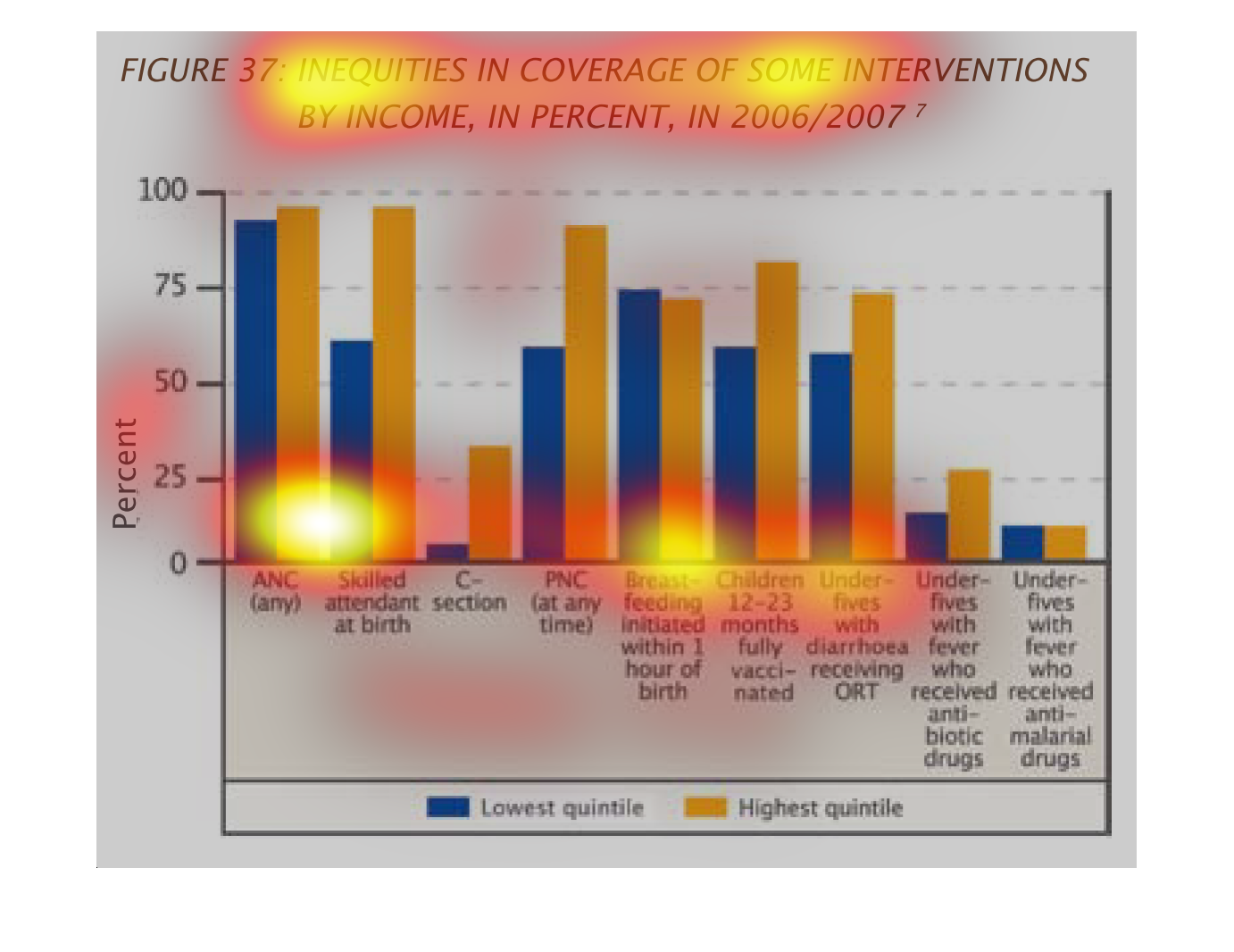
This handmade chart shows how inequity can get in the way of treatment for standard interventions.
But it is hard to read the chart otherwise and i have no idea what is going on

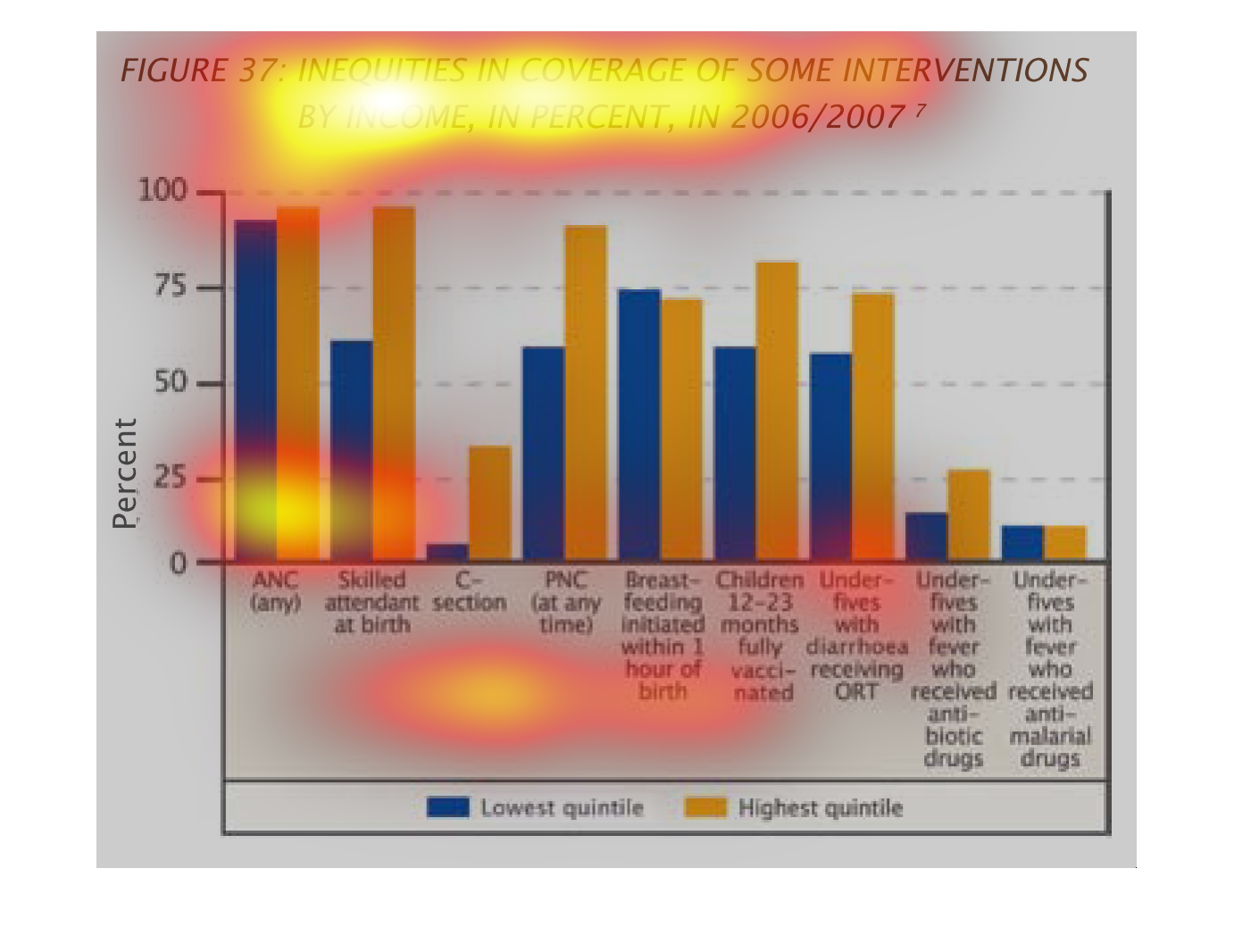
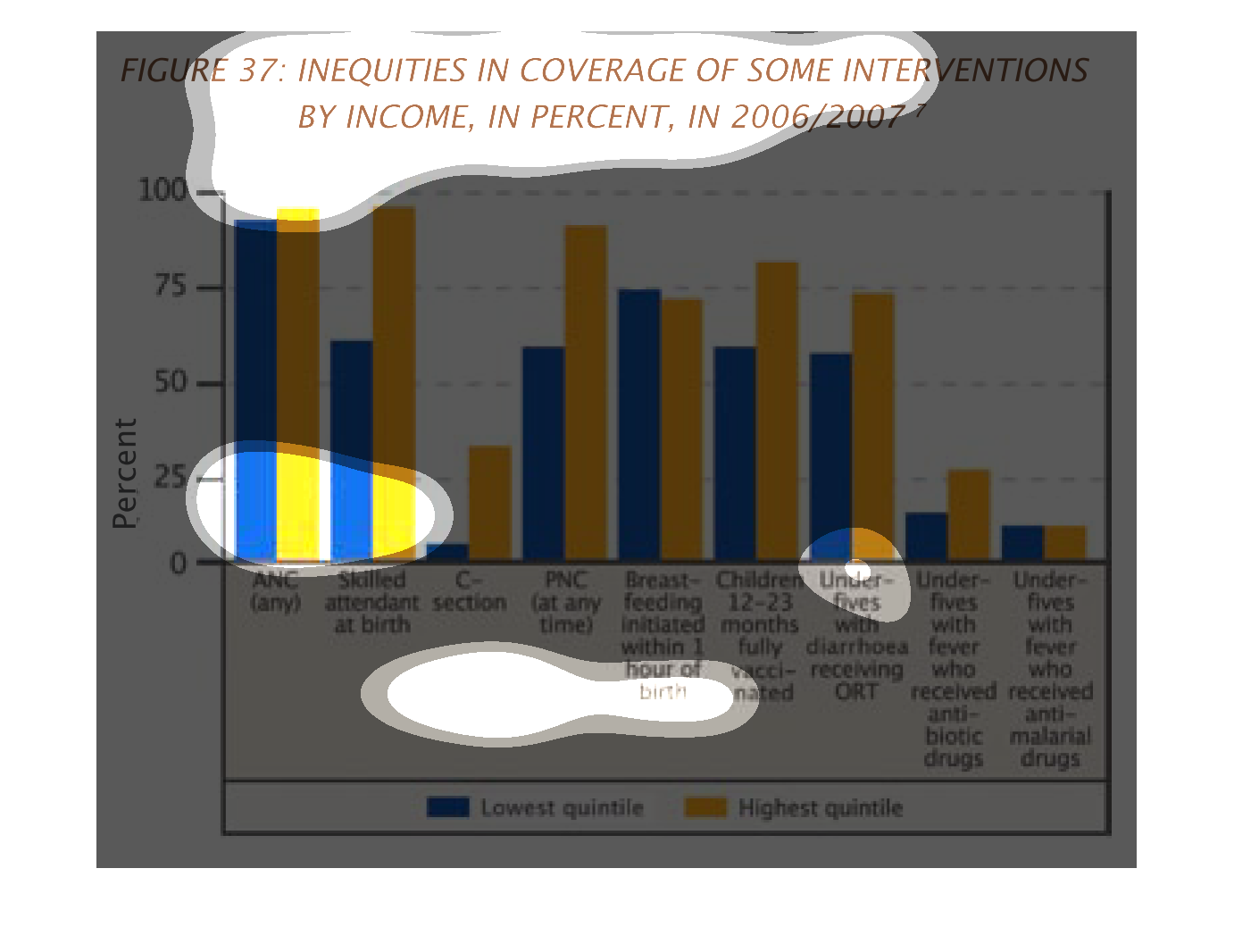
The figure is comparing the lowest and highest fifth of a population based upon the percentage
of those who received specific types of care. The data points focus on times at and following
childbirth up through age five of the children. Generally, the graph shows significant disparity
between the highest and lowest quintile the further away temporally from the initial birth
process.
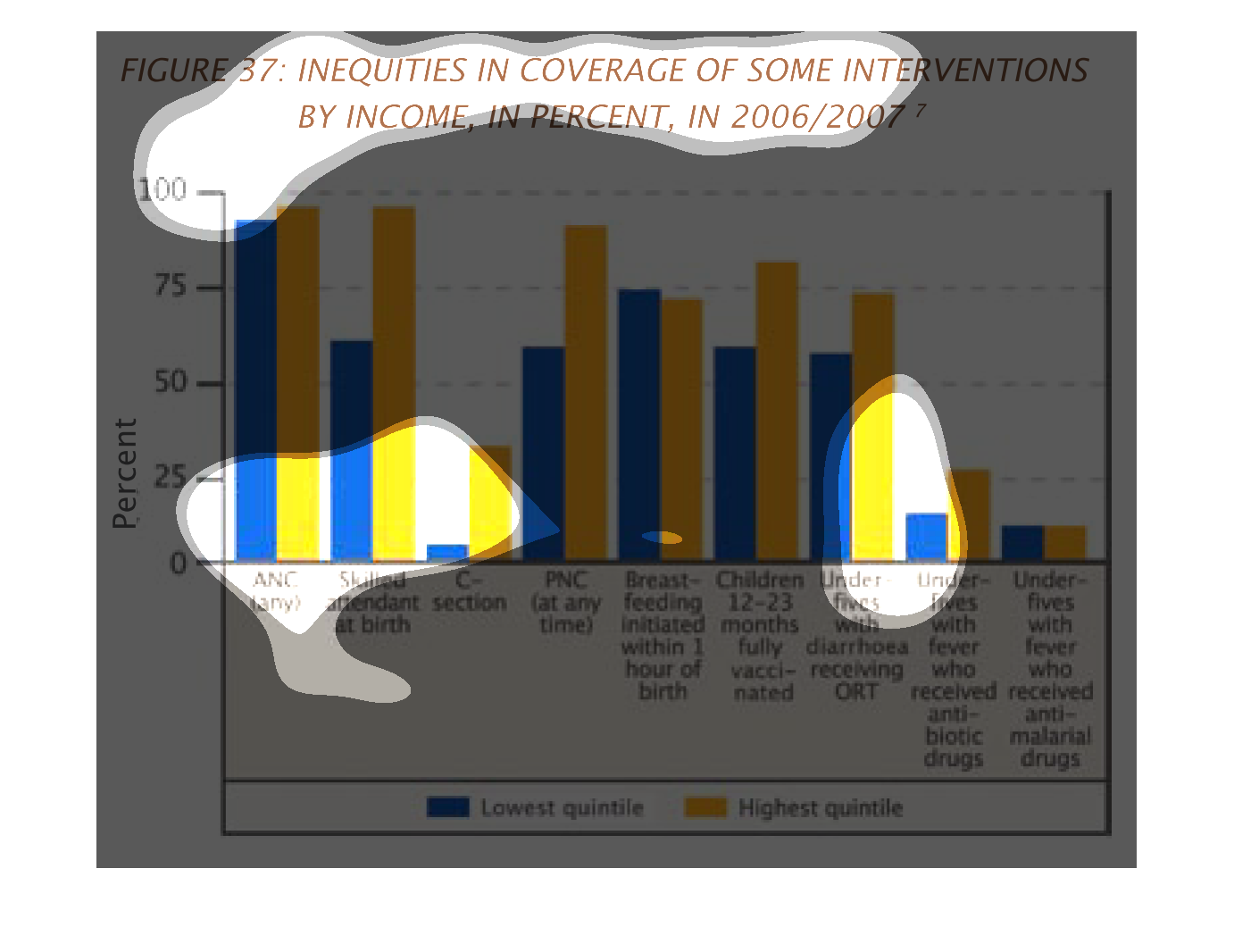
This is a bar chart that shows a study that was done for the periods of 2006 and 2007 of the
inequities in coverage of some interventions by income in percent. These include ANC, skilled
attendant at birth, C-section, PNC, breast feeding initiated within 1 hour of birth, children
12-23 months fully vaccinated, under fives with diarrhoea receiving ORT, under fives with
fever who received antibiotic drugs, and under fives with fever who received antimalarial
drugs. The data was separated by blue and yellow bars depicting lowest quintile and highest
quintile.
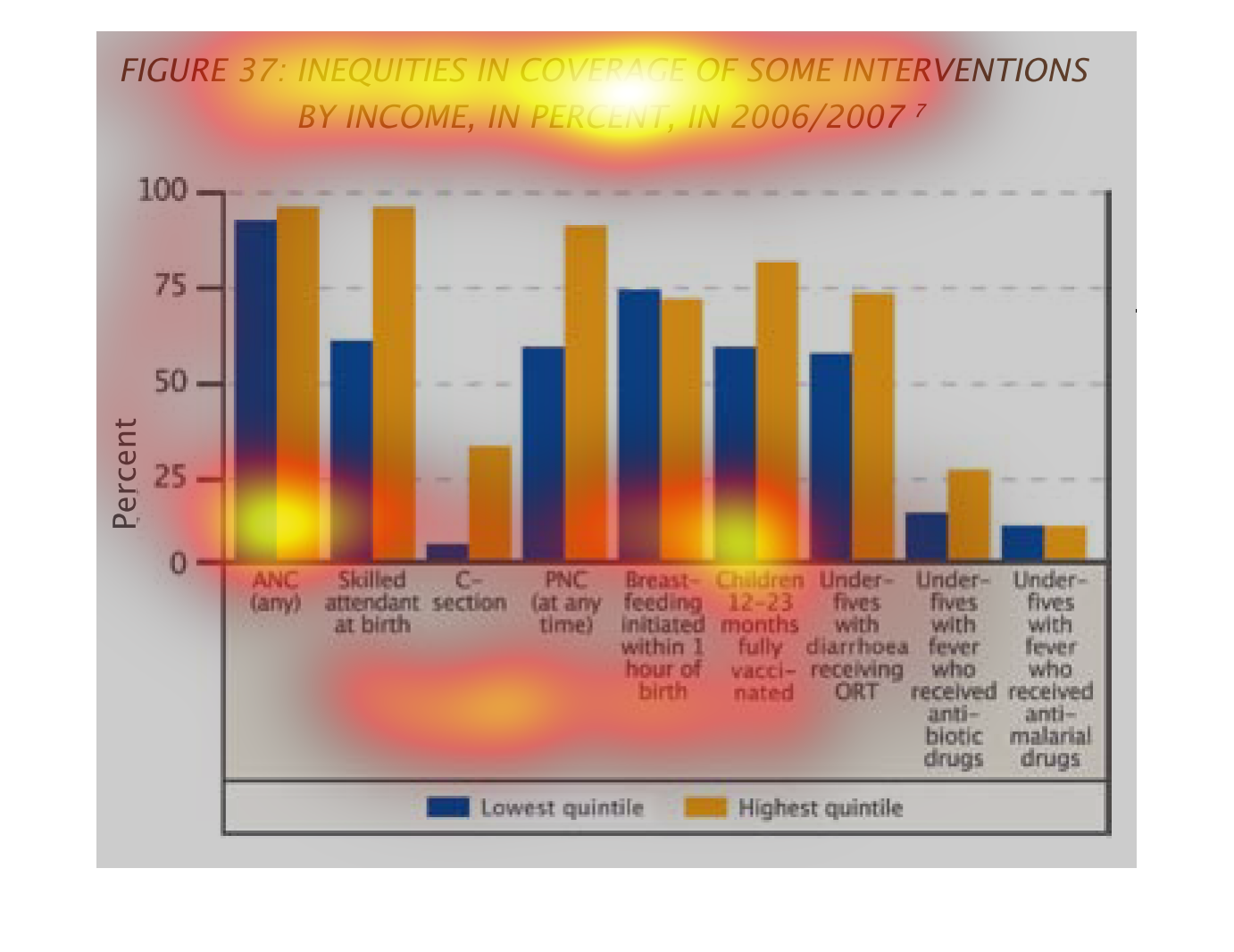
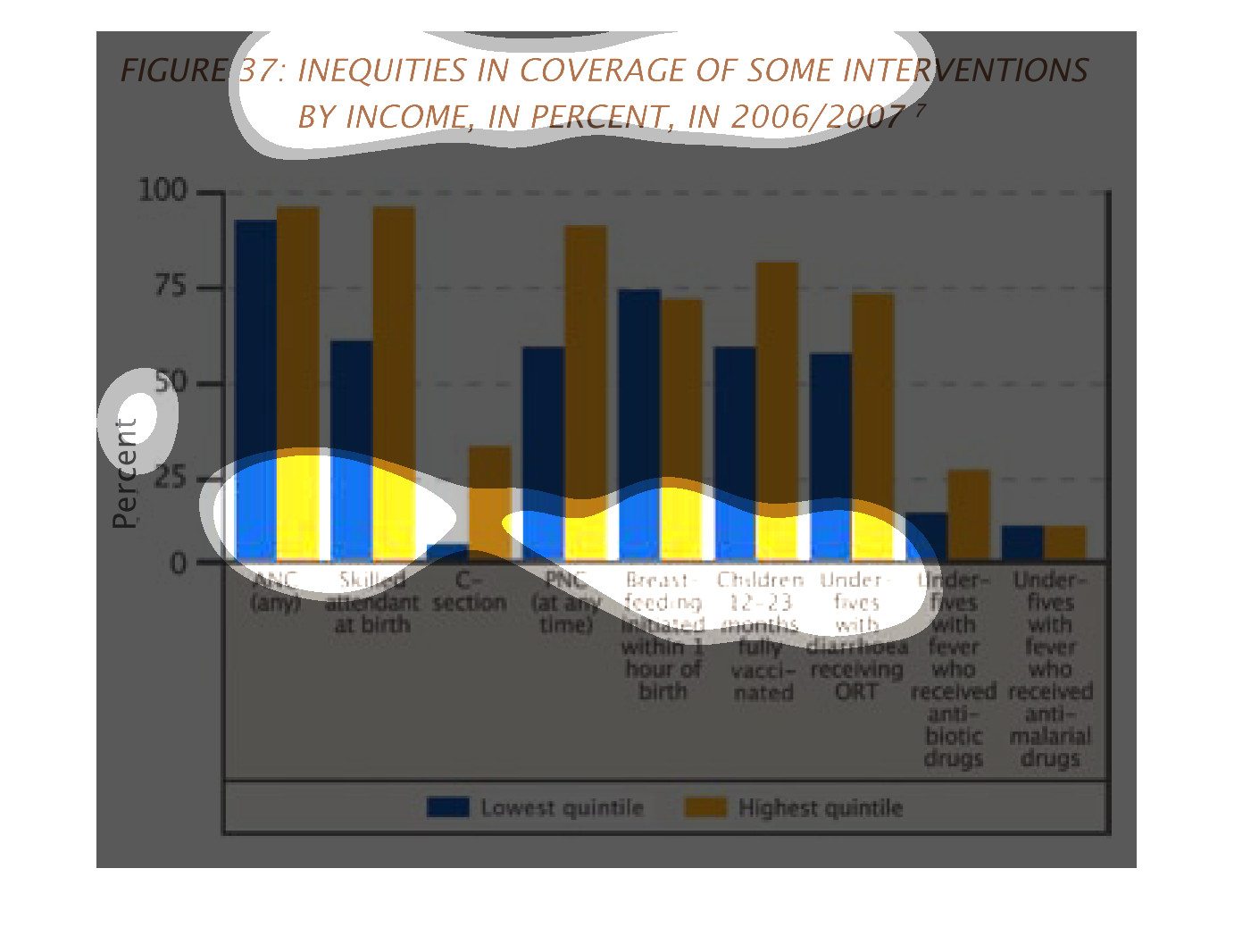
The graph is a bar graph representing a breakdown of interventions during childbirth during
2006 and 2007. The graph is broken down based on income and types of intervention.
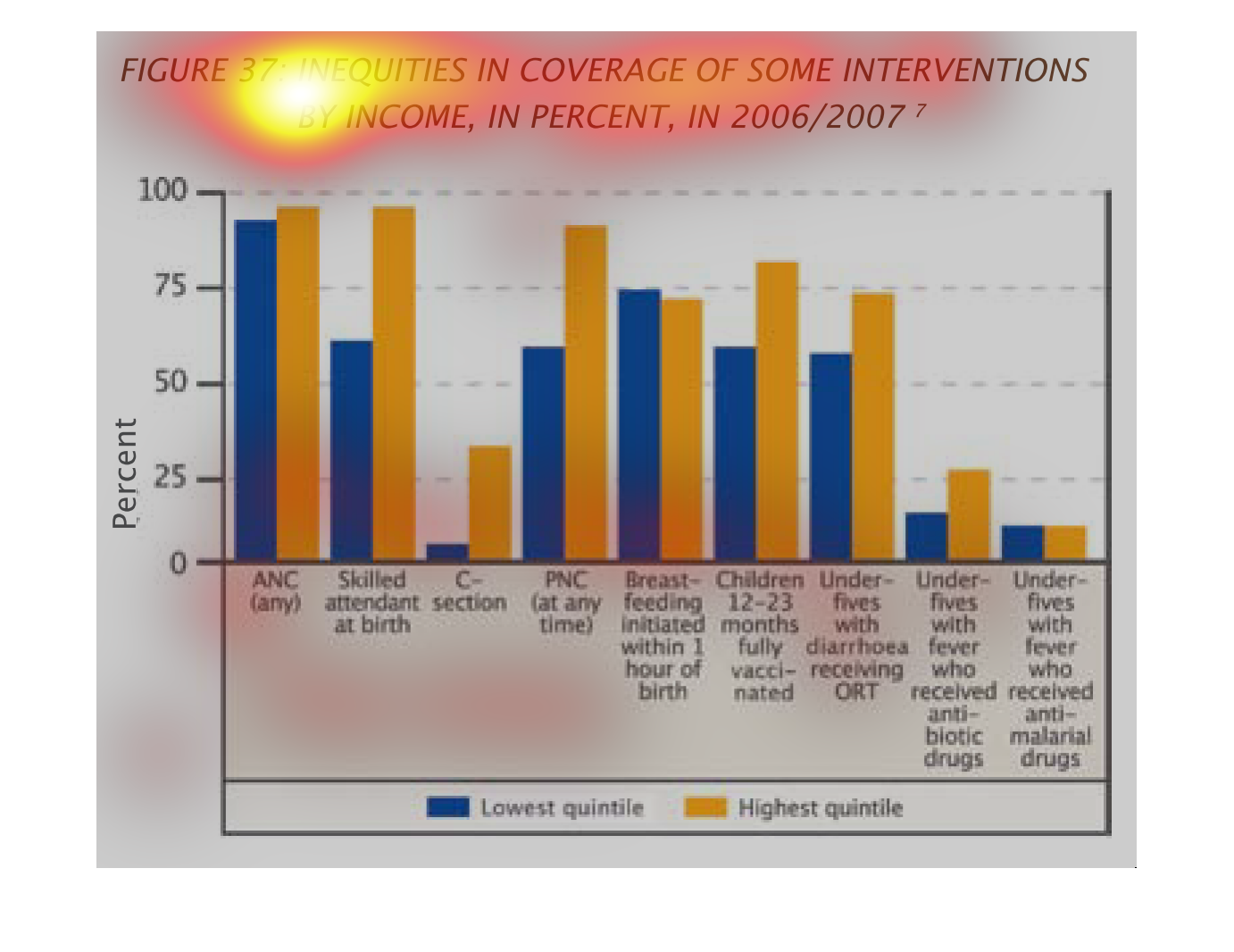
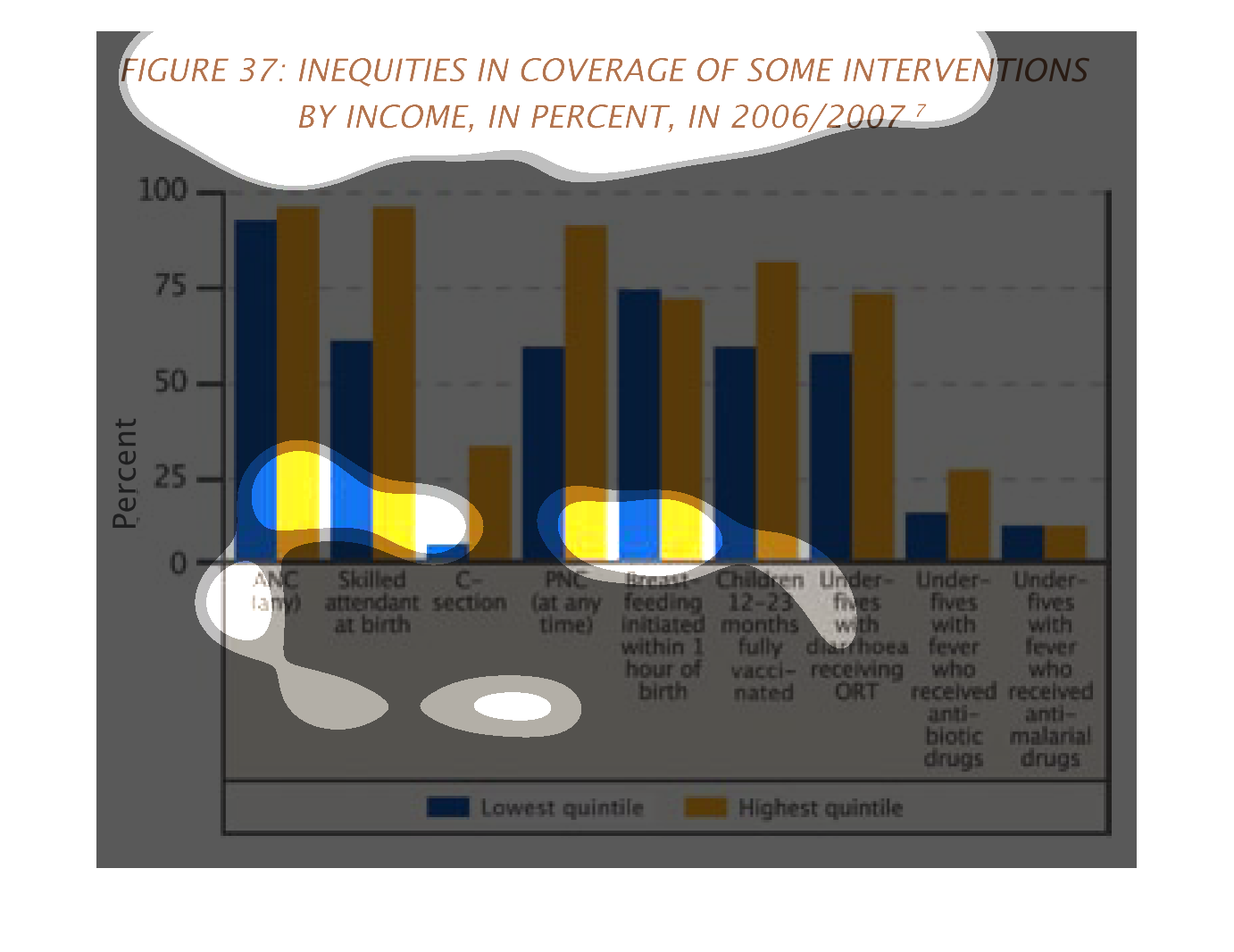
This graph shows inequities in coverage of some medical interventions by income. This graph
is from 2006 to 2007. It shows that the highest quintile receives better medical care in every
category across the board. There is a significant difference in having a skilled attendant
at birth.
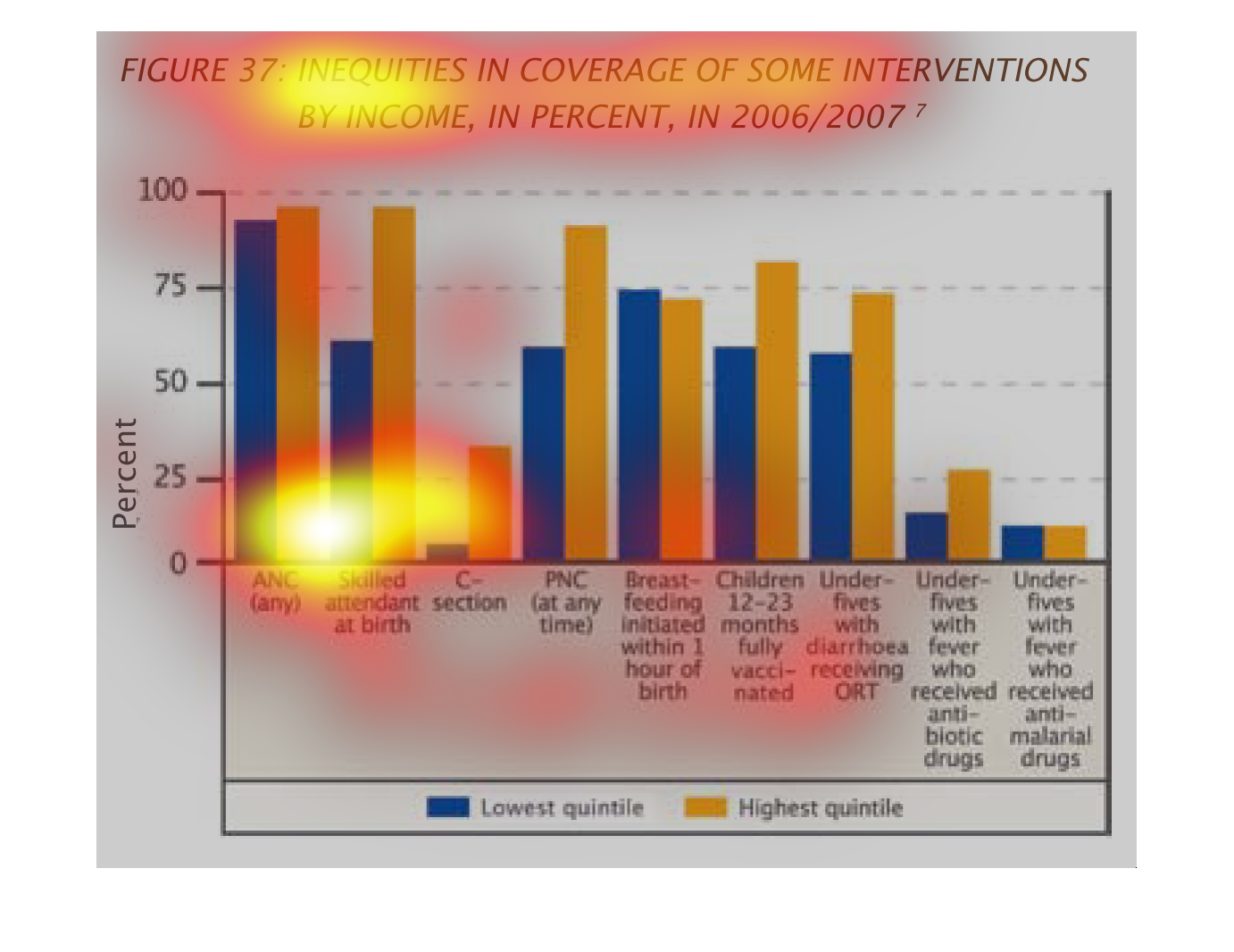
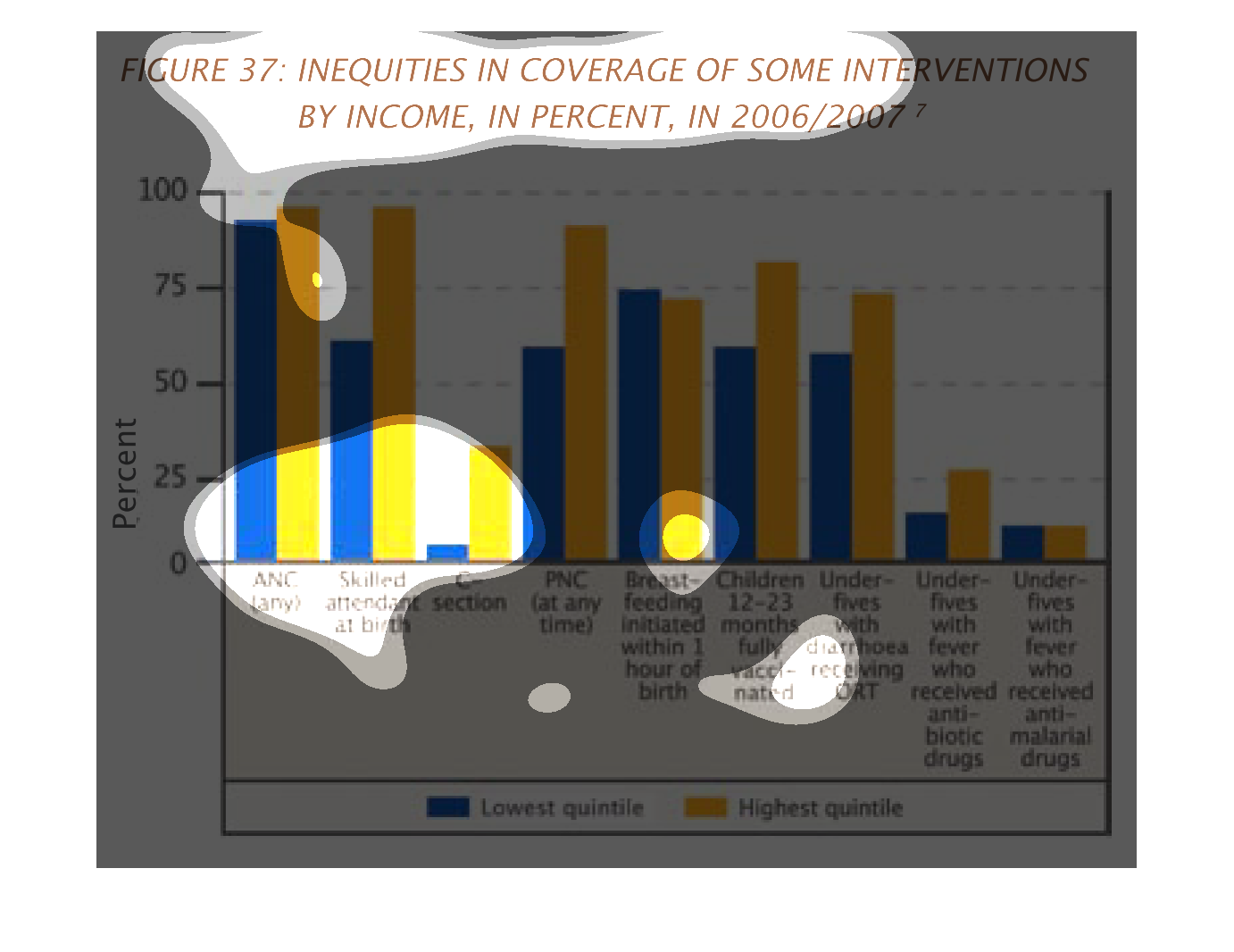
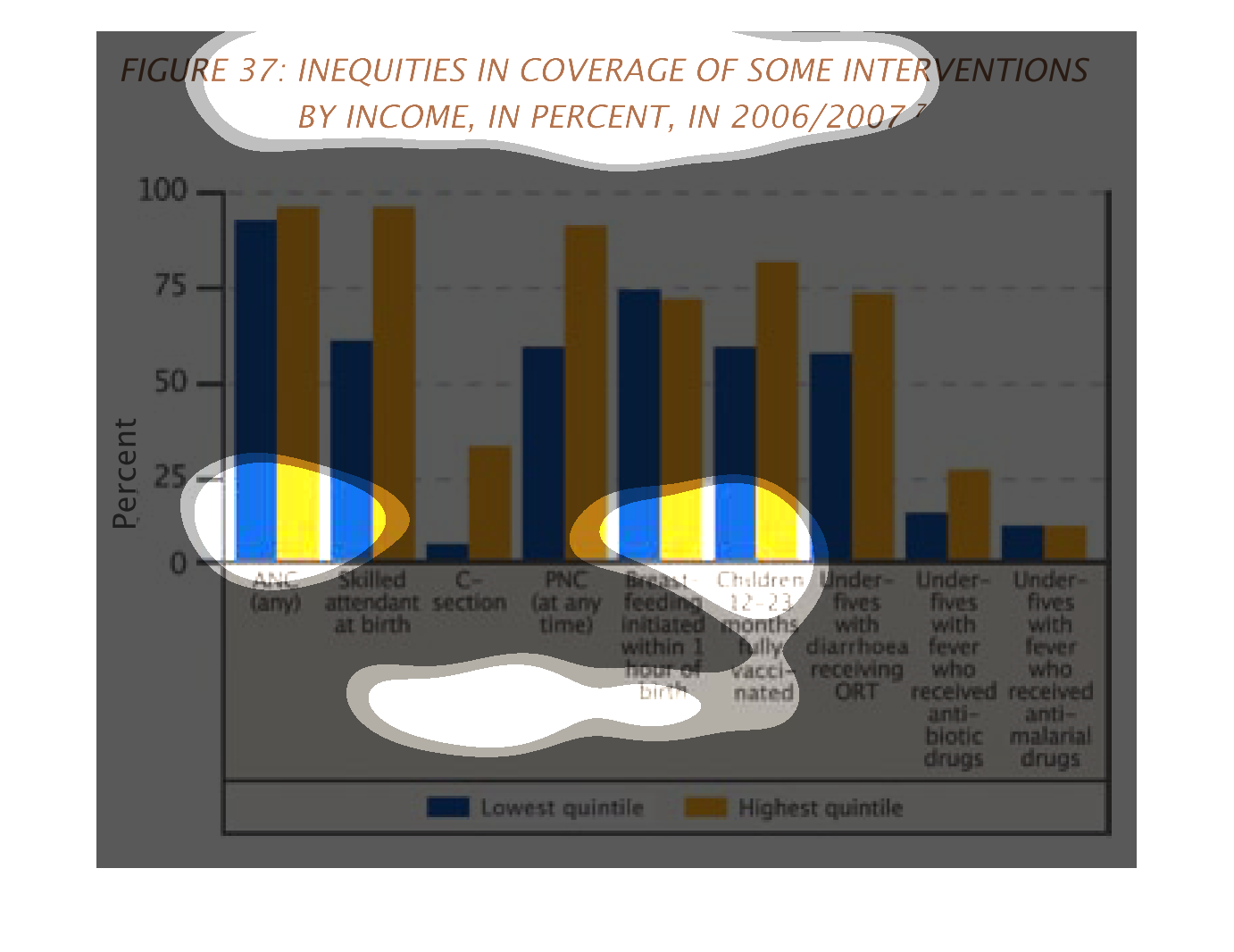
This chart is broken down by income and shows the results at some inequities in childbearing
outcomes. It represents the years 2006 through 2007 and is mostly showing inequities in coverage.
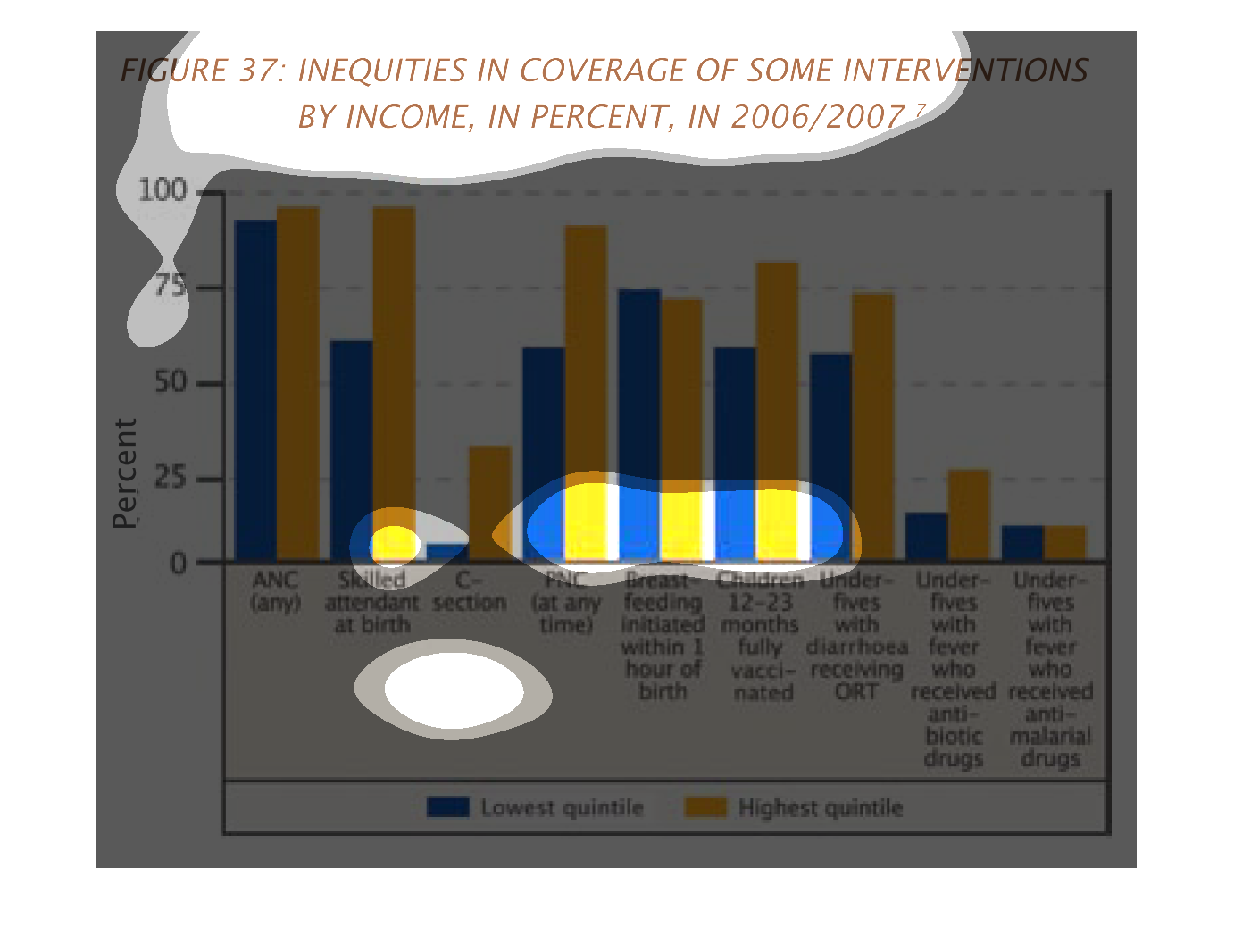
This chart shows inequities in interventions, in two different modes: income and percent,
in 2006/2007.  The interventions discussed are: ANC at birth, skilled birth attendant, PNC,
breastfeeding with in an hour of birth, and vaccinations.
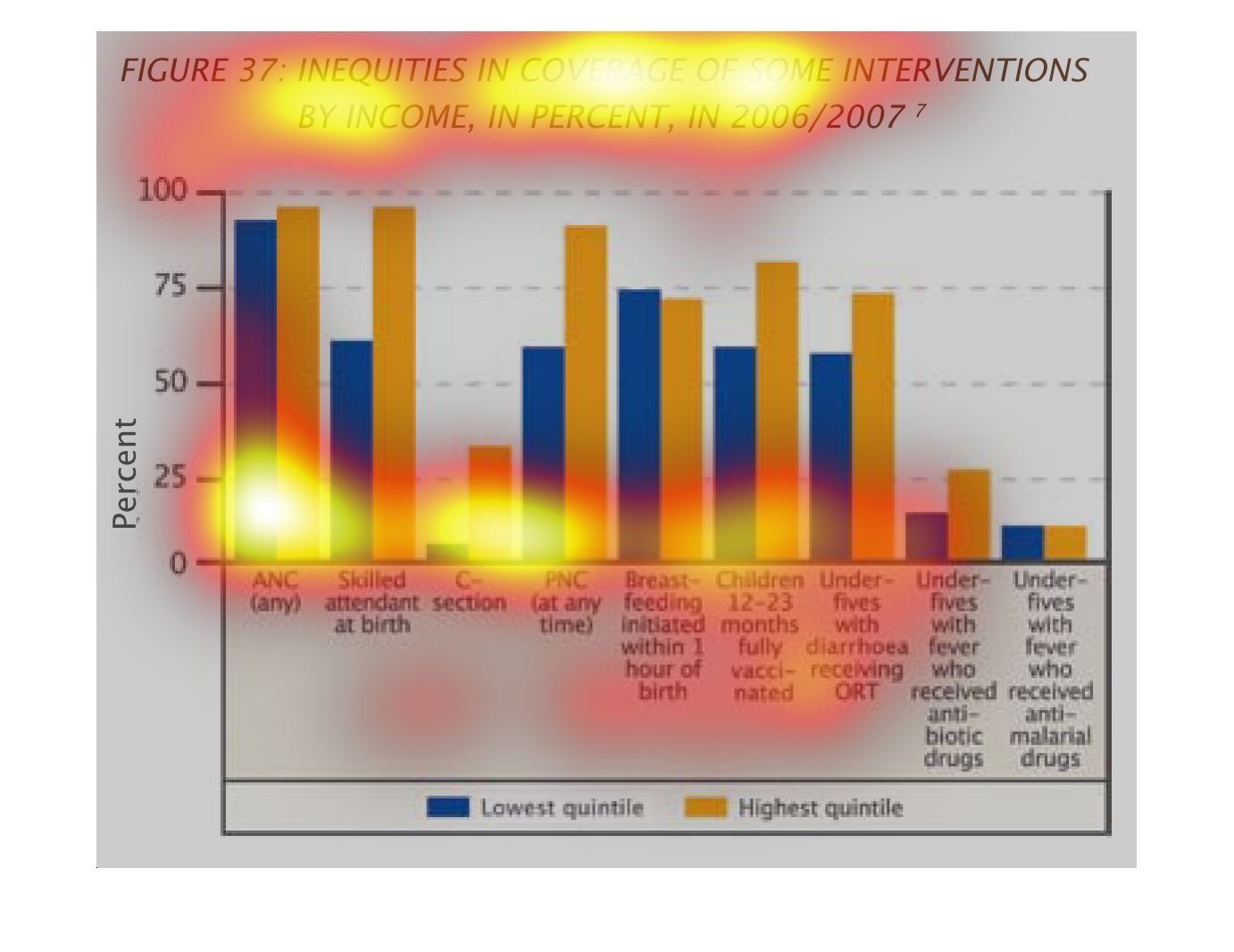
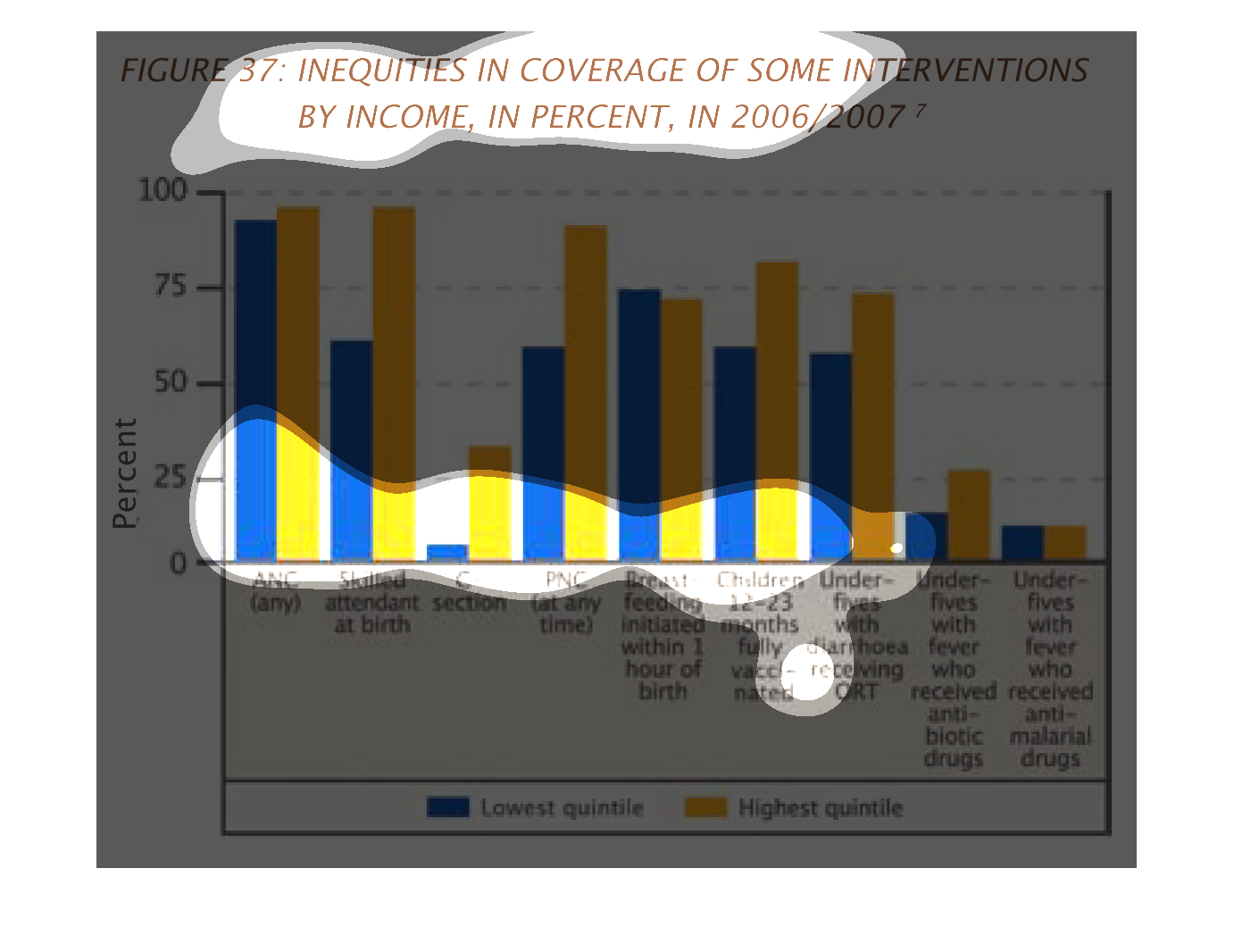
The image depicts a bar graph of inequities in coverage of some interventions by income (in
percentage) in 2006/2007. The graph compares lowest quintile to highest quintile. Categories
include: ANC (any), Skilled attedant at birth, C-section, PNC (at any time), Breast feeding
initiated within 1 hour of birth, children 12-23 months fully vaccinated, Under fives with
diarrhoea receiving ORT, under fives with fever who received antibiotic drugs, and Under fives
with fever who recieved anti-malaria drugs. The data shows that the highest quintile has noticeably
higher percentages of coverage in almost all categories, compared to the lower quintile.
This chart describes inequities in coverage of some interventions by income, in percent, in
2006/2007. Categories on the list include skilled attendant at birth.
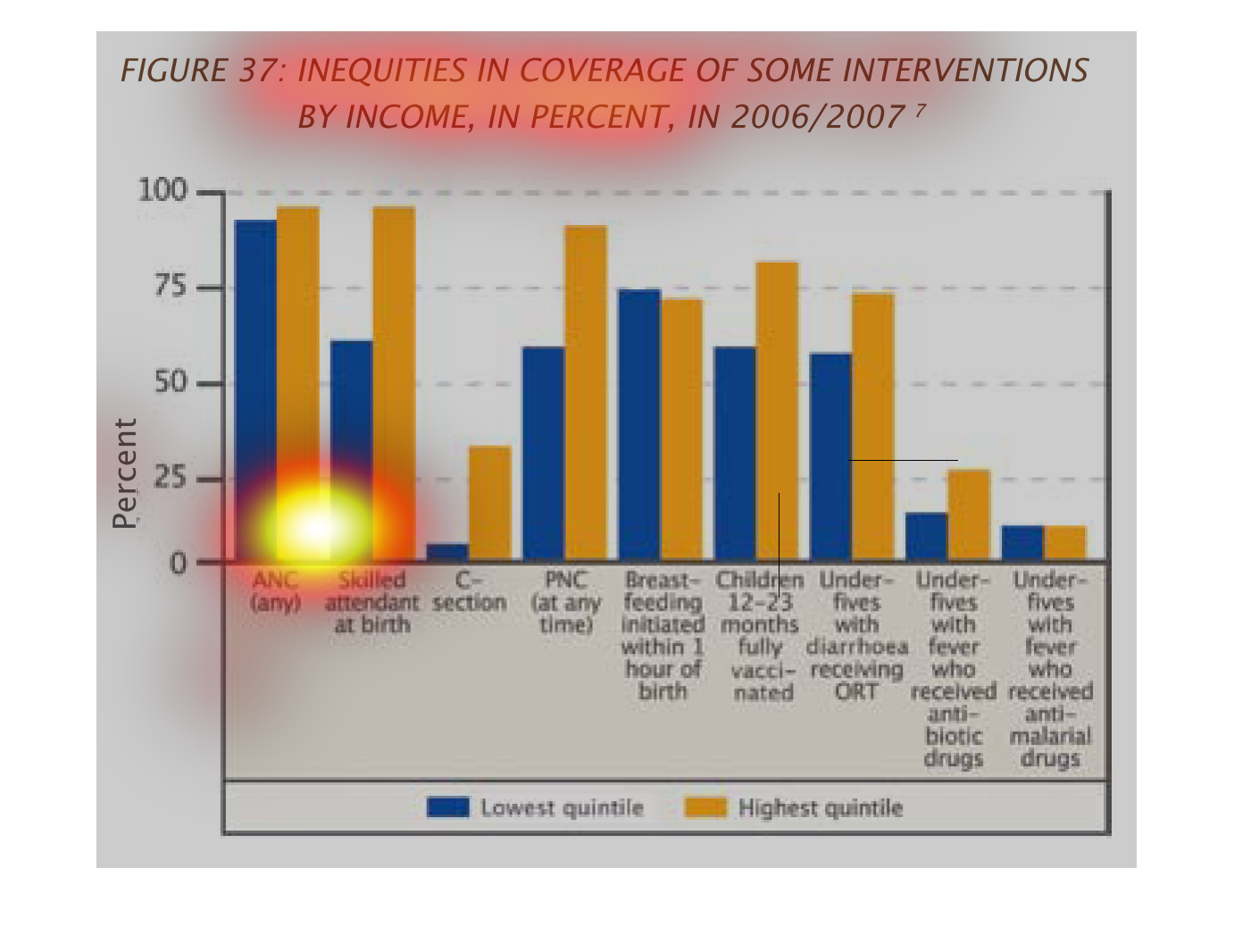
This is about the inequities in coverage of some interventions by income for 2006 and 2007.
C sections was in the lowest quin-tile, while ANC's was the highest quin tile.
The graph shows differences in medical coverage based on income in 2006 and 2007. The data
shows that while the lowest quintile of earners had similar coverage in some respects with
the highest quintile of earners, highest quintile earners got C-sections at a much higher
rate.
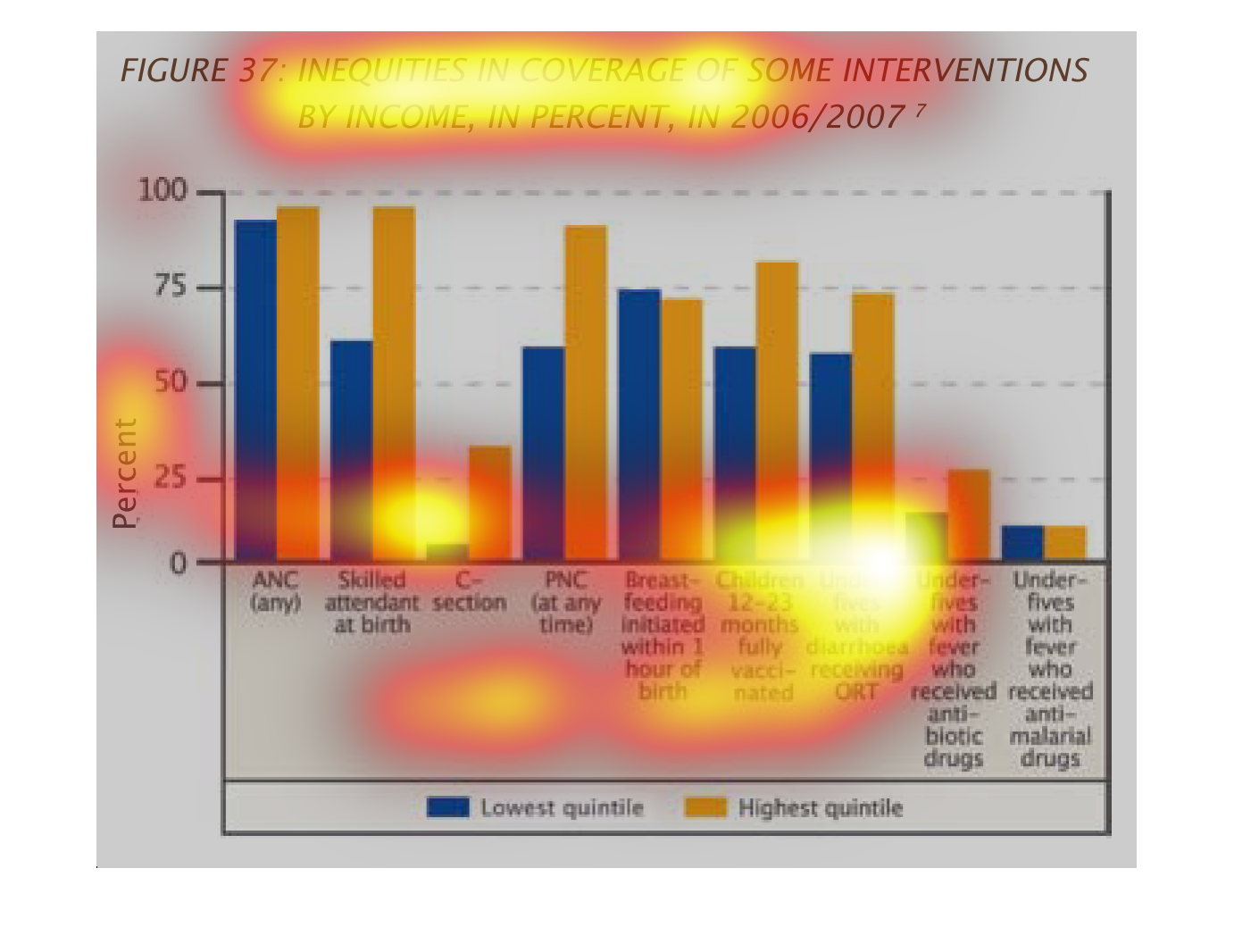
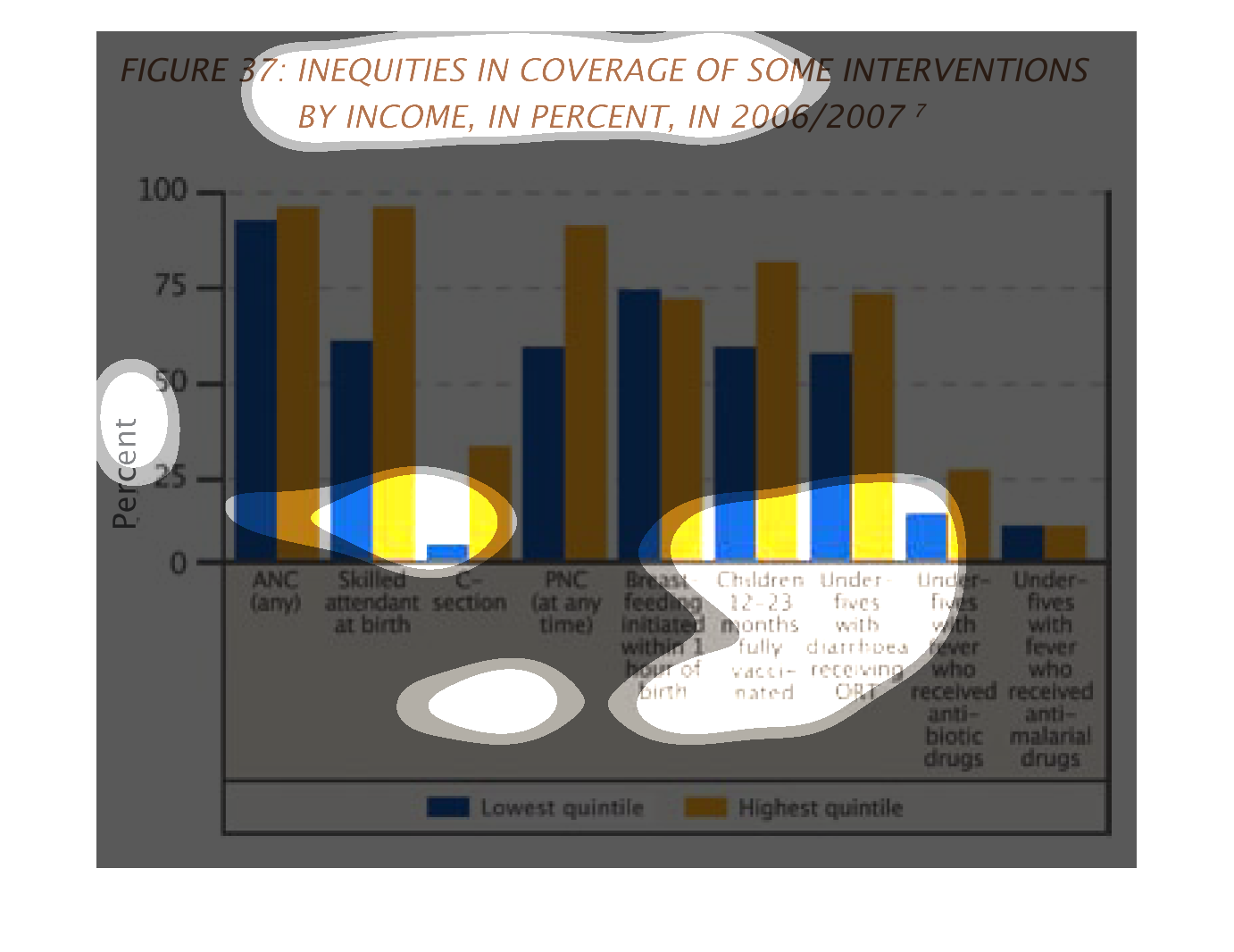
Title is Inequities in Coverage of Some Interventions by Income, in percent, 2006/2007. Intervention
categories include: Any, Skilled Attendant at Birth, PNC, Breastfeeding inititated within
one hour of birth, Children 12-23 months fully vaccinated, Under fives with diarhea receiving
ORT, Under fives with fever receiving antibiotic drugs, Under fives with fever who received
anti-malarial drugs
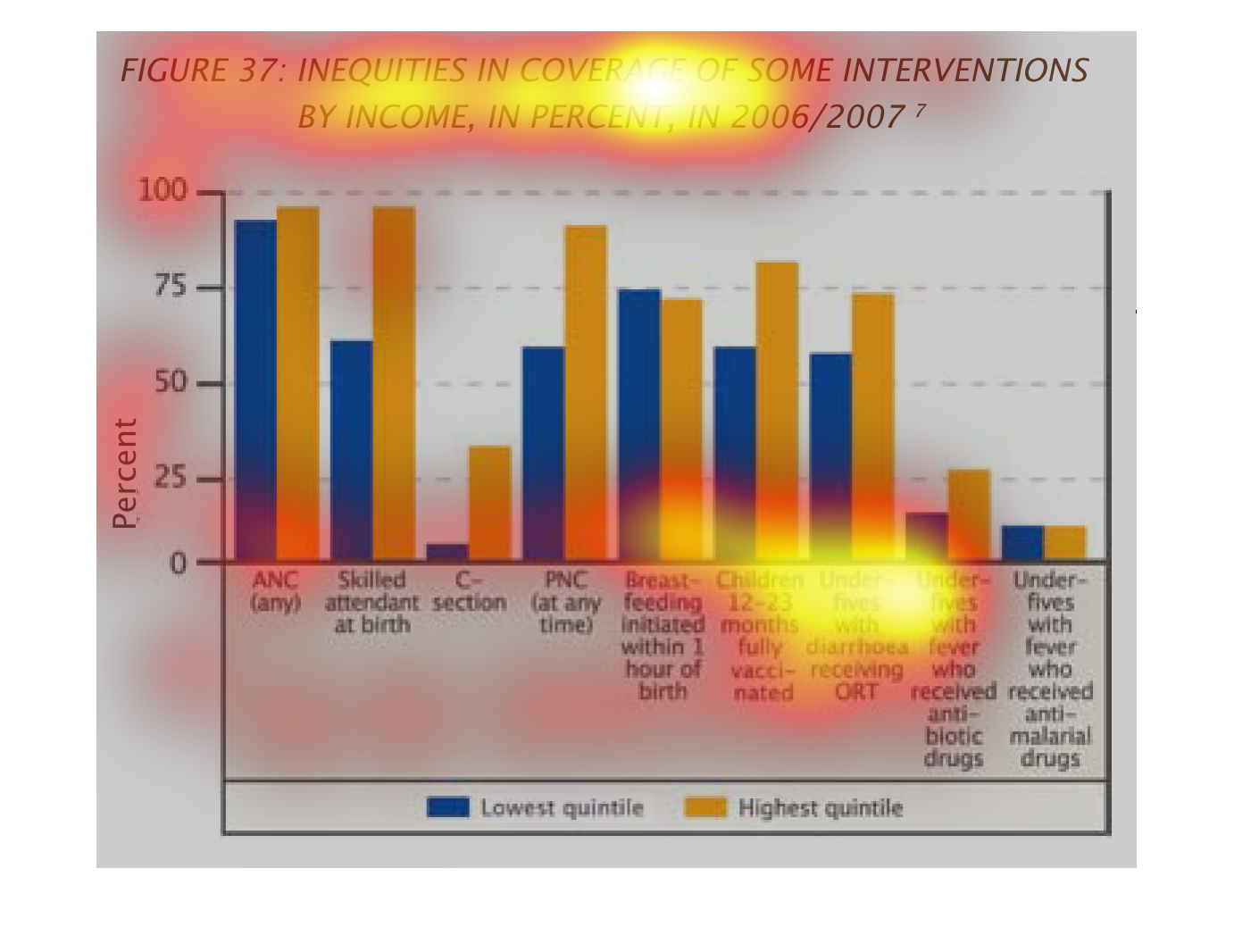
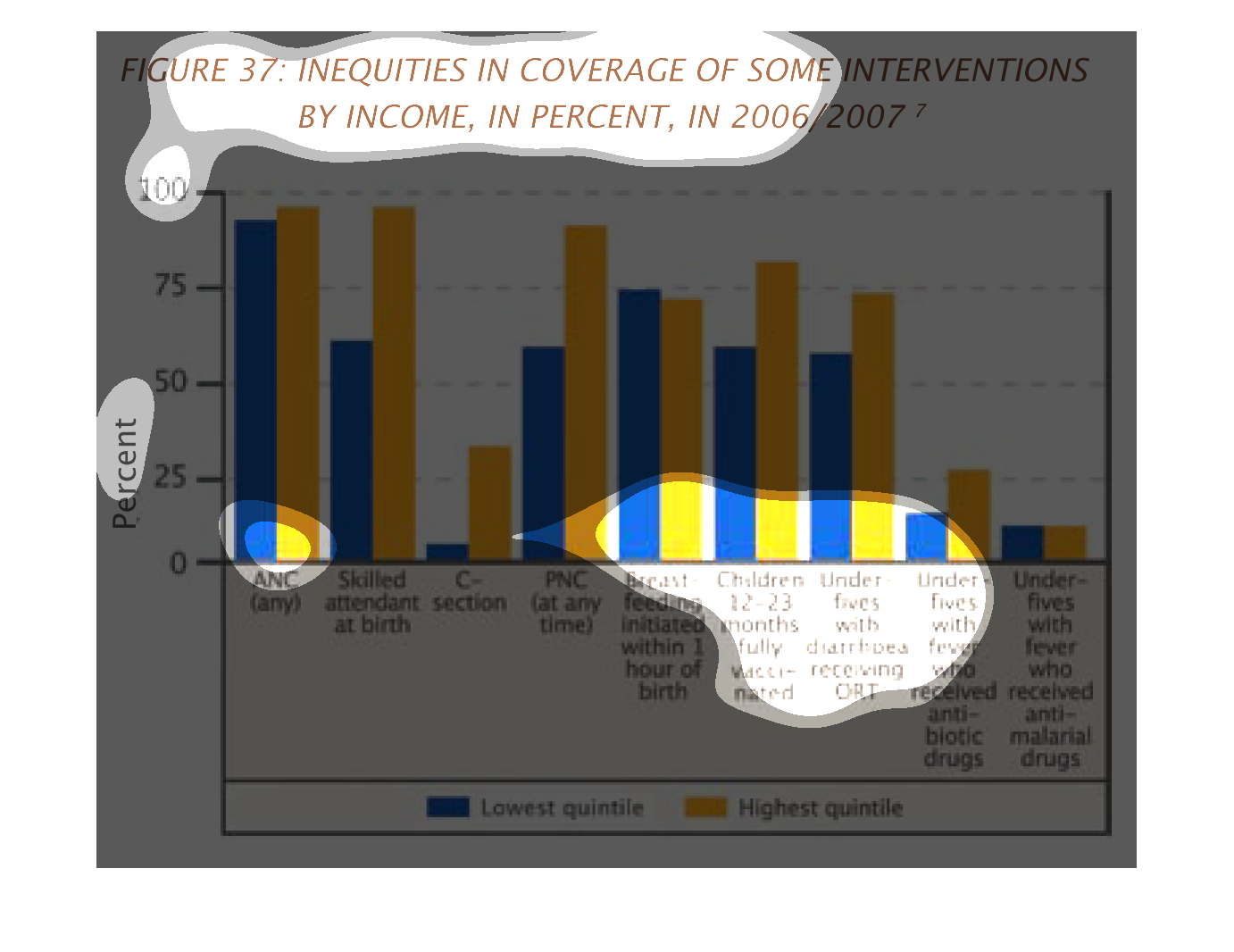
This chart shows the inequities in coverage of some interventions by income in percent for
the years 2006 and 2007.  ANC and skilled attendant at birth both had the highest percentage
of the highest quintile.
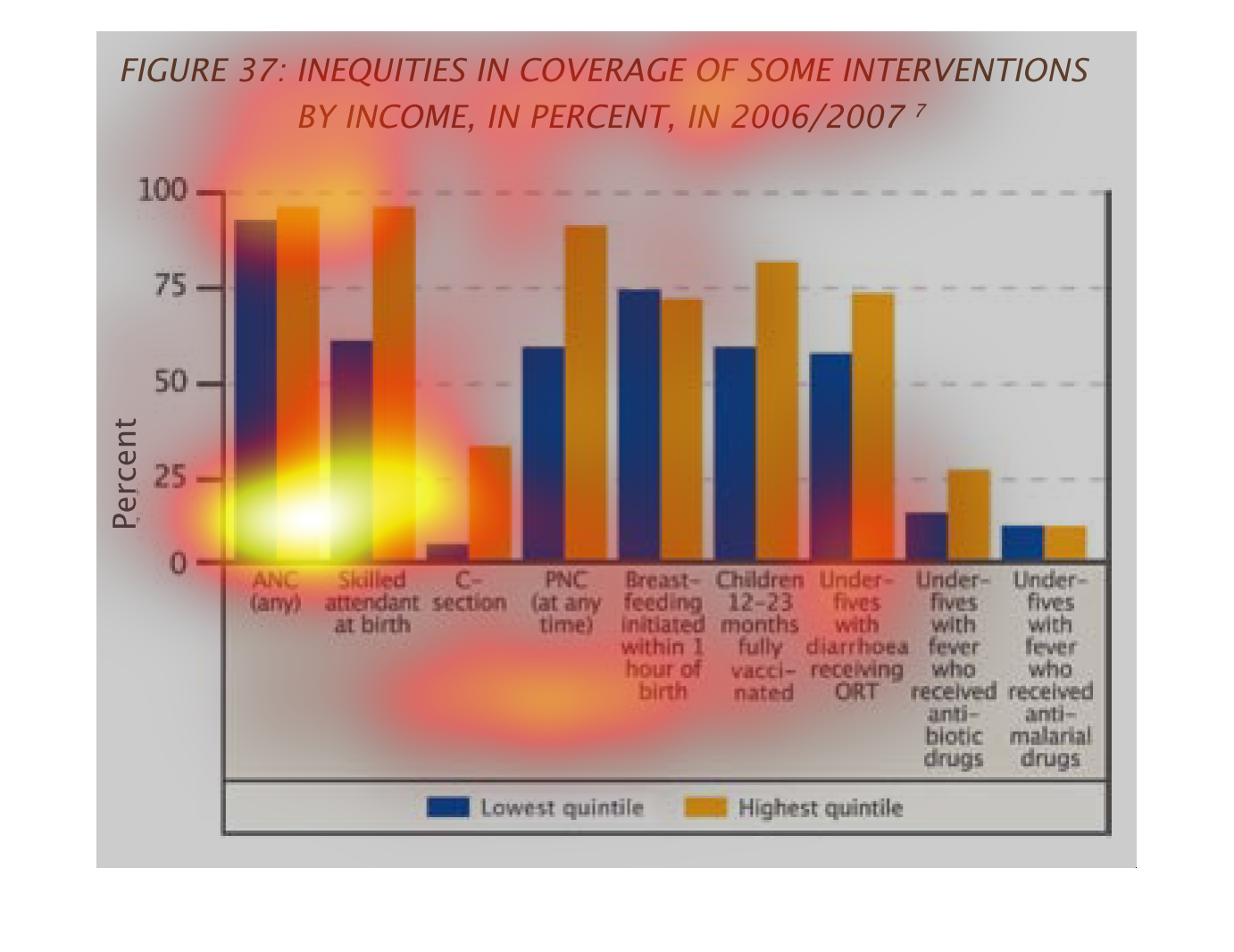
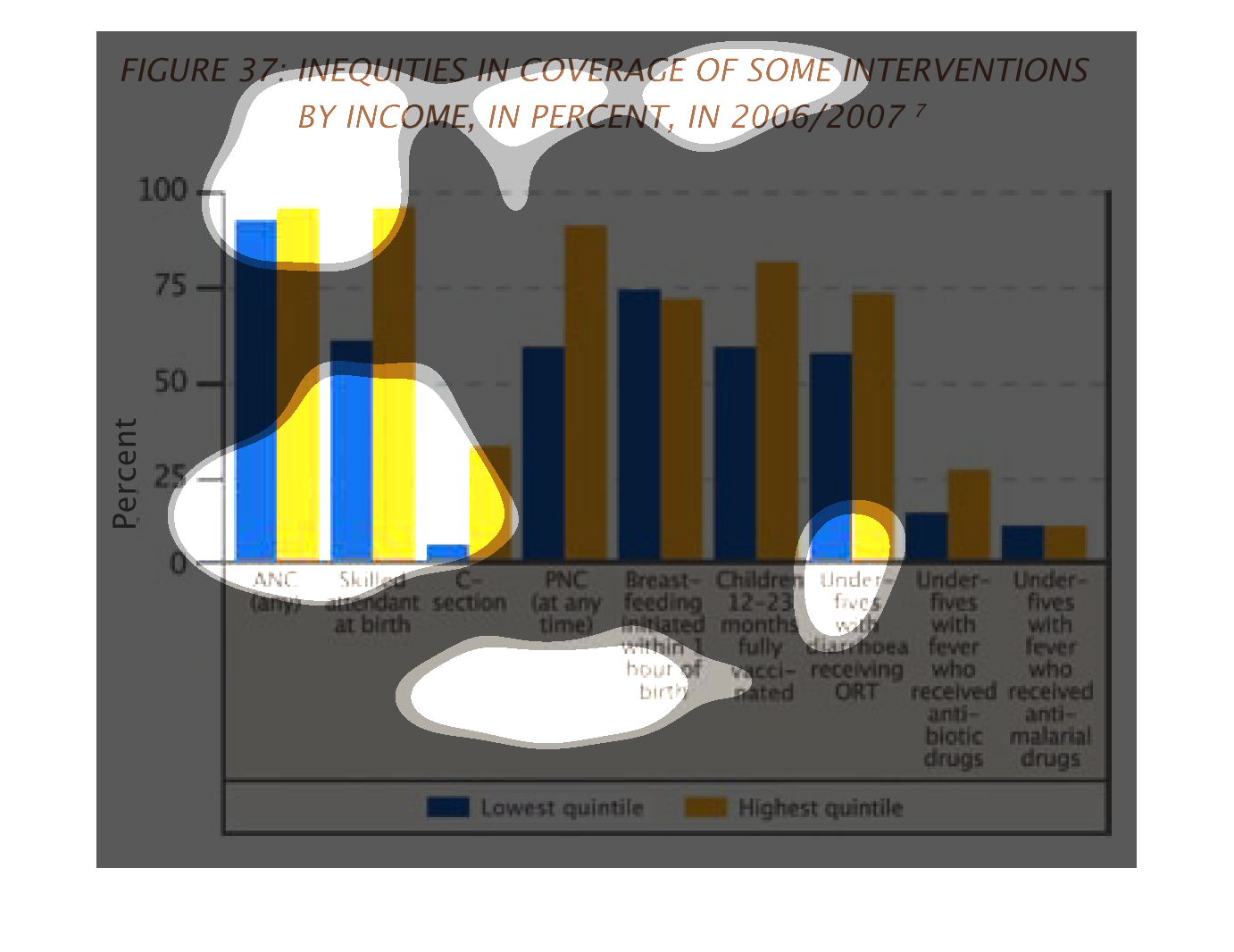
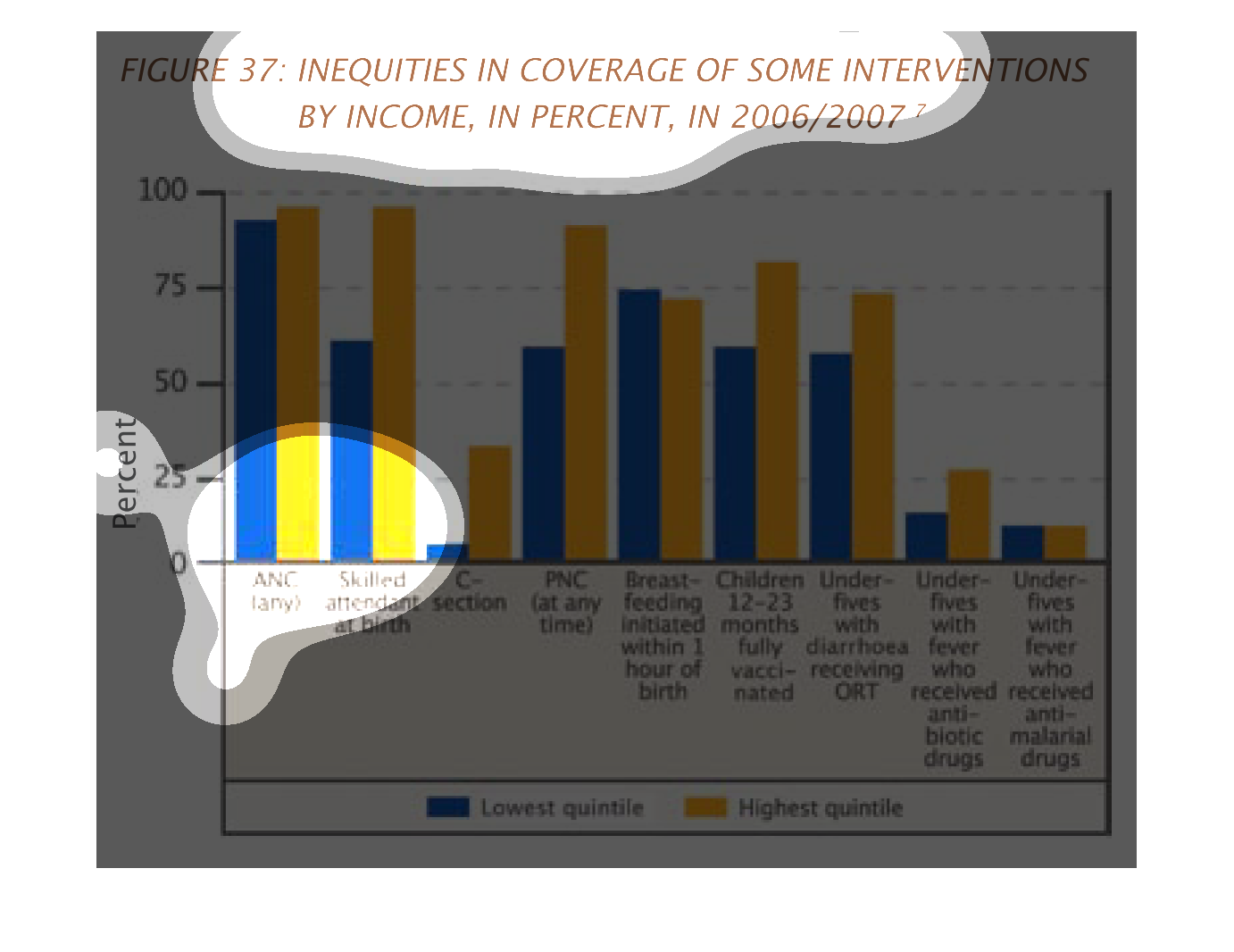
The chart shows the inequities in coverage of some interventions by income, in percent, in
the years 2006 and 2007.  Some of the interventions include c-sections, vaccinations in children
under between the ages of 12 - 23 months, and breastfeeding within one hour of birth.  The
study is divided into the lowest and highest quintile.