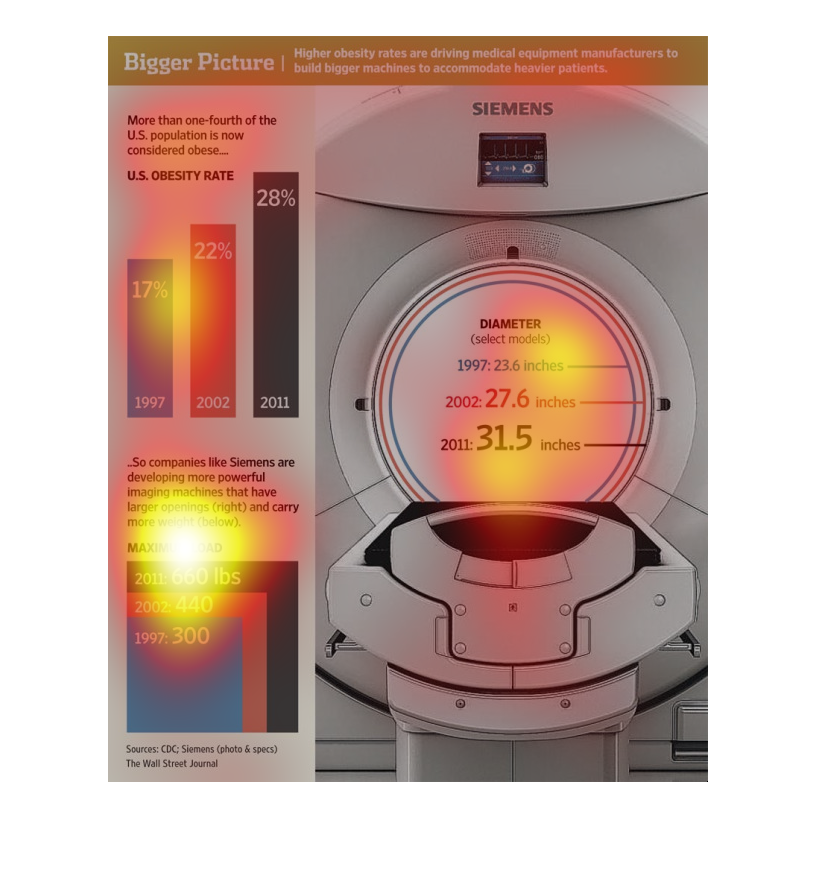
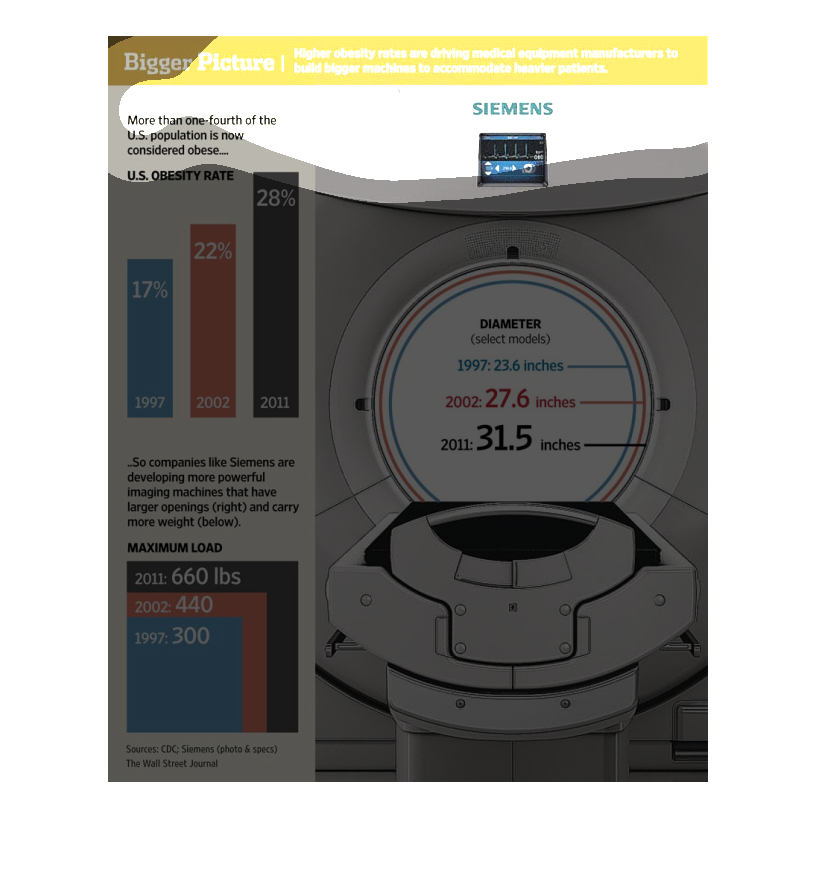
The following chart shows that due to the obesity epidemic within the United States Health
Care Providers, Manufactures are having to make and provide bigger pieces of equipment to
fit the obese patients.
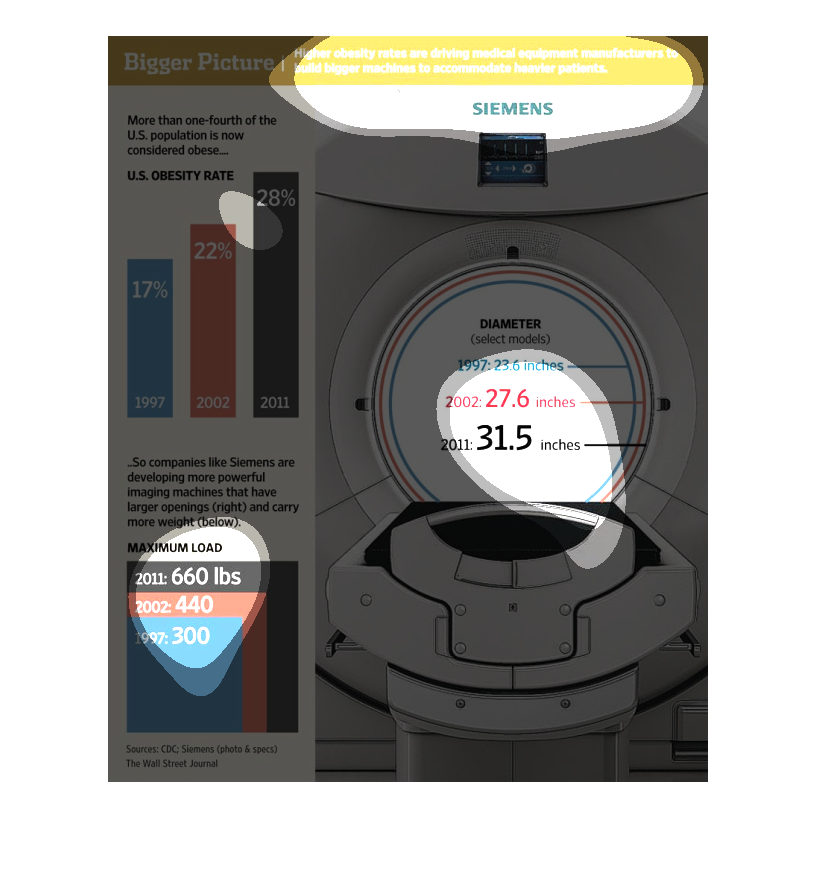
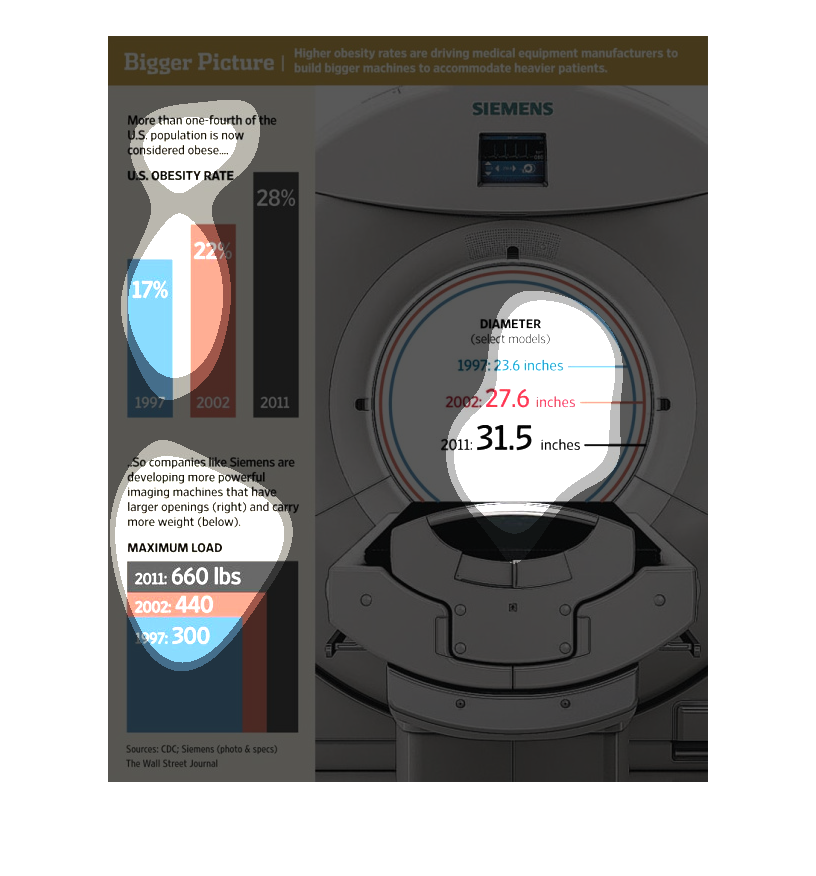
This chart describes bigger picture. Specifically, higher obesity rates are driving medical
equipment manufacturers build bigger machines to accommodate heavier patients.
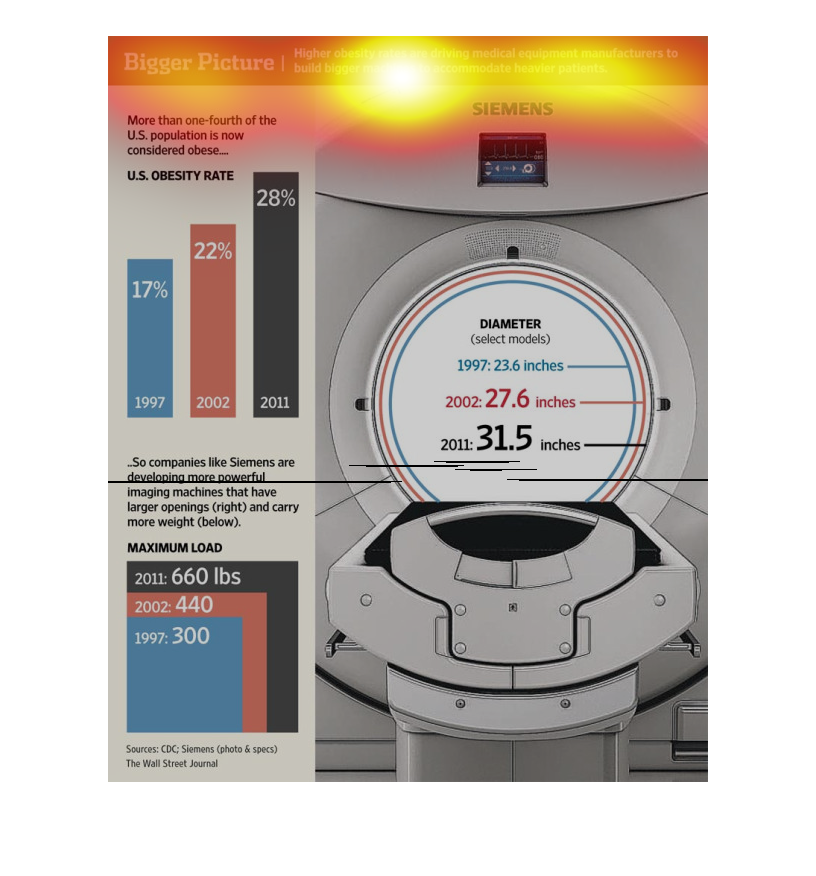
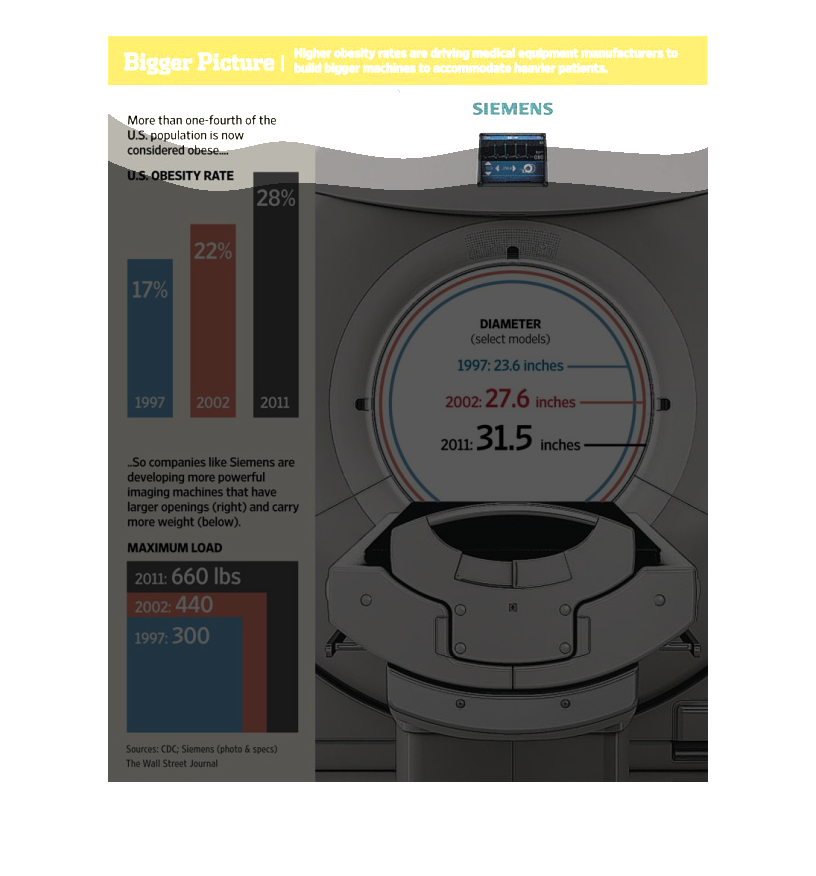
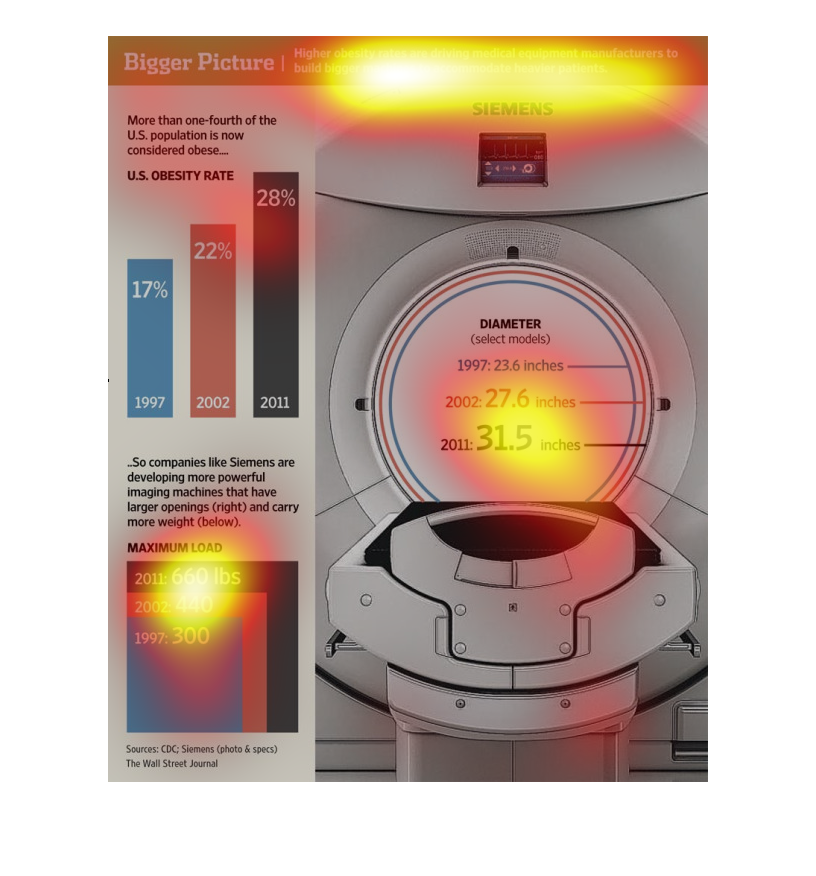
This chart describes the bigger picture. Specifically, higher obesity rates are driving medical
equipment manufactures to build bigger machines to accommodate heavier patients.
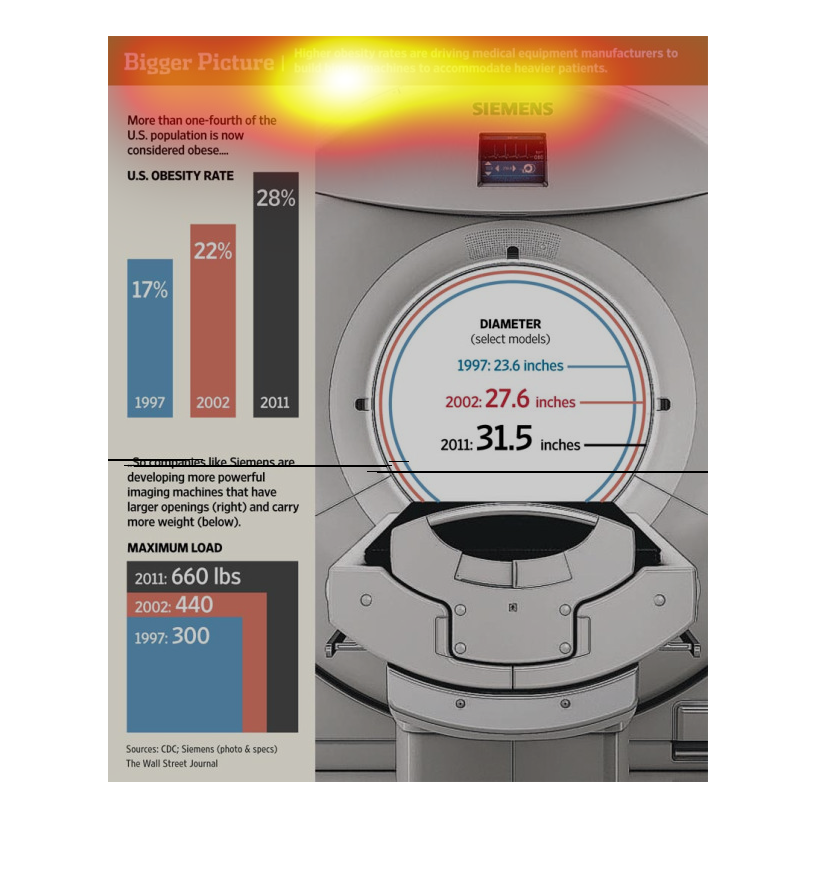
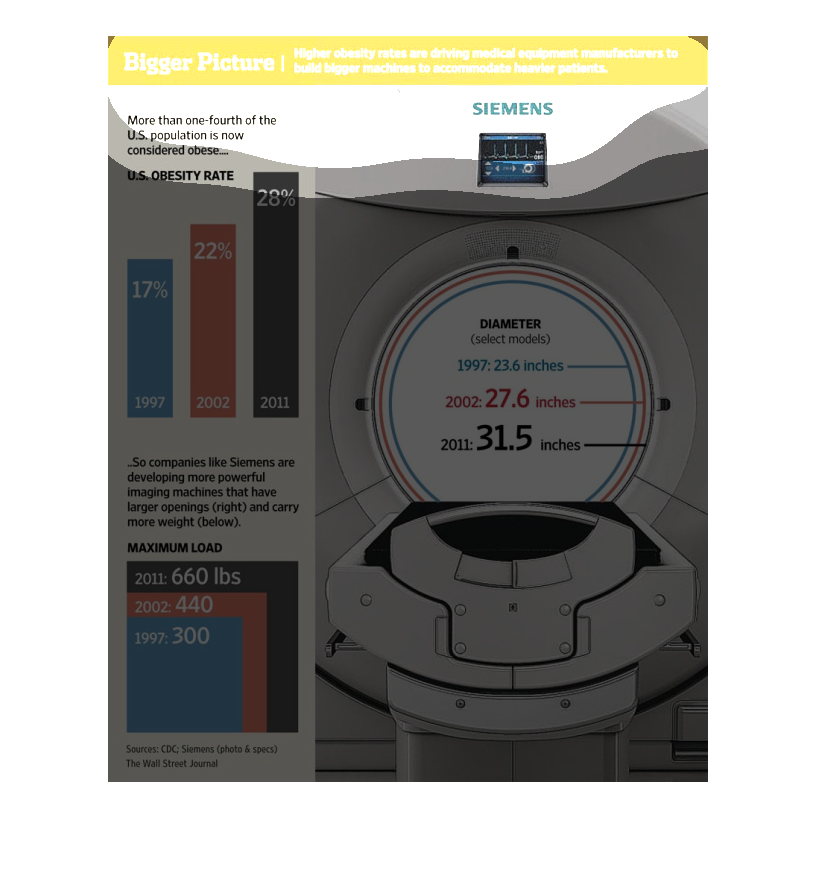
An infographic of obesity rates and medical equipment manufacturer specifications. Its shows
the relationship between obesity rates and the change in maximum weight and size of medical
machines
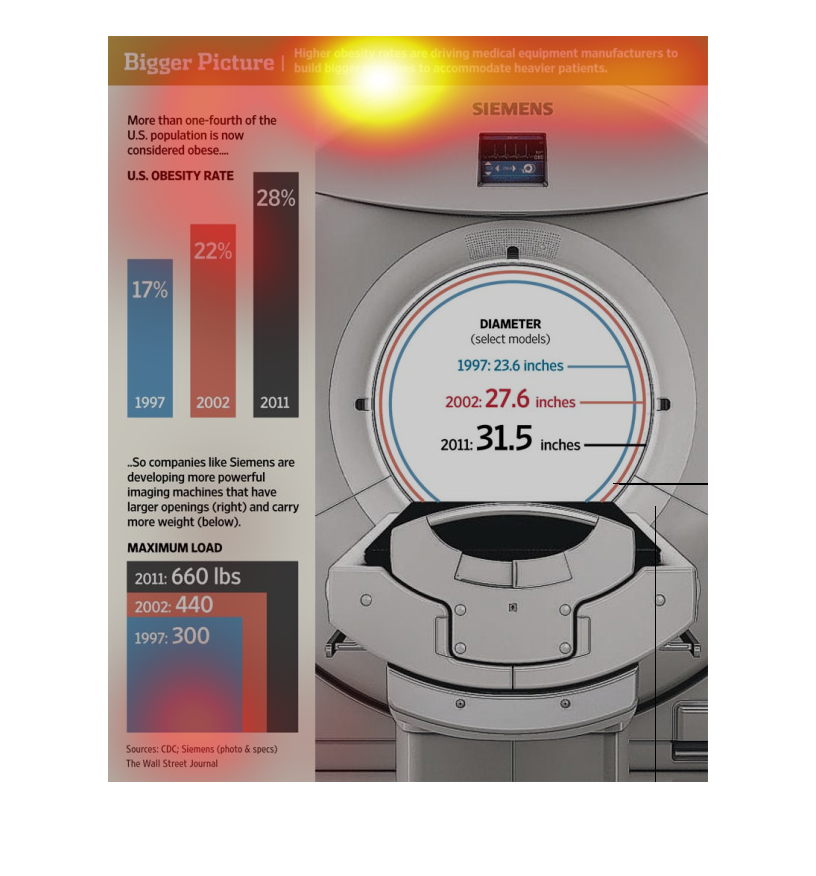
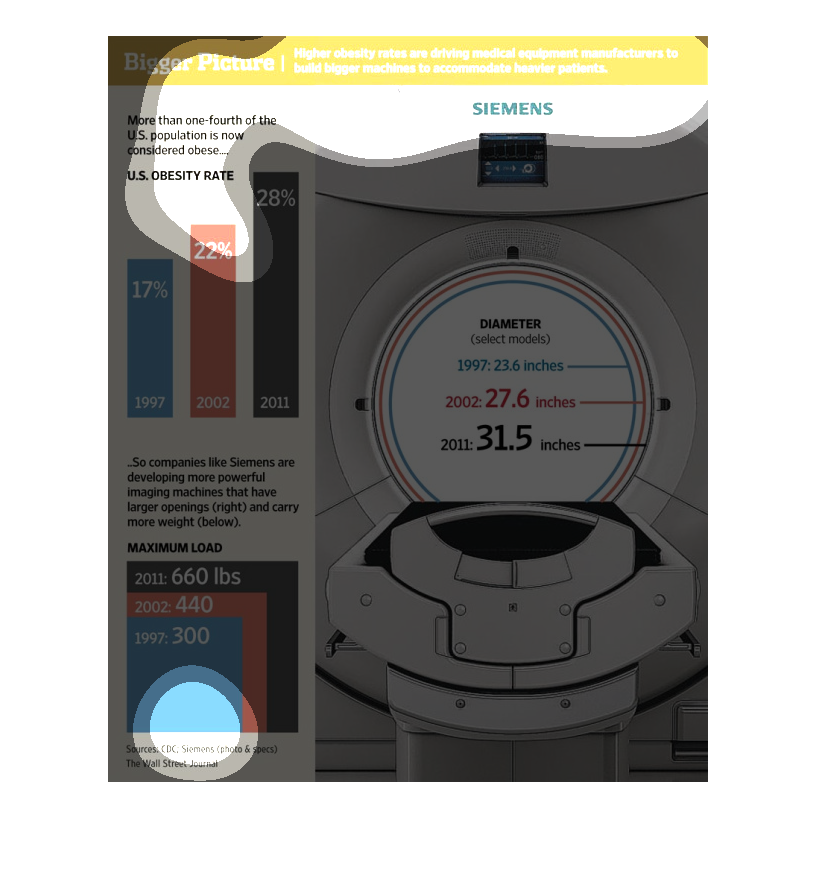
This is a series of graphs and diagrams depicting graphically that higher obesity rates are
driving medical equipment manufacturers to build bigger machines to accommodate heavier patients.
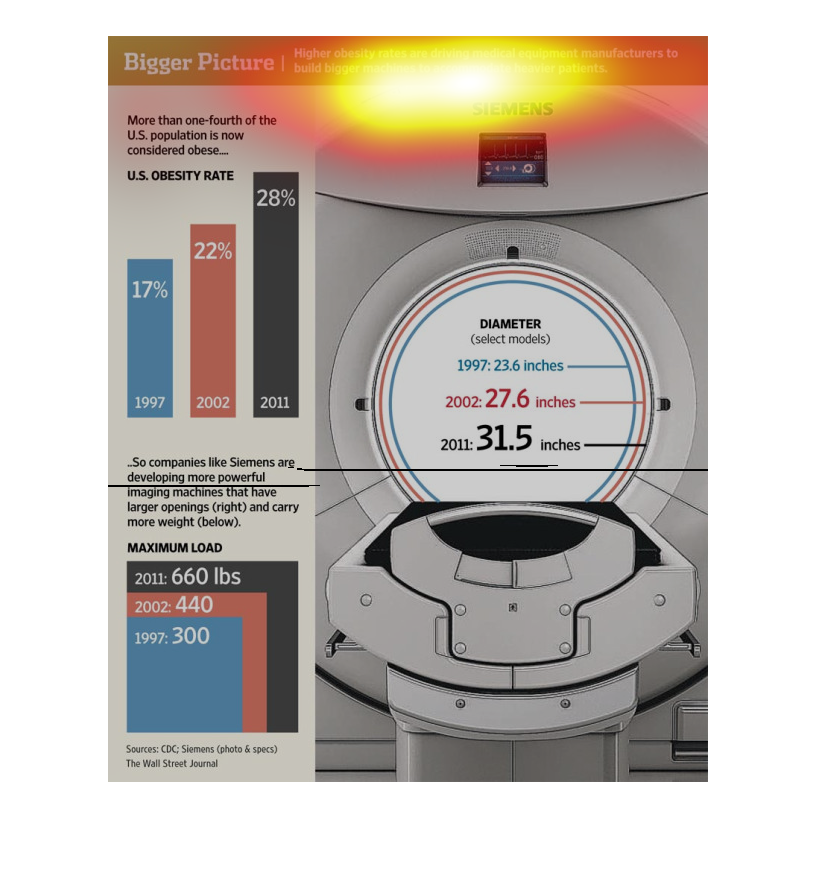
Siemens is looking towards the future in a big way, at least that is what it seems like from
this Wall Street Journal piece. They want to continue being the top dogs in projection. In
order to do that they need to continue to innovate.
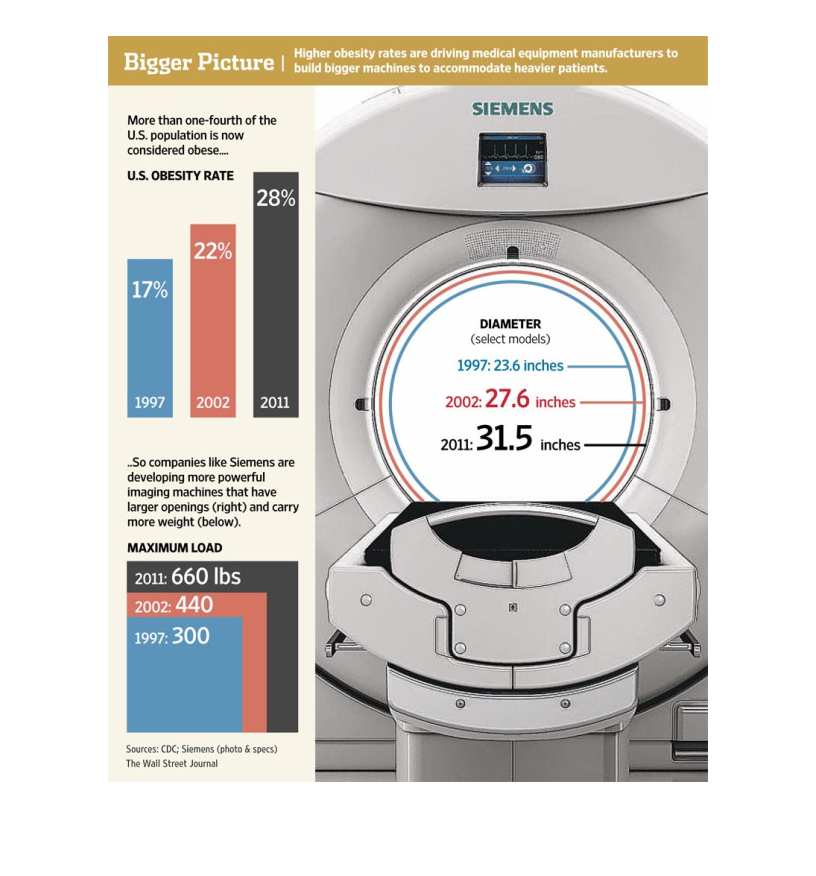
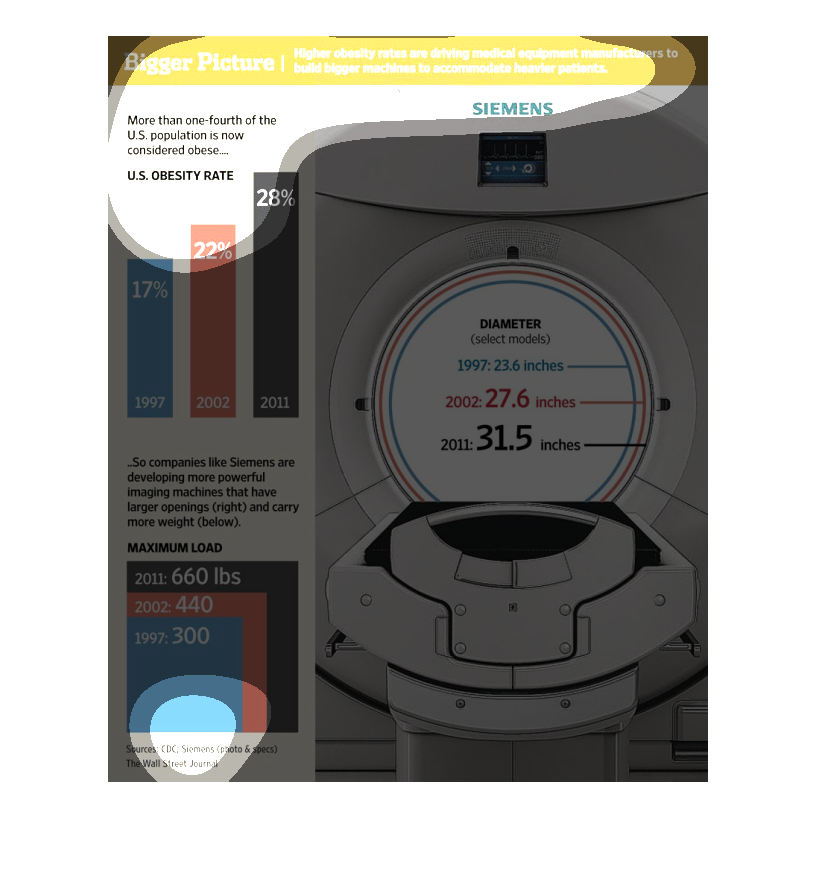
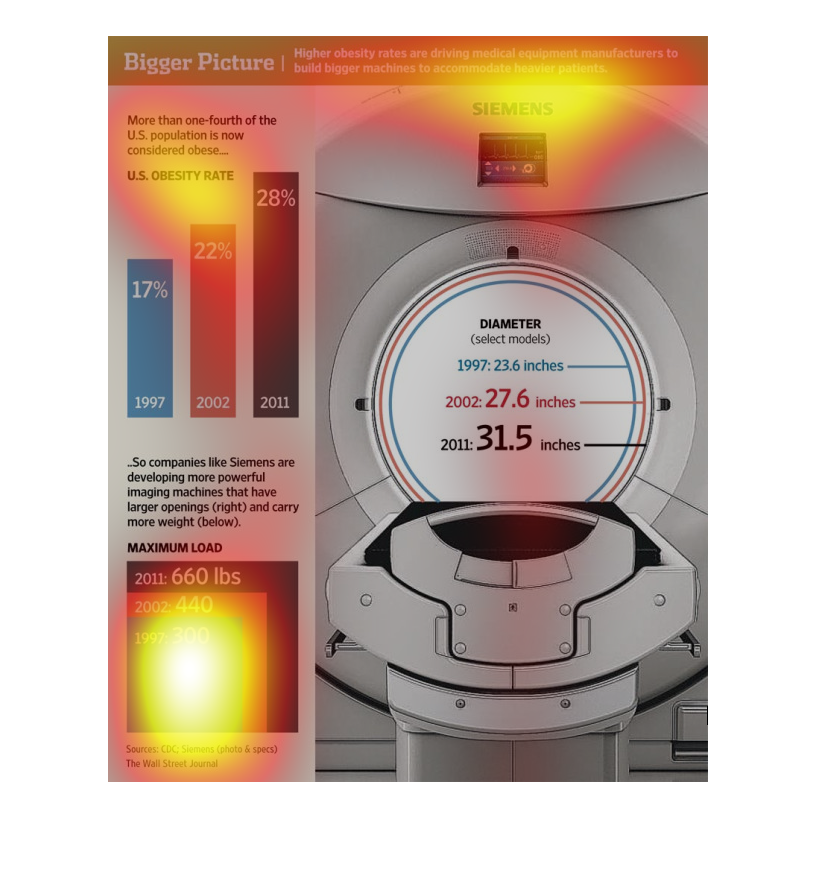
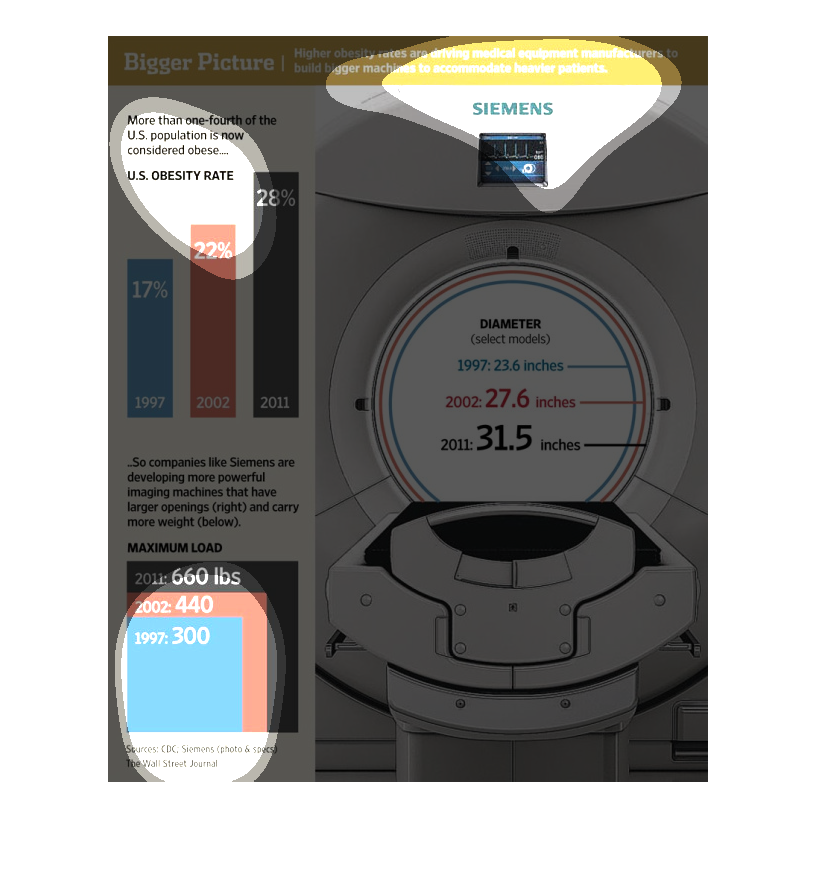
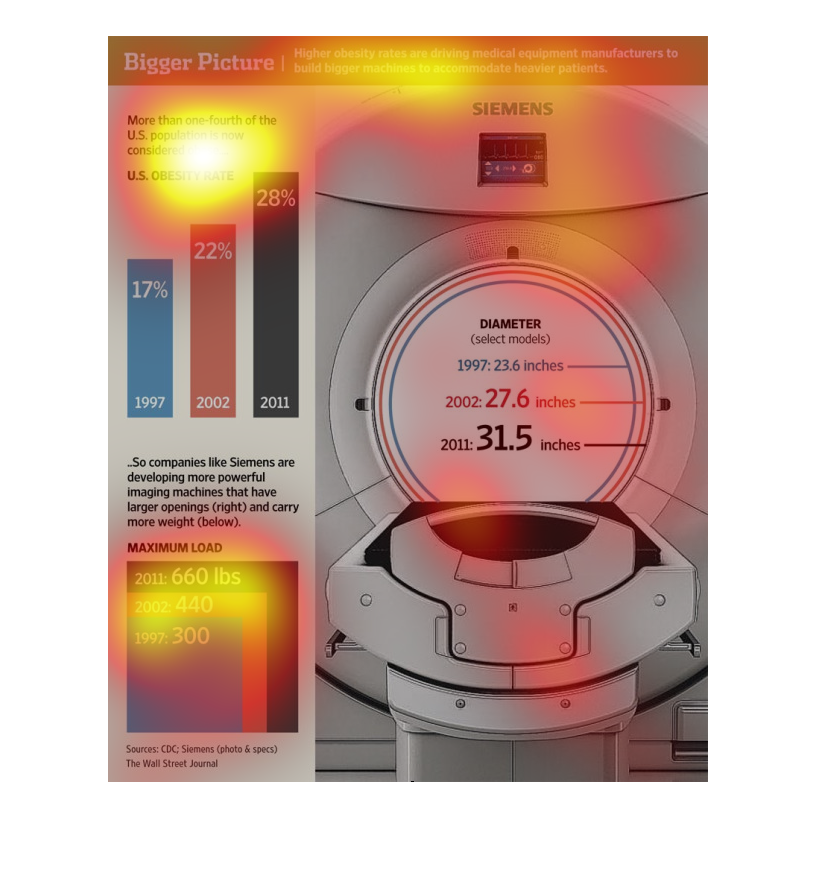
The image depicts the obesity epidemic in the US, indicating that more than one-fourth of
the US population is considered obese. Obesity rates continue to climb from 1997 to 2011
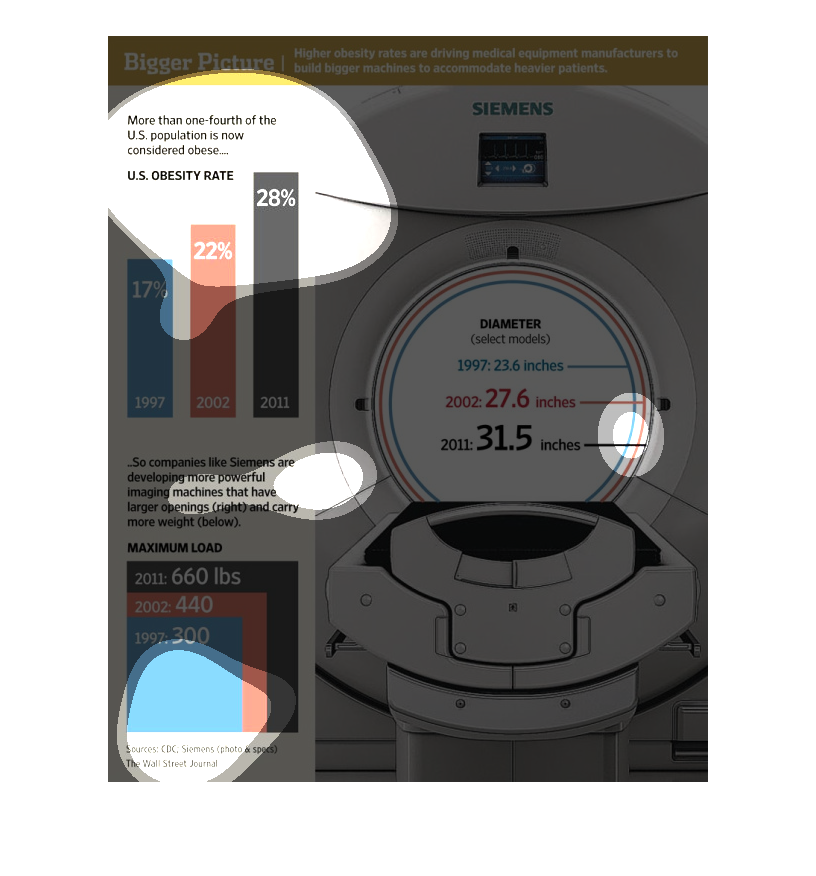
Higher obesity rates are forcing manufacturers of medical equipment to make larger diagnostic
machines. An MRI machine made in 2011 is 31 inches across, compared to 23.6 inches across
in 1997, and can handle twice the weight.
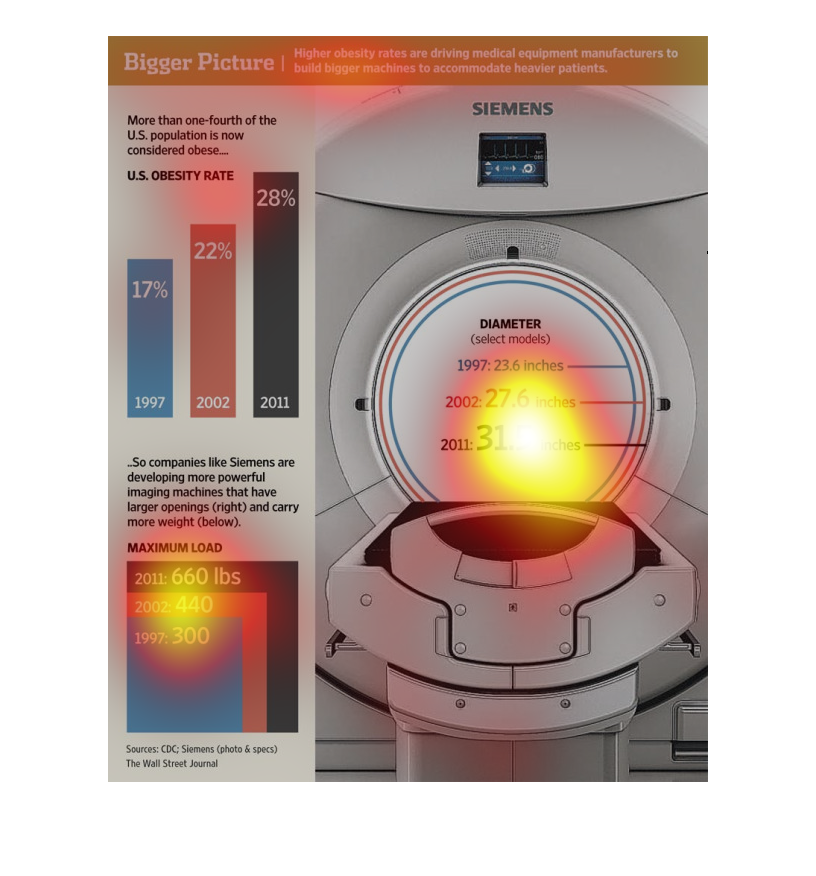
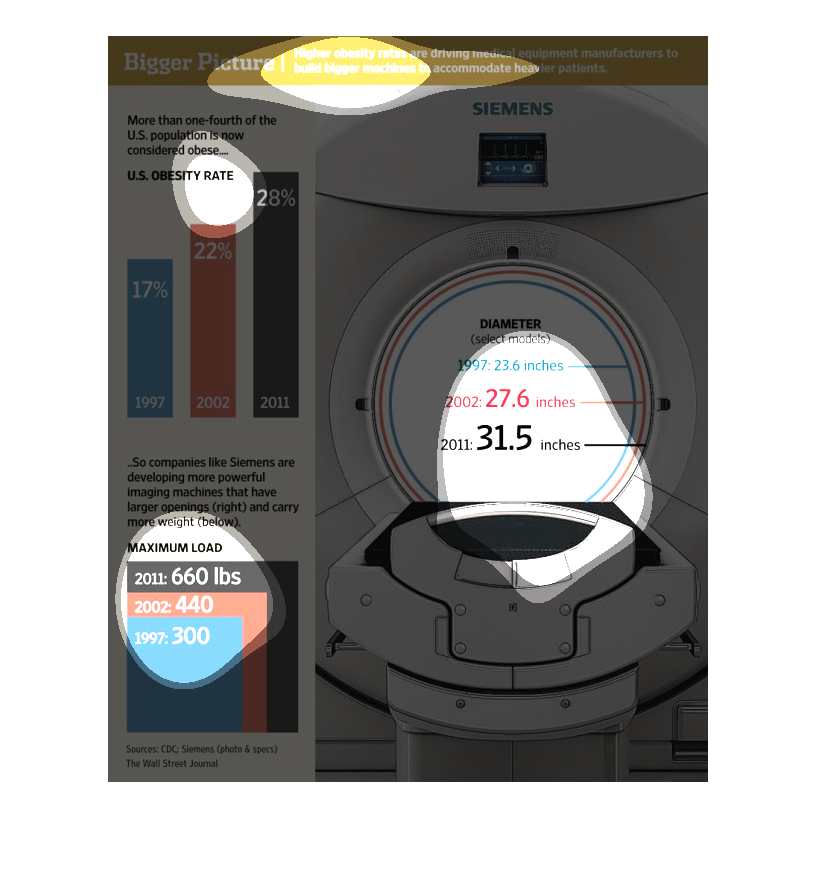
Bar graphs and a pictograph depicting and comparing the rates of American obesity and both
the diameter and capacity of imaging machines used to perform diagnostic imaging exams on
obese patients.
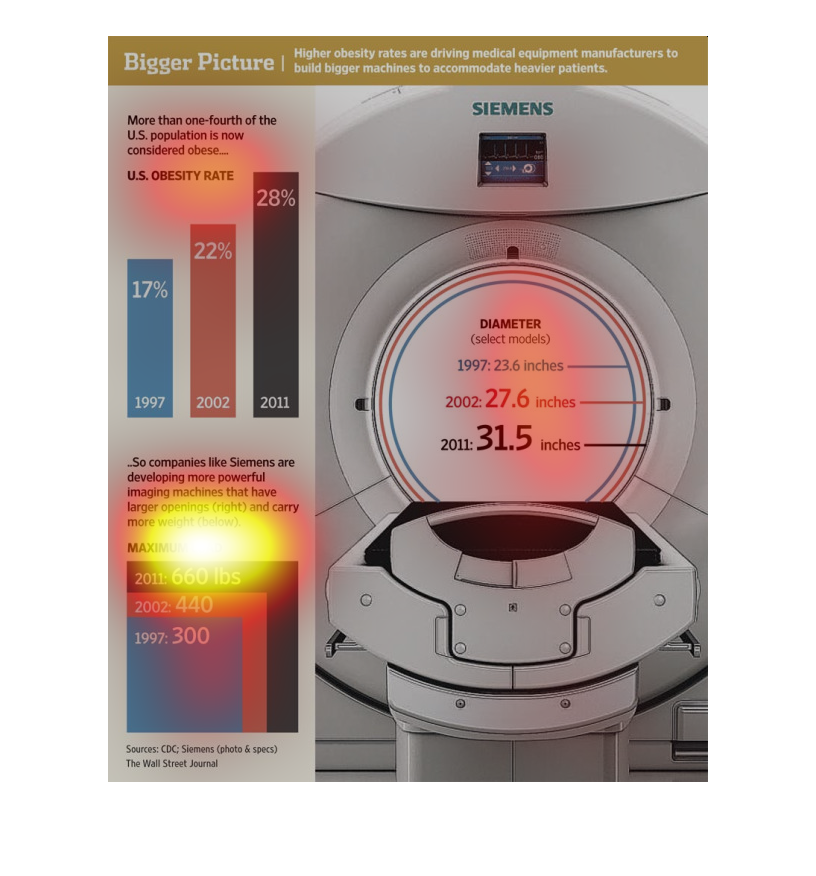
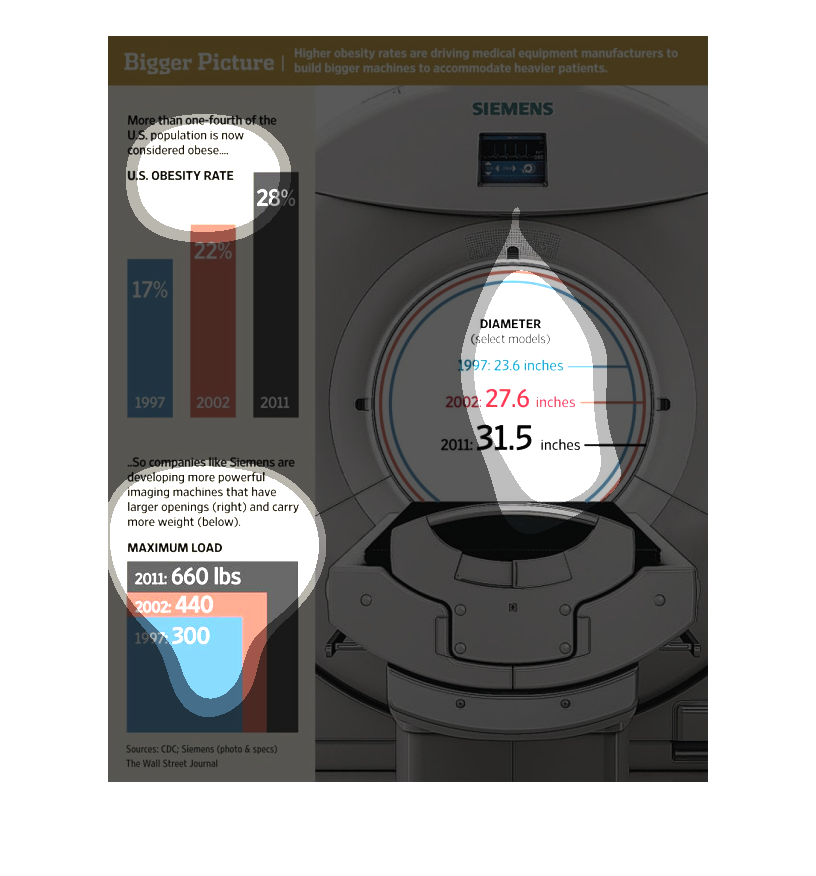
This graph demonstrates the US obesity rate over time for 1997, 2002, and 2011 and how the
maximum load for imaging machines has increased during the same time period to accommodate
fatter people.
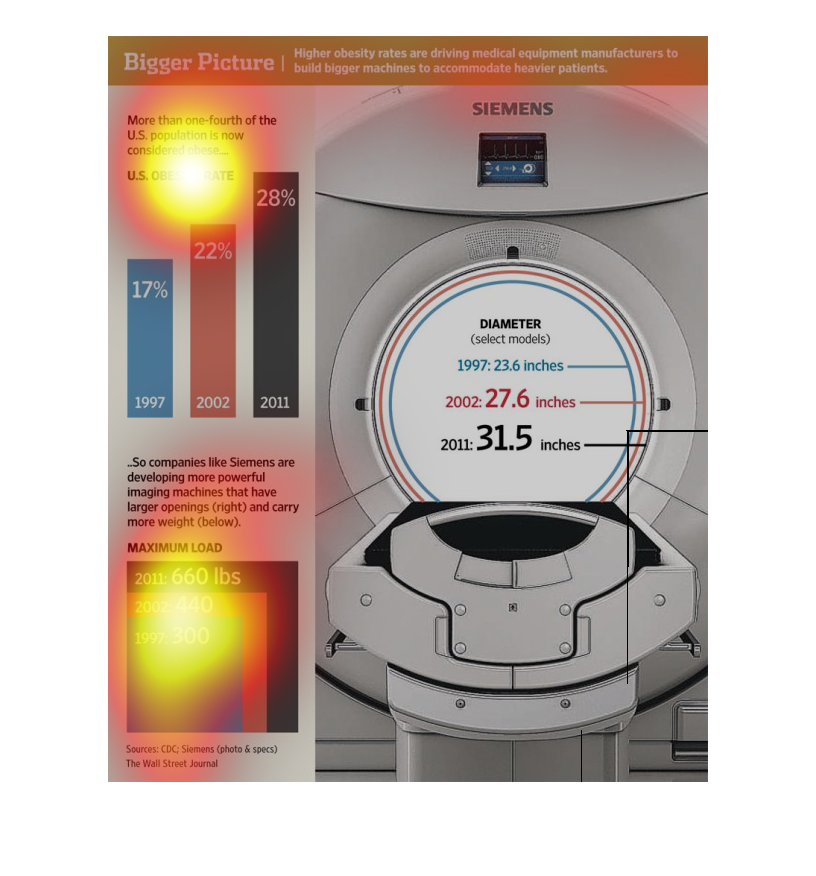
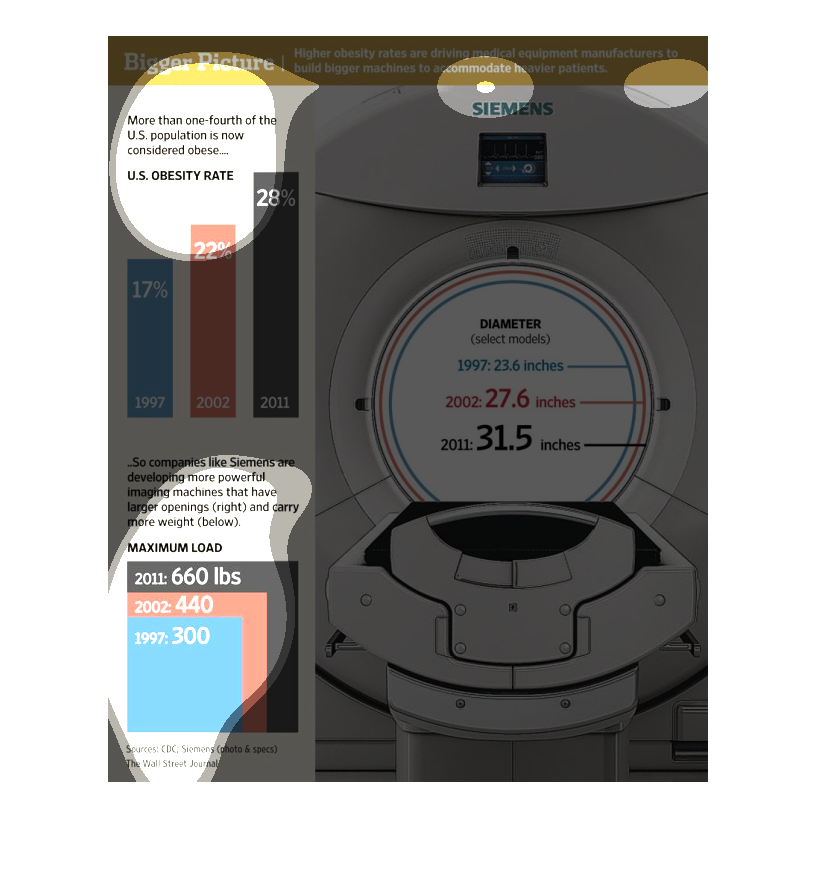
The image depicts how higher obesity rates are driving medical equipment manufacturers to
build bigger machines to accommodate heavier patients. Obesity rates are climbing, as well
as the need to construct larger equipment which can handle heavier weights.
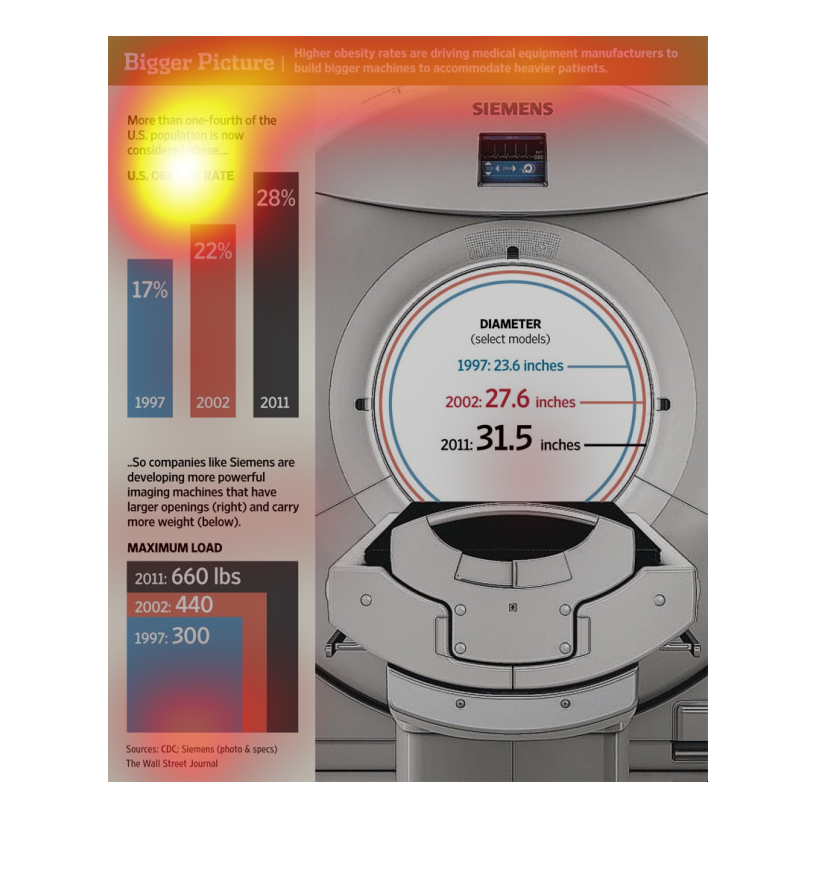
This chart talks about how the higher rate of obesity is causing medical manufacturers to
make larger machines in order to accommodate larger patients. In 2011, 28% of people were
obese. The maximum weight for machines were 660 pounds. The diameter of machines have also
increased.
This diagram describes the situation involving building bigger medical equipment due to rising
rates of obesity in America. Siemens has developed an imaging machine that can hold up to
660 pounds.
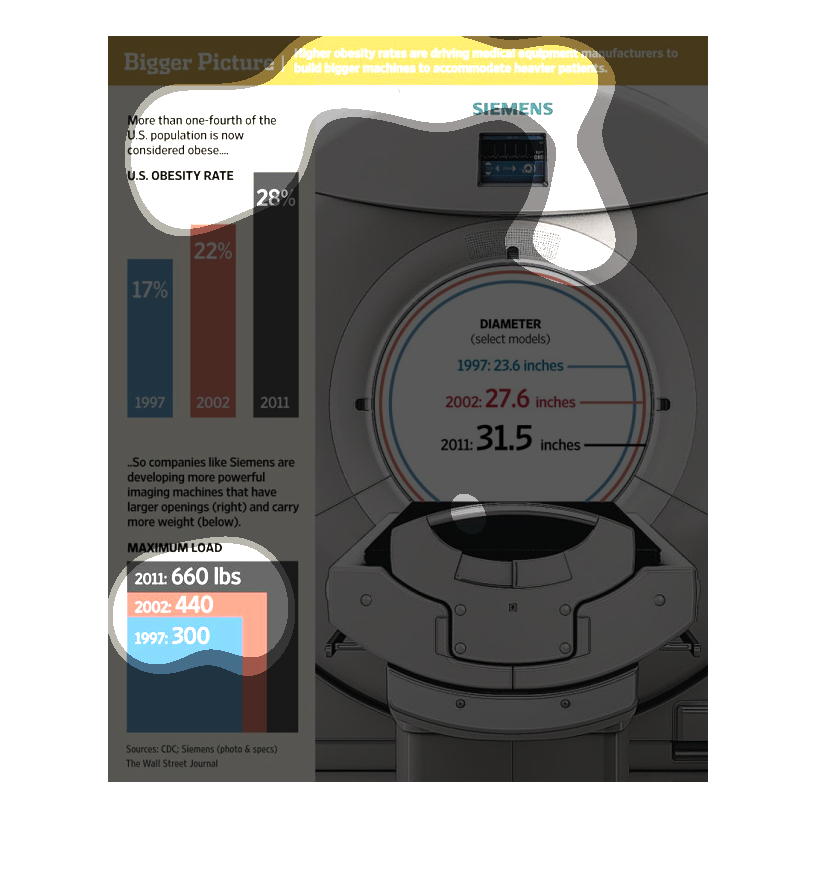
Imaging is the wave of the future, catch it before it leaves you behind! The fact that Siemens-
as shown in this illustration- is toiling to innovate and keep itself at the head of the market
shows its importance.
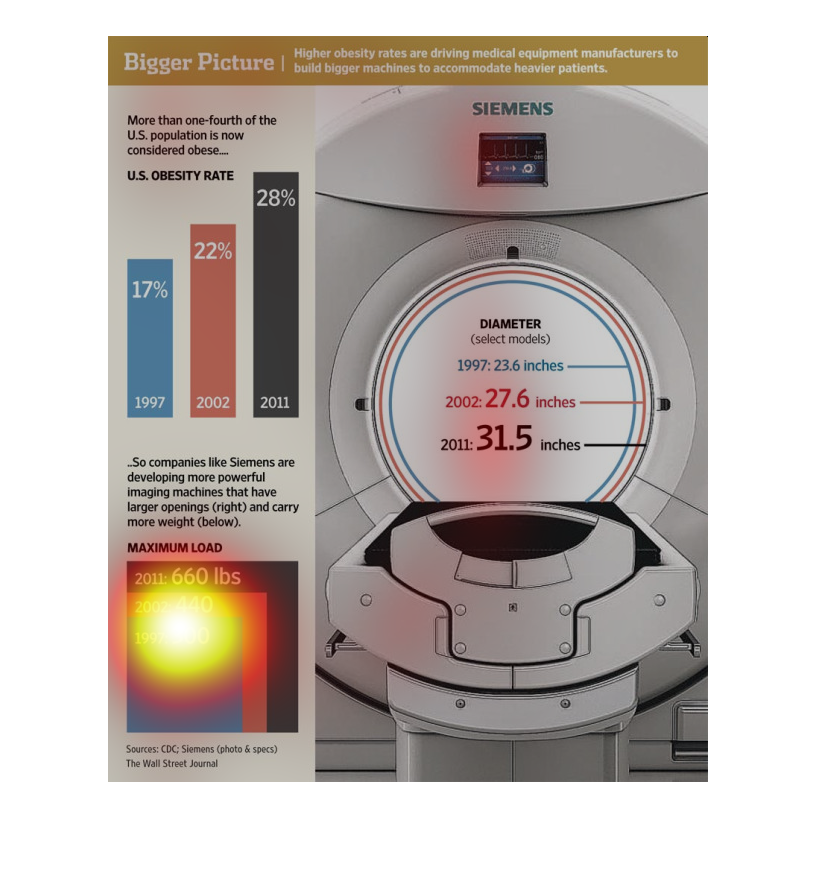
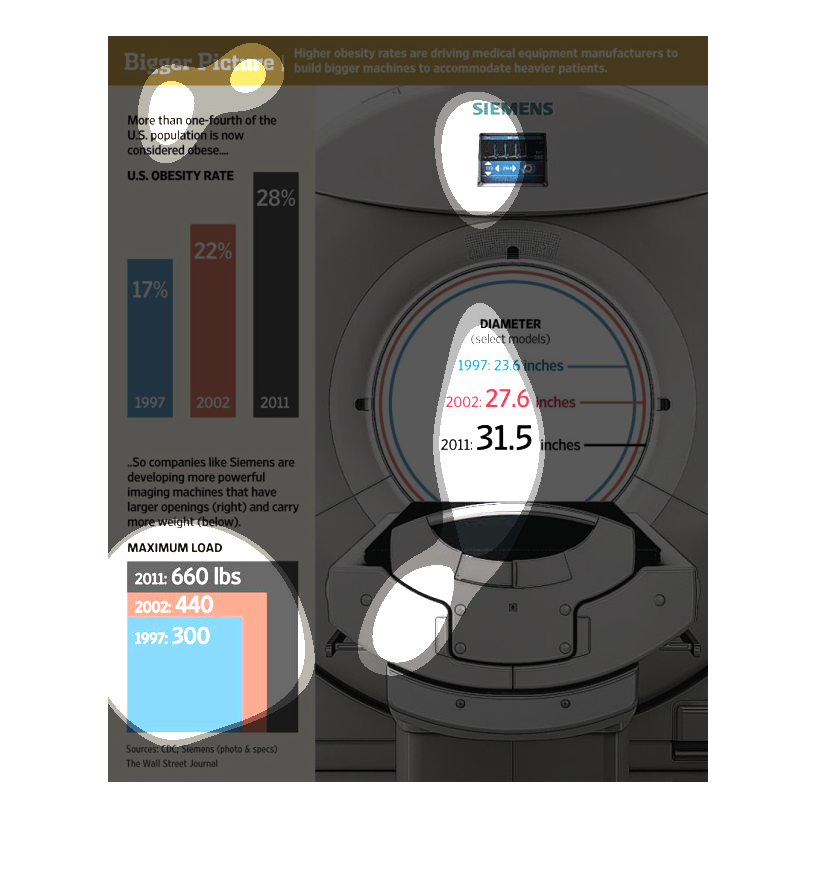
This image consists of three separate but related graphs. One graph, on the right side of
the image, is designed to look like a medical imaging machine and shows the increasing diameter
of medical imaging machines from 1997 to 2011 due to rising obesity rates in the U.S.  The
other two graphs are on the left side of the image. One, a bar graph, shows the gradually-increasing
percentage of the U.S. population considered to be obese. In 1997 the percentage was 17%;
in 2011 the percentage was 28%. The final graph here shows that makers of medical imaging
machines have been increasing the machines' weight capacity in direct correlation with rising
obesity rates.