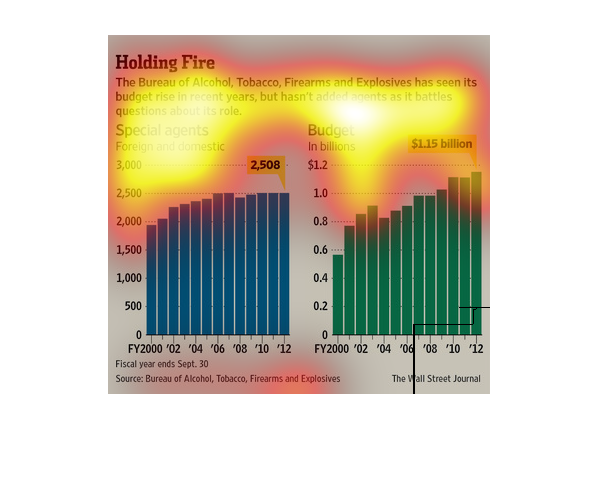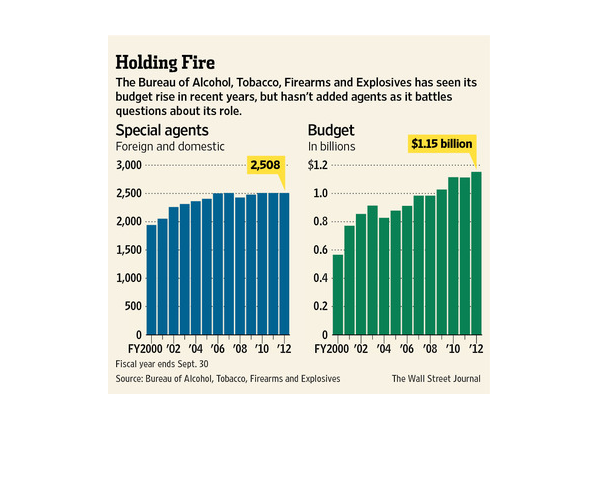
This chart is titled Holding fire. It shows the rise in budget for Alcohol, Tobacco, Firearms
and Explosives, however it has not added agents as it answers questions about its role.
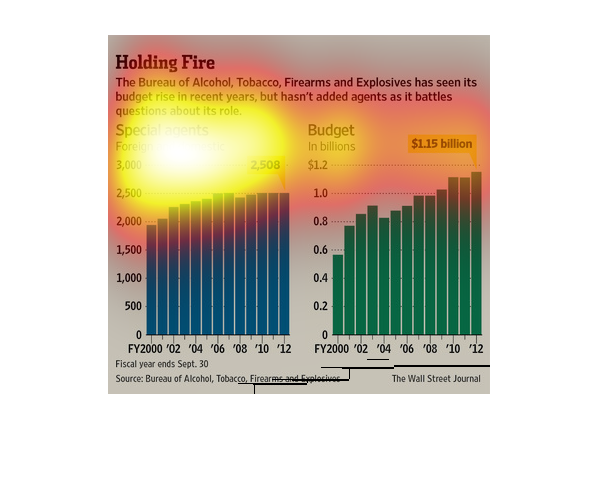
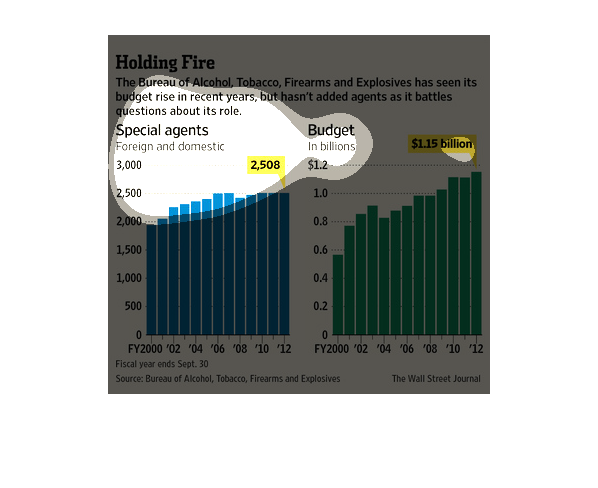
The ATF is waging a war, of what short this study is not exactly sure of. What is certain
is that expenses for the agency have dramatically gone up and yet no change in personnel have
been made.
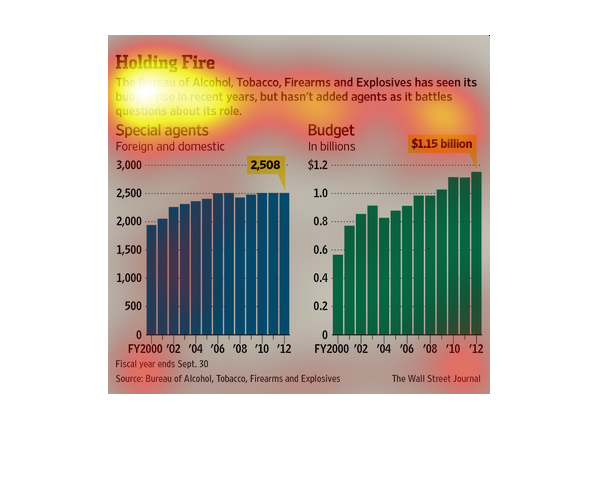
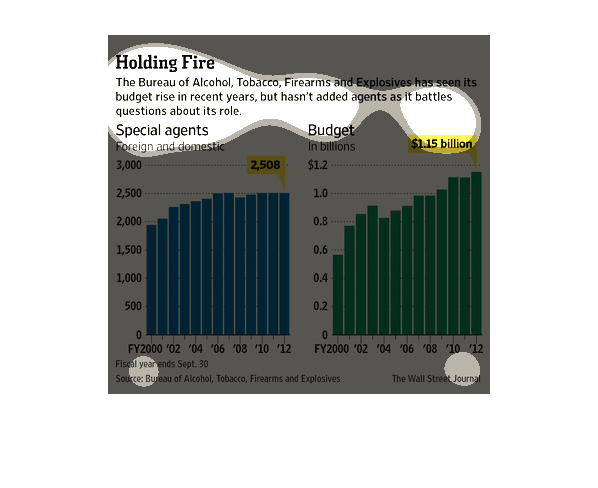
This chart describes holding fire. Specifically, the bureau of alcohol, tobacco, and firearms
and explosives has seen its budget rise in recent years.
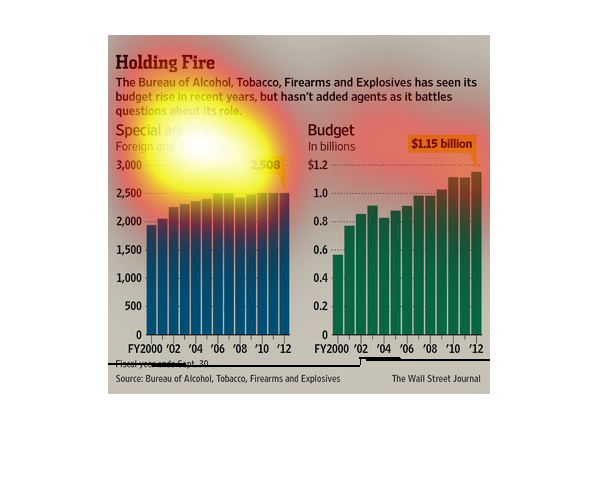
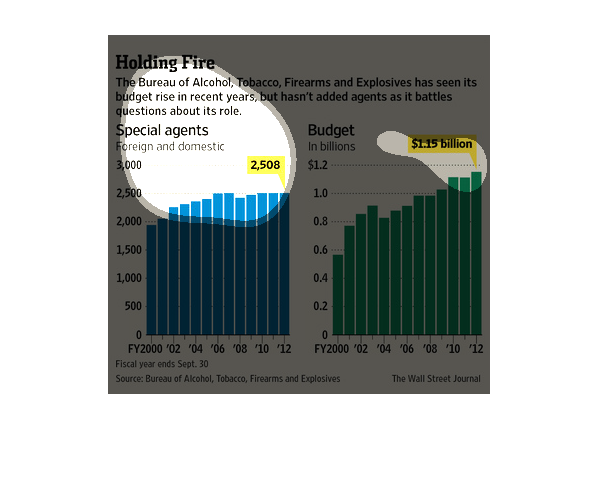
it seems to be a graph describing the problems that firearms seem to be causing for the bureau.
there seems to be a budget problem, as the costs related to these things keep rising
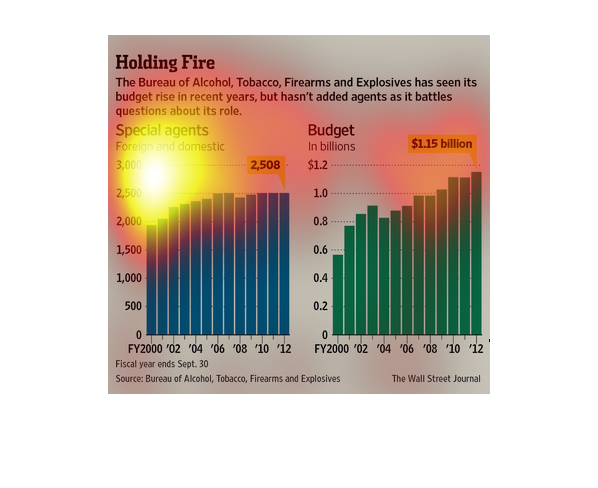
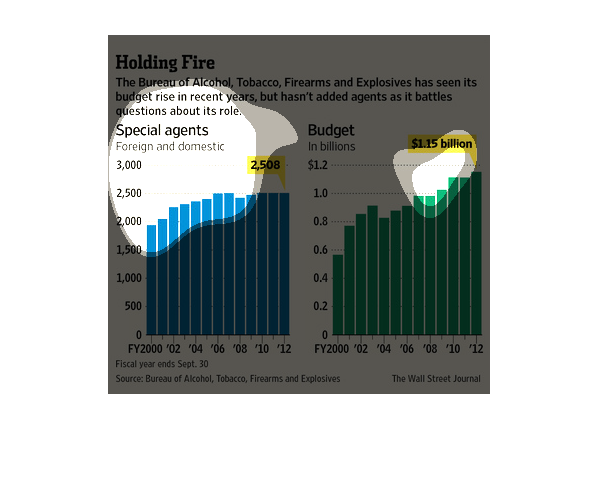
An infographic showing the number of agents and budget of the Department of Alcohol, Tobacco
and Firearms. The bigger budgets haven't led to more agents hired
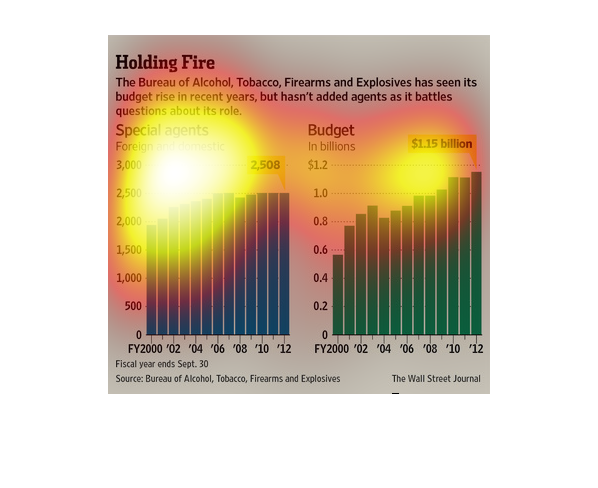
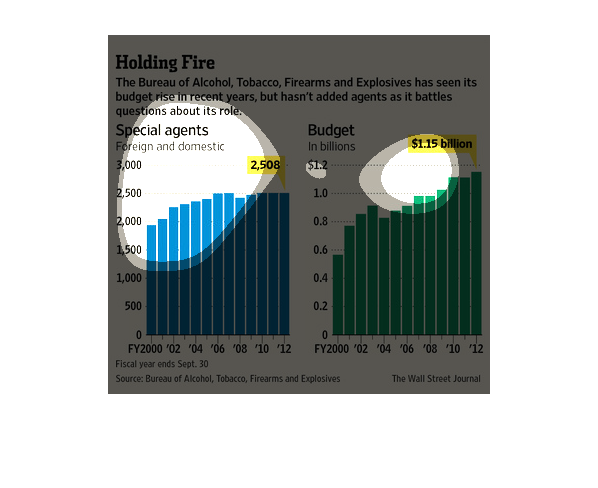
This is a series of bar graphs and related statistics depicting that the ATF had seen it's
budget rise in recent years, but it hadn't added agents as it battled questions about it's
role.
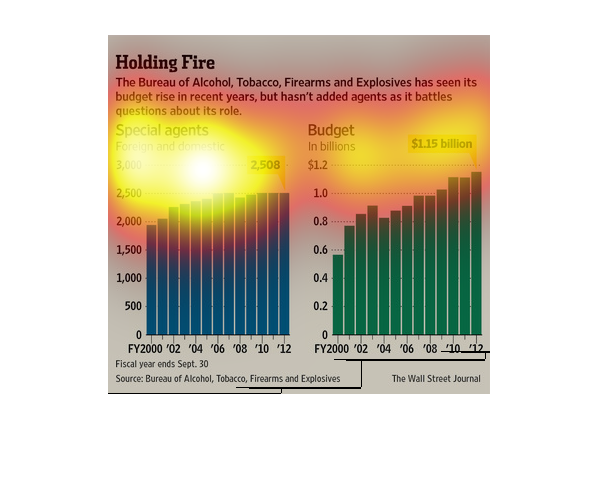
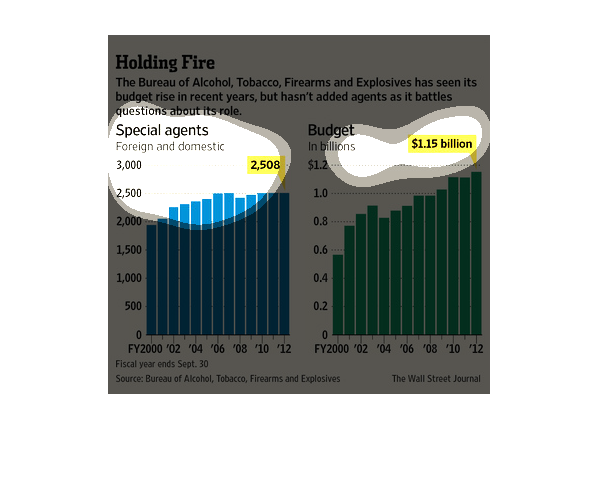
holding fire, the bureau of alcohol, tobacco, firearms, and  explosives has seen its budget
rise in recent years, but hasn't added agents as it battles questions about its role. We see
two separate graphs, on for agents the other for budget, spanning years 2000 through 2012,
we see agents rise and plateau by 2006 yet the budget continues to steadily increase.
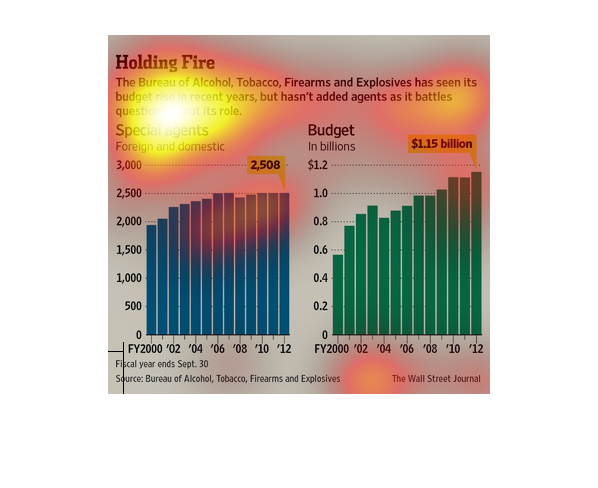
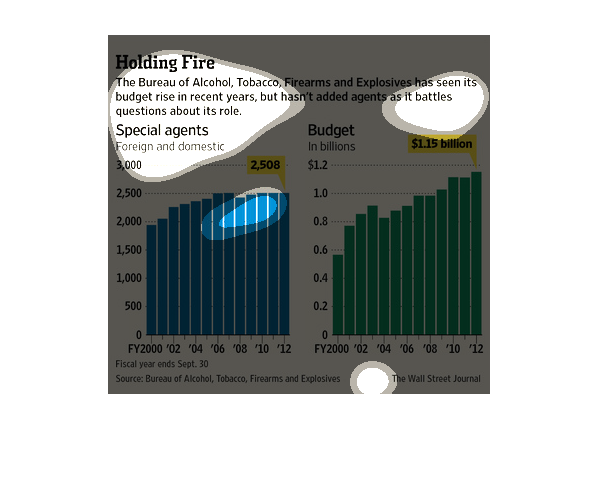
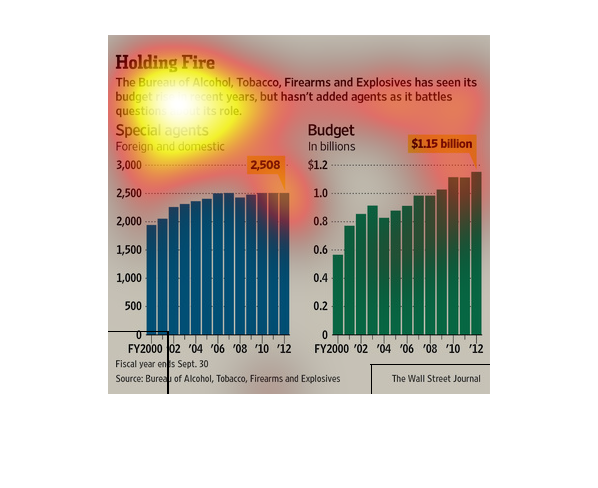
This chart describes holding fire. Specifically, the bureau of alcohol, tobacco, firearms
and explosives has seen its budget rise in recent years, but hasn't added agents as it battles
questions about its role.
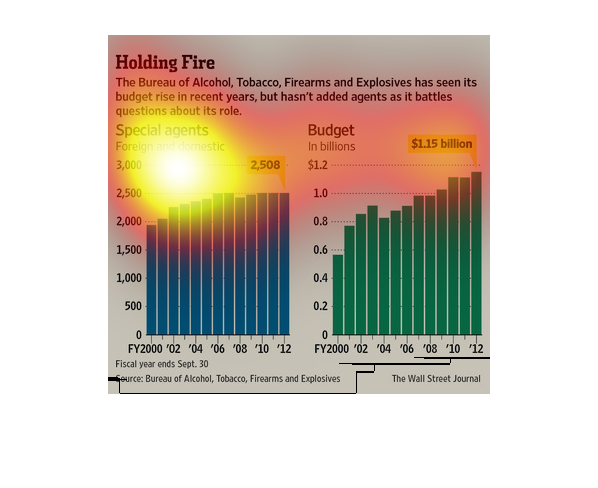
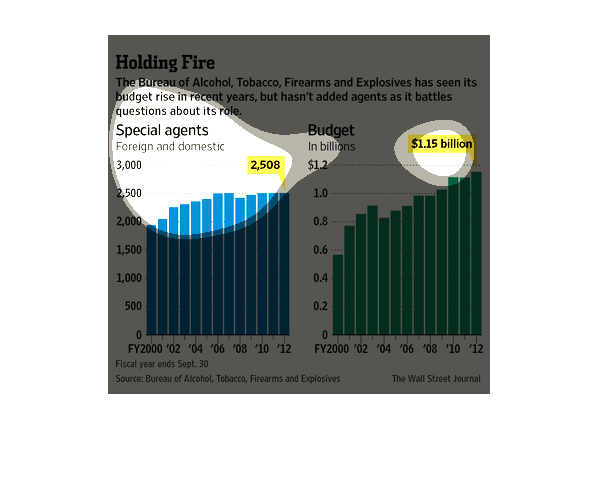
The two charts show the rise in the DEA's budget from the year 2000 to 2012 and the increase
in agents hired. Though the budget has increased there has not been a significant uptick in
hiring.
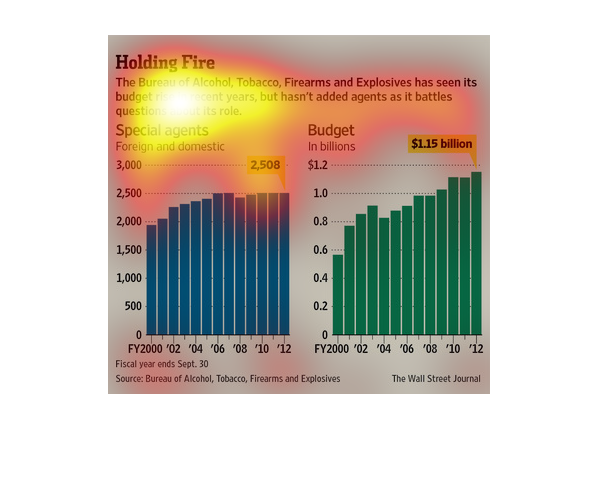
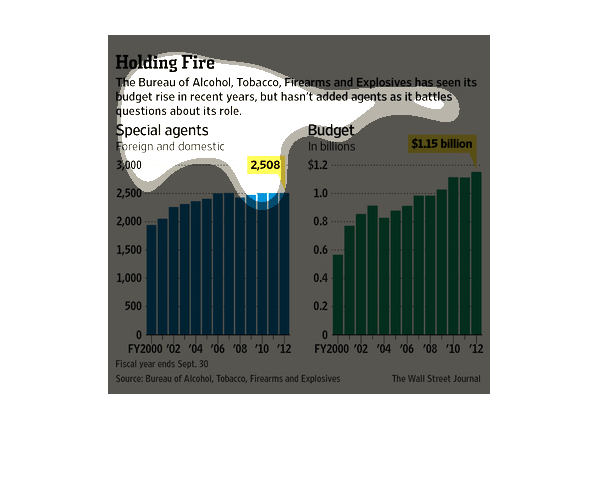
The following chart is from the Tobacco, Alcohol and firearm and explosives has seen its budget
rise in recent years, but has not experienced an increase in agents.
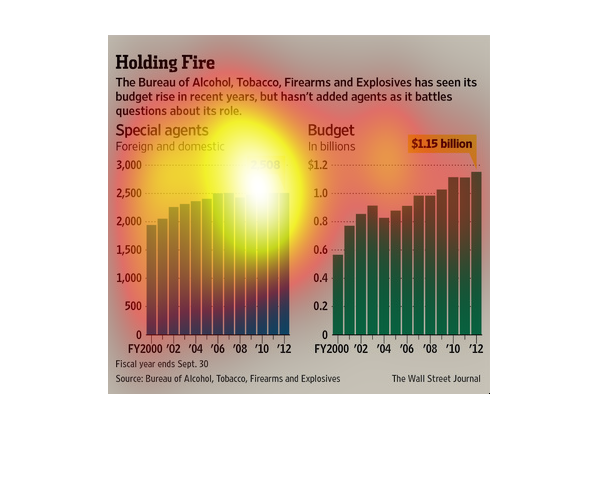
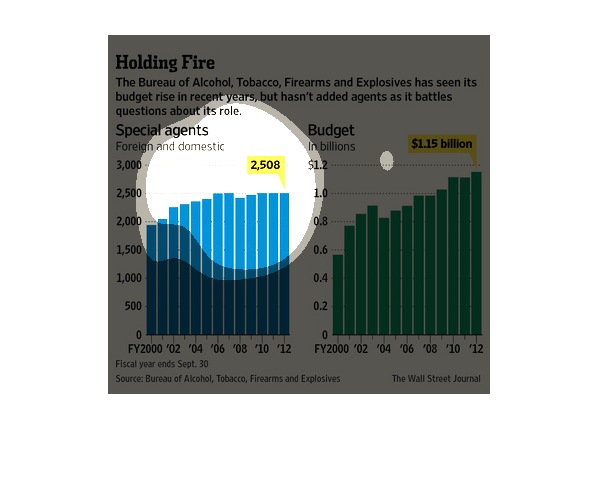
This is a series of color coded graphs depicting that the ATF has seen it's budget rise in
recent years, but hasn't added agents as it battles questions about its role.
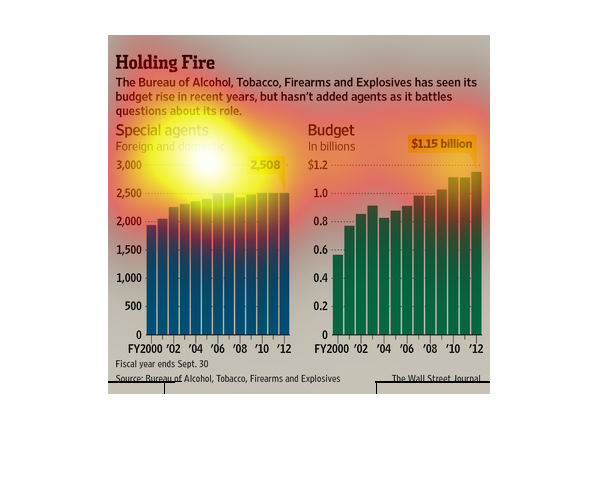
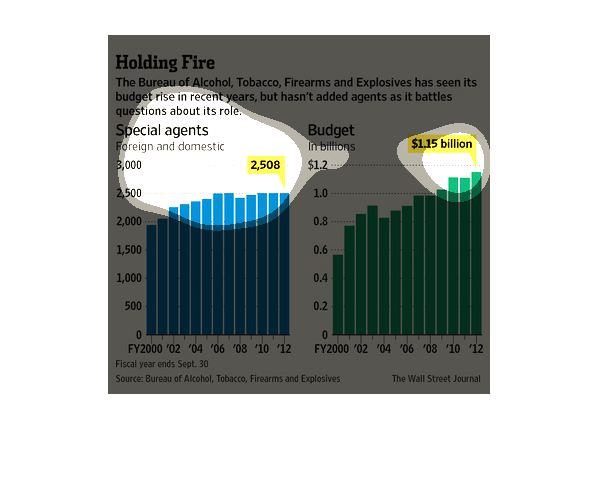
The image depicts how the Bureau of Alcohol, Tobacco, and Firearms and Explosives has seen
it's budgets rise in recent years, but hasn't added agents as it battles questions about it's
role as a governmental agency. Hired agents appears to hover at around the same amount for
a number of years, with budgets steadily increasing year-over-year.
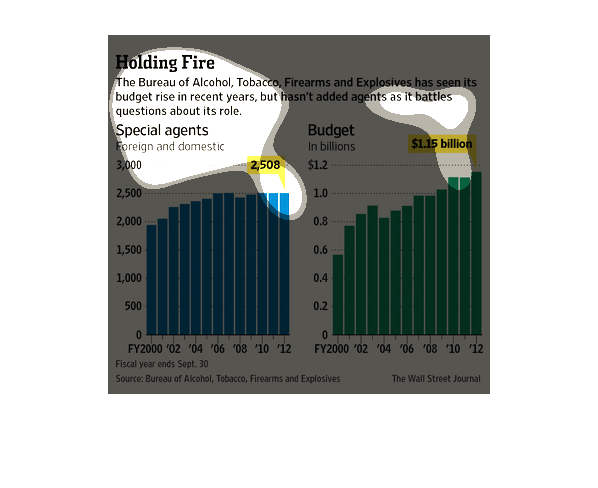
The graph illustrates the relationship between the number of agents in the Bureau of Alcohol,
Tobacco, Firearms, and Explosives and the total budget of the Bureau from fiscal year 2000
to 2012. Though there is a direct relationship between them, the budget has increased much
more dramatically than the number of agents, which as stalled out in recent years.
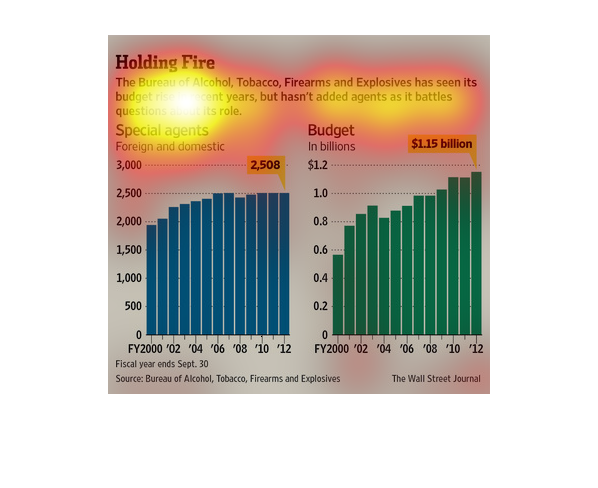
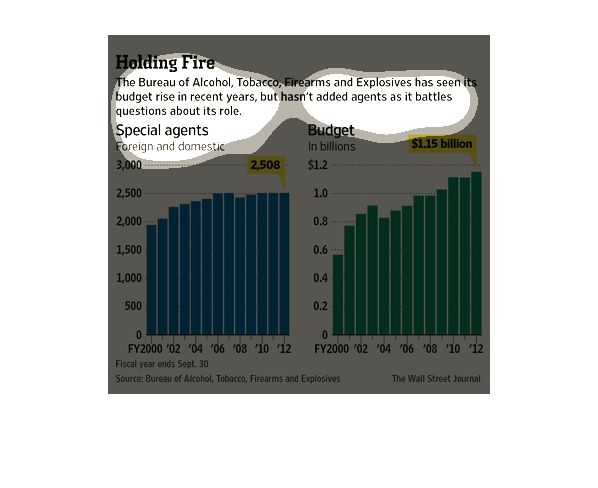
The Alcohol, Tobacco, Firearms, and Explosives branch has had an increase in their budget
with no increase in agents. The first part of the graph shows how many agents were active
per year from 2002-2012 with a plateau at the last three years. The second part of the graph
shows what the agencies budget was for those time periods. Showing a small spike from 2011
to 2012.