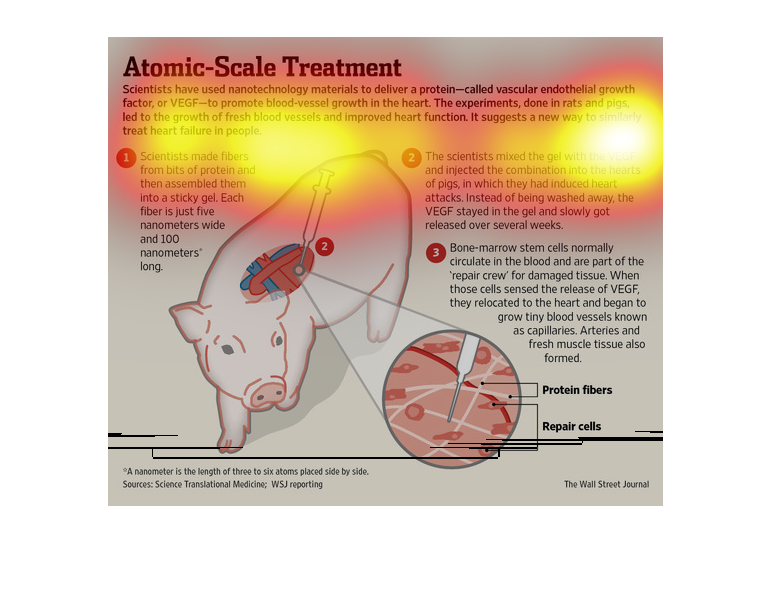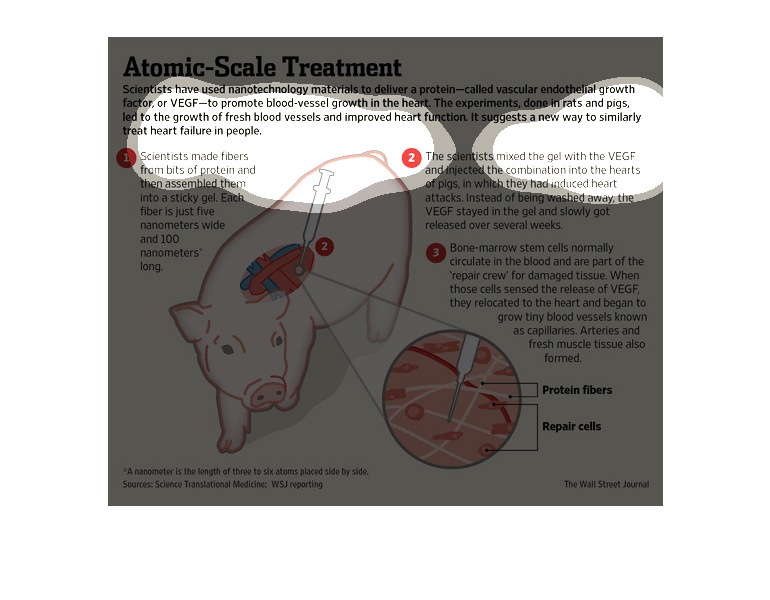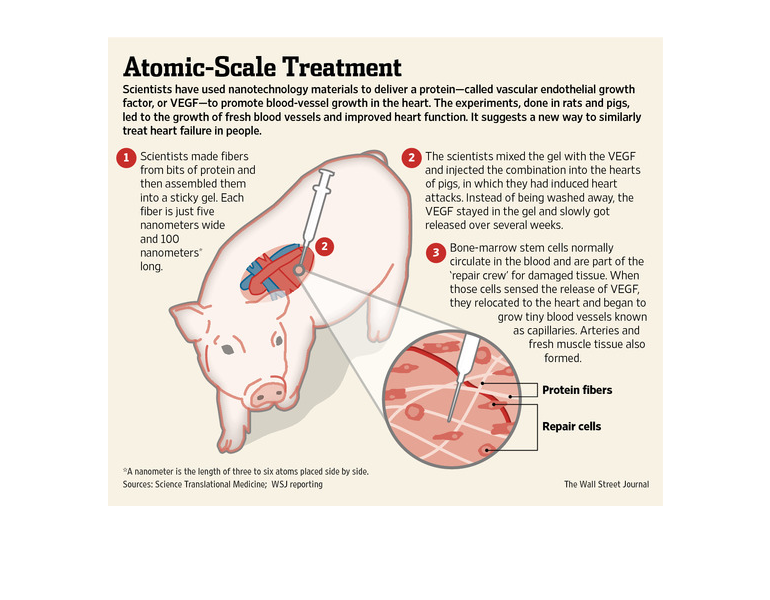
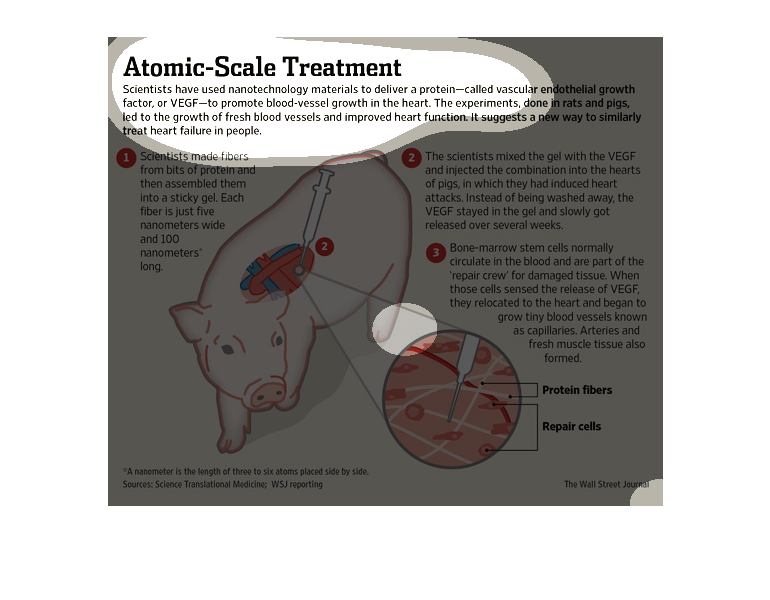
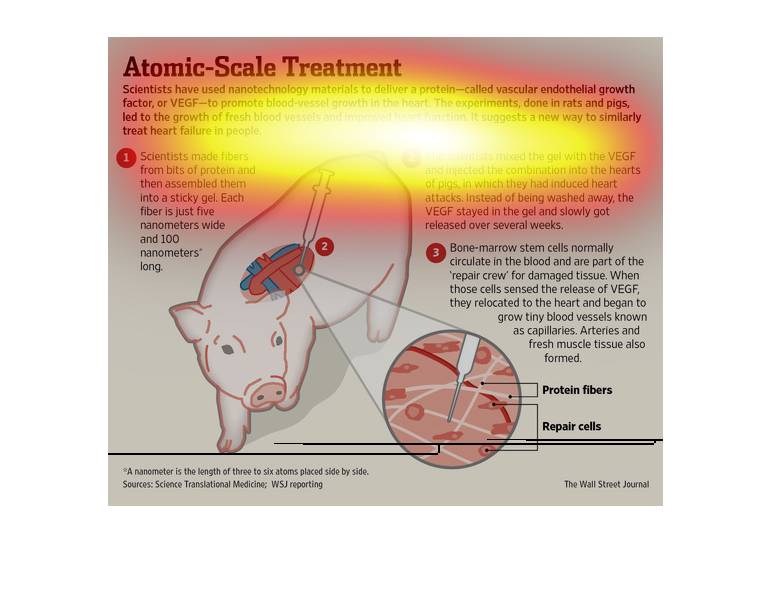
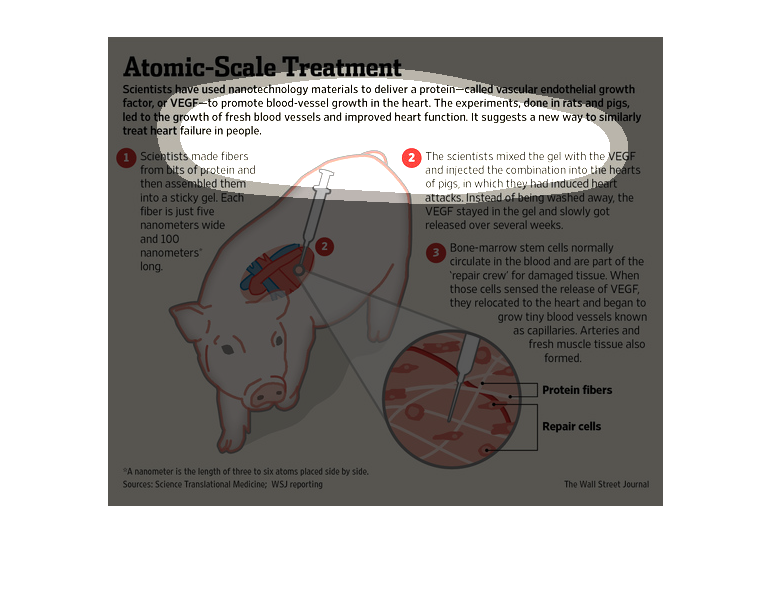
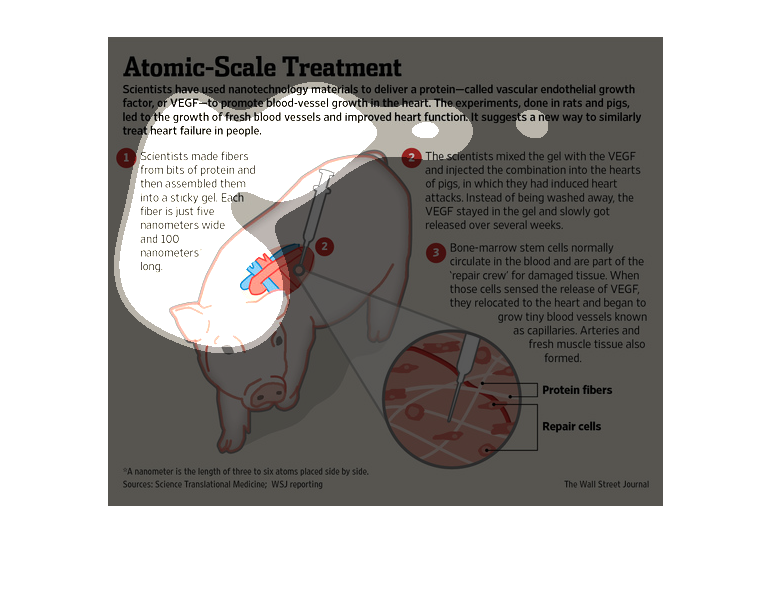
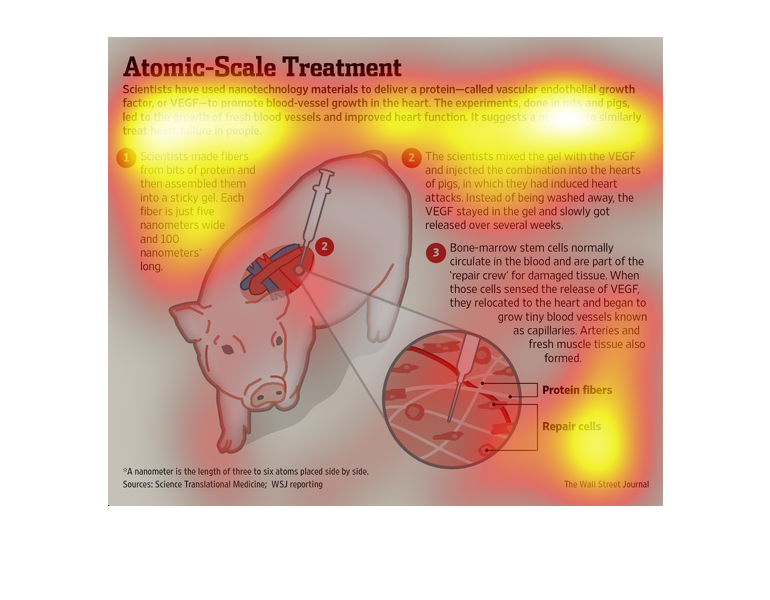
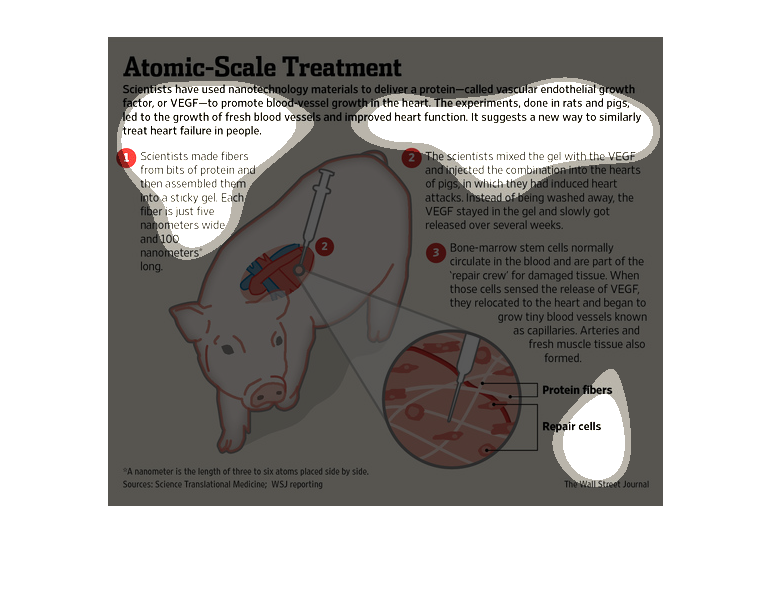
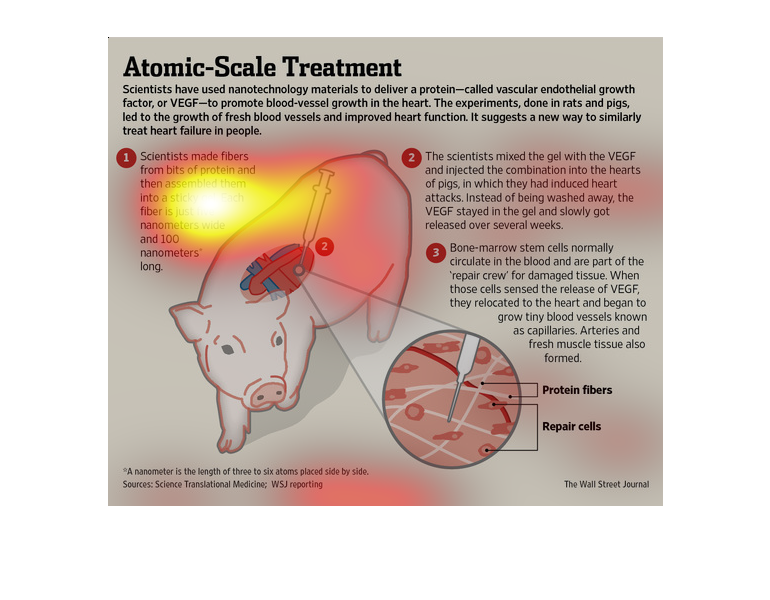
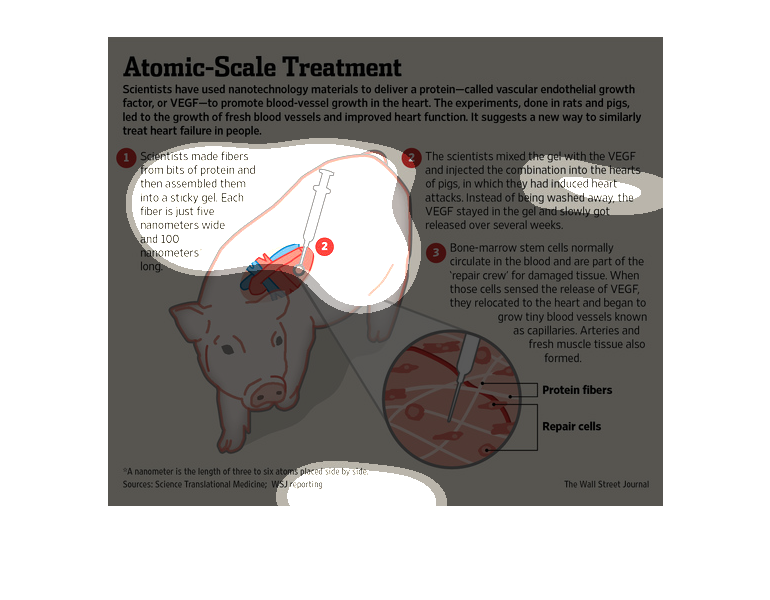
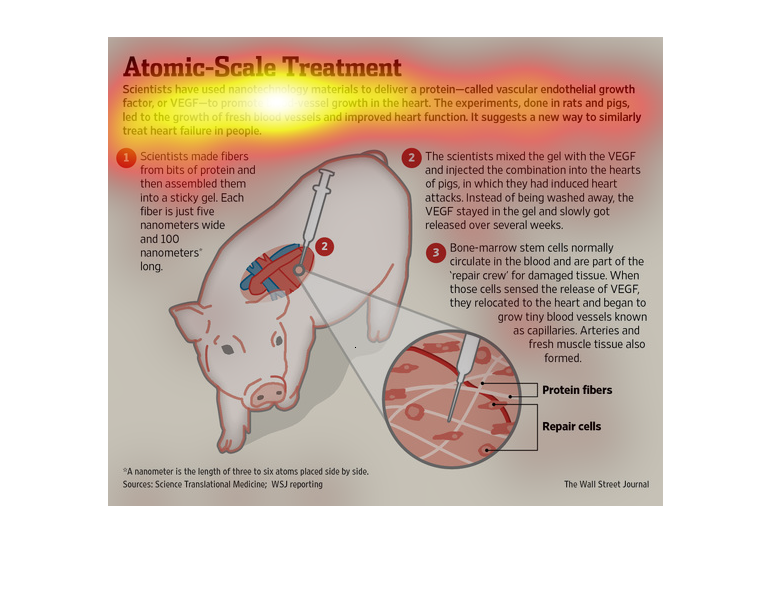
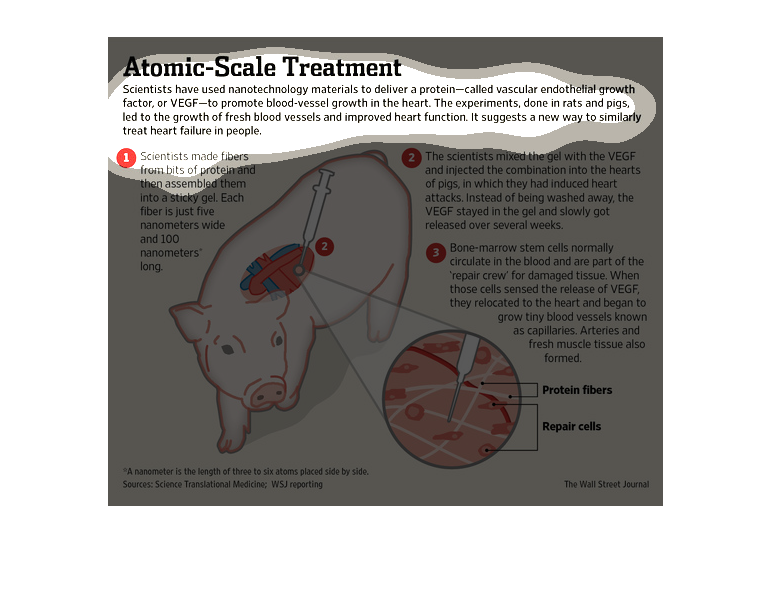
This infographic of a pig shows the series of steps that go into a new scientific treatment
for growing blood vessels around the heart, called VEGF. It features detailed shots of how
the procedure is tested in pigs and an illustration of what it looks like at the cellular
level.
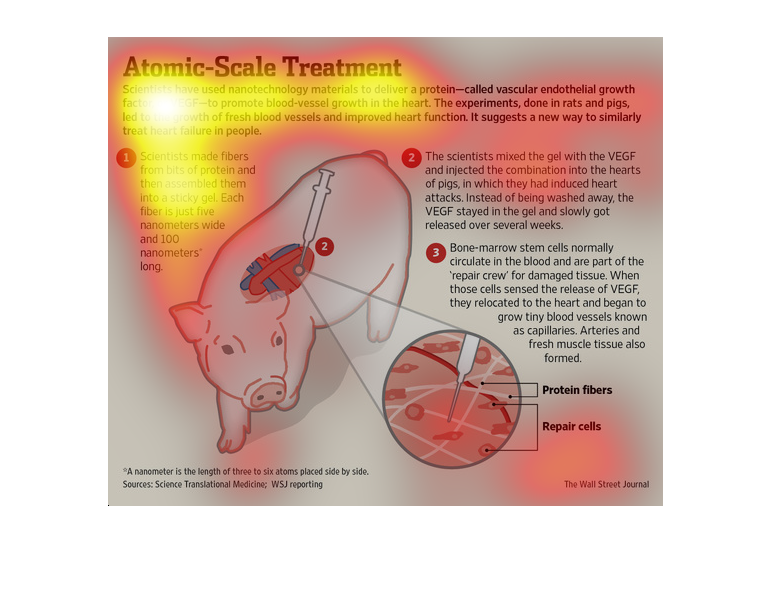
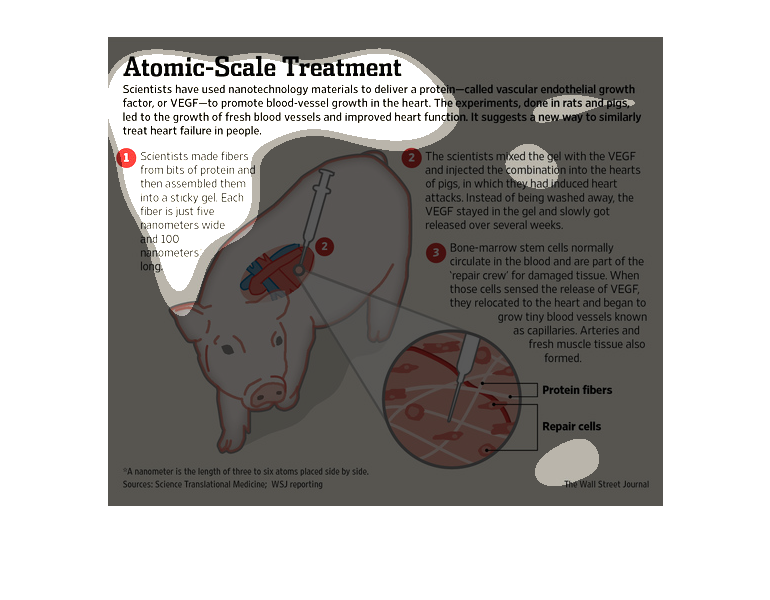
This diagram is called "Atomic-scale treatment". This diagram is showing how scientists use
nontechnology materials to deliver proteins called vascular endothelial growth.
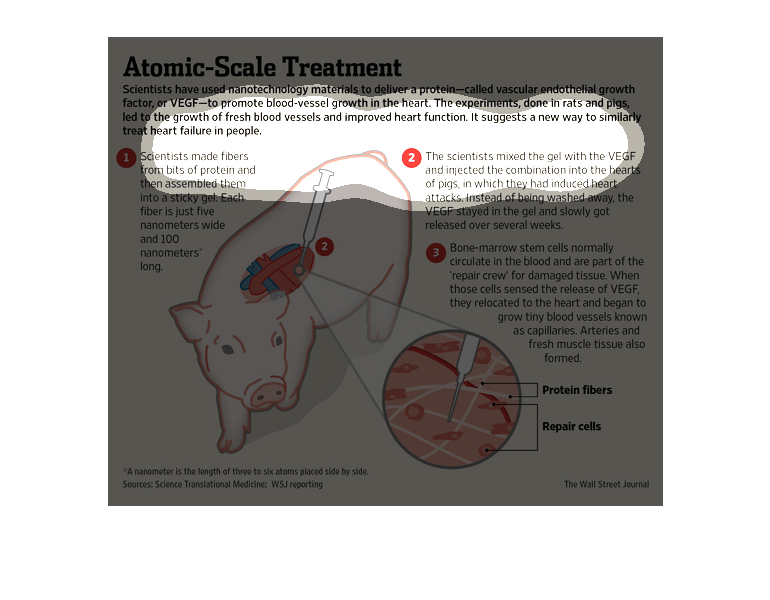
The image describes how a protein called vascular endothelial growth factor helps promote
pressure vessel growth to the heart. The image shows a needle injecting the protein into the
vessel.
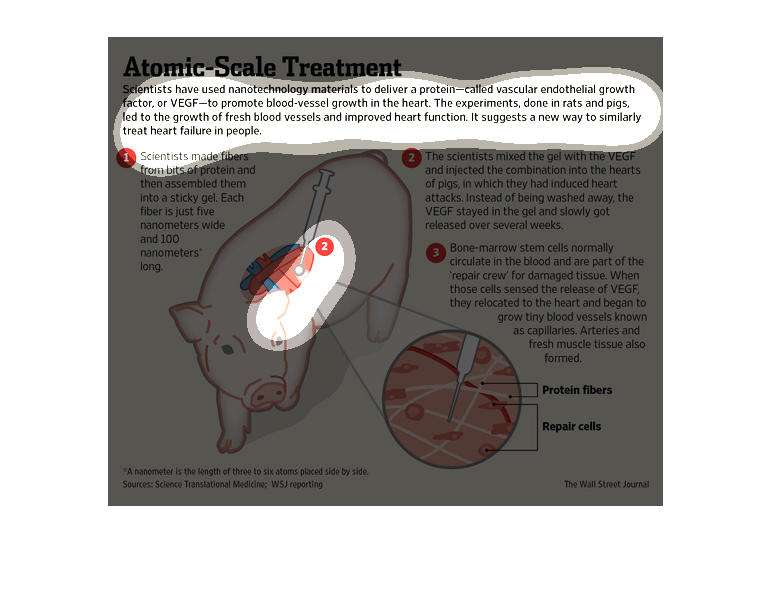
The image is about an atomic-scale treatment that involves using nanotechnology to deliver
a protein called vascular endothelial growth factor (VEGF) that promotes blood flow in the
heart. Since the experiments were able successful in promoting fresh blood in rats/pigs, the
scientists believe that this can treat heart failure in humans.
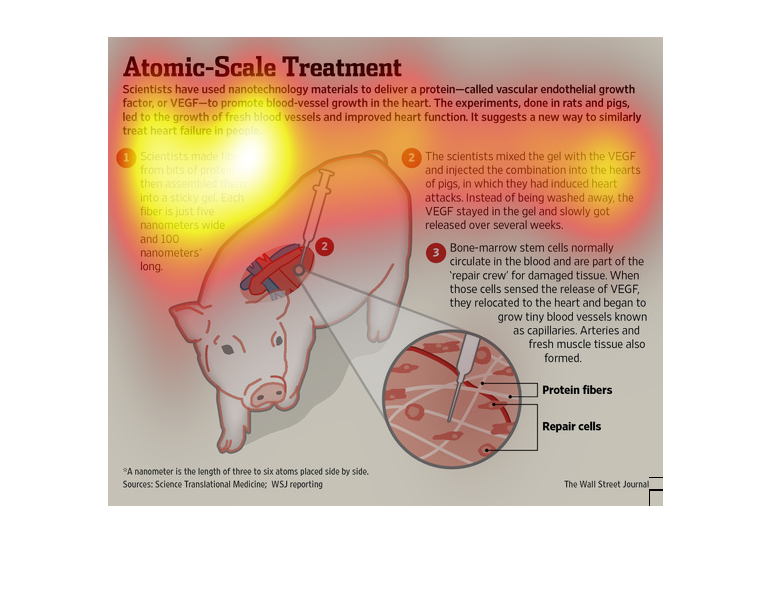
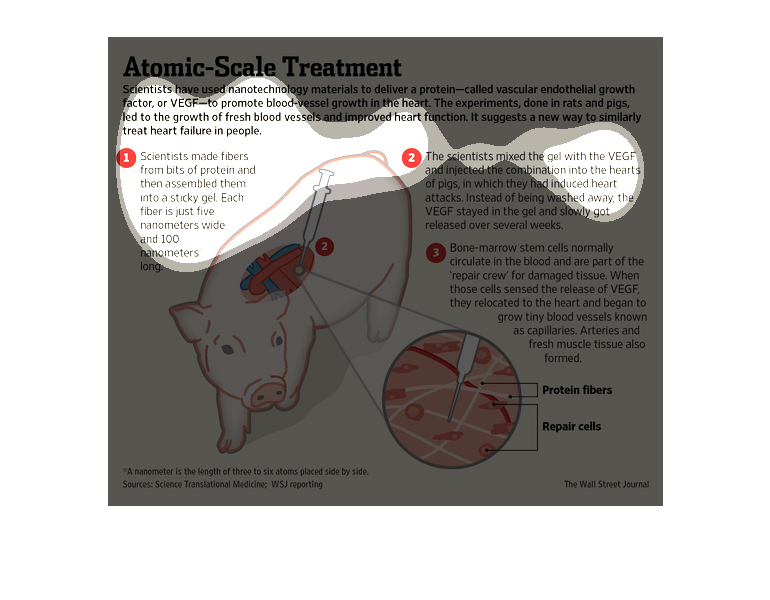
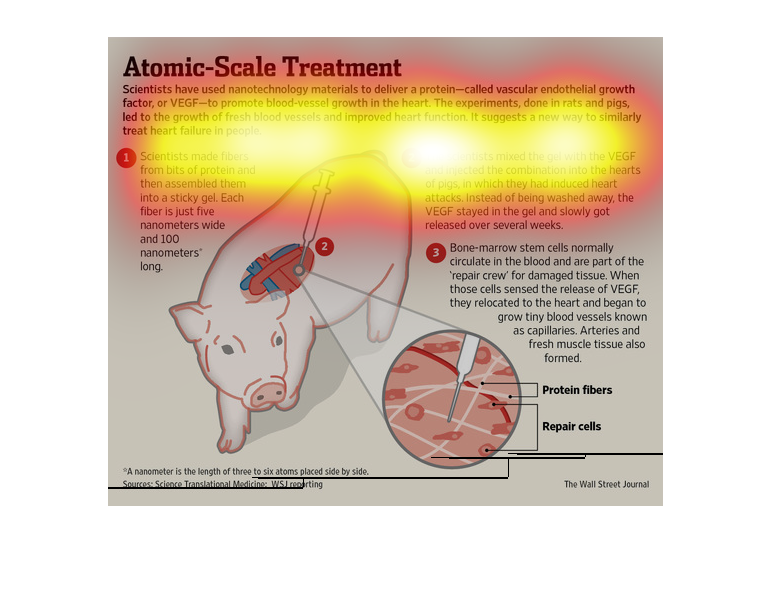
This chart describes atomic scale treatment. Specifically, scientists have used nano technology
materials to deliver a protein called vascular endothelial growth factor.
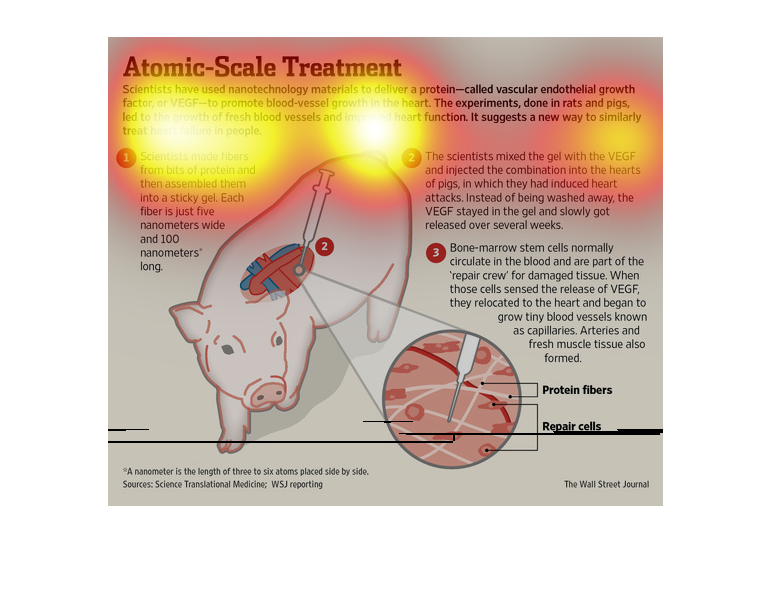
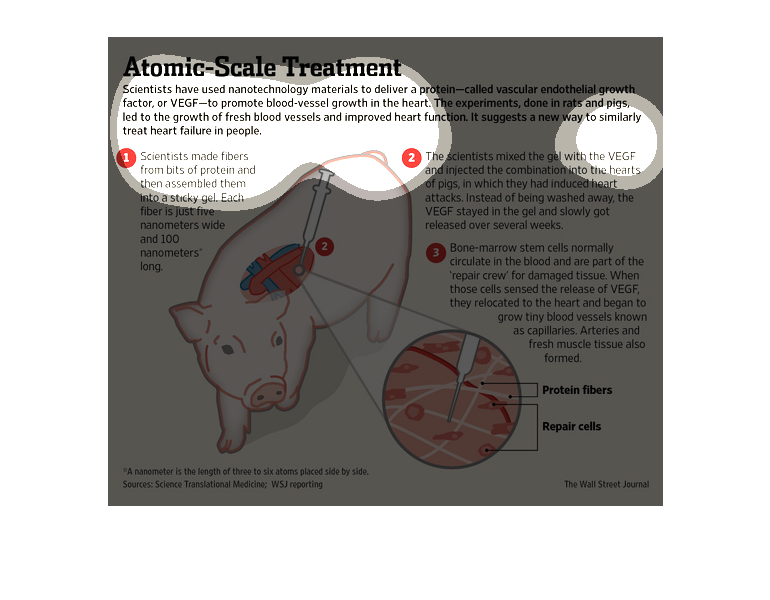
This chart from the Wall Street Journal shows how new nanotechnology has been developed to
possibly treat human ailments such as anemia and other diseases
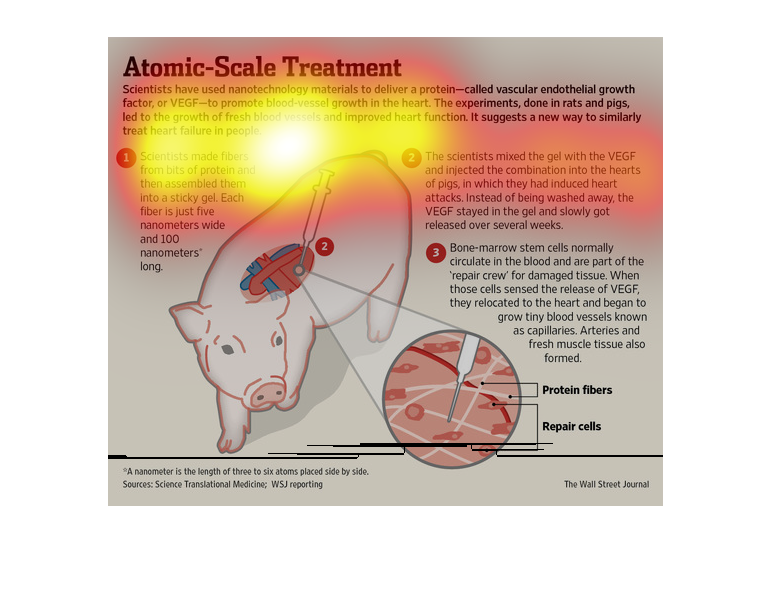
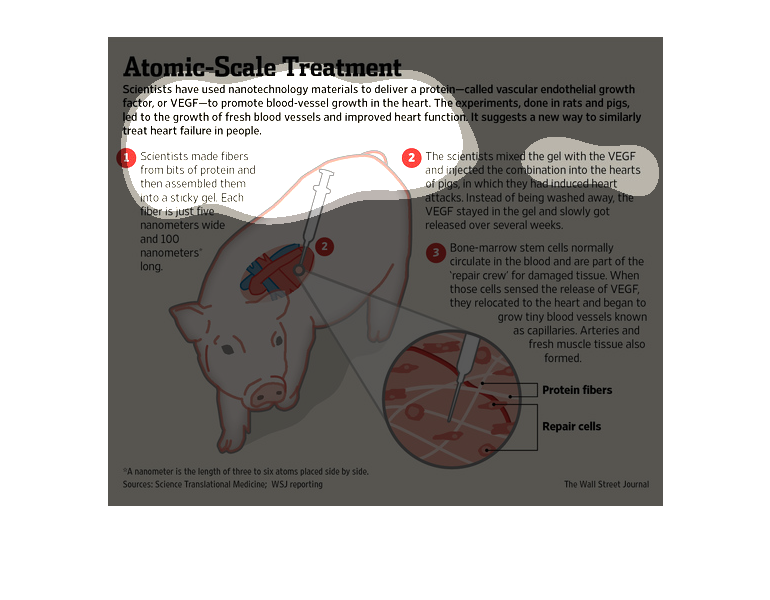
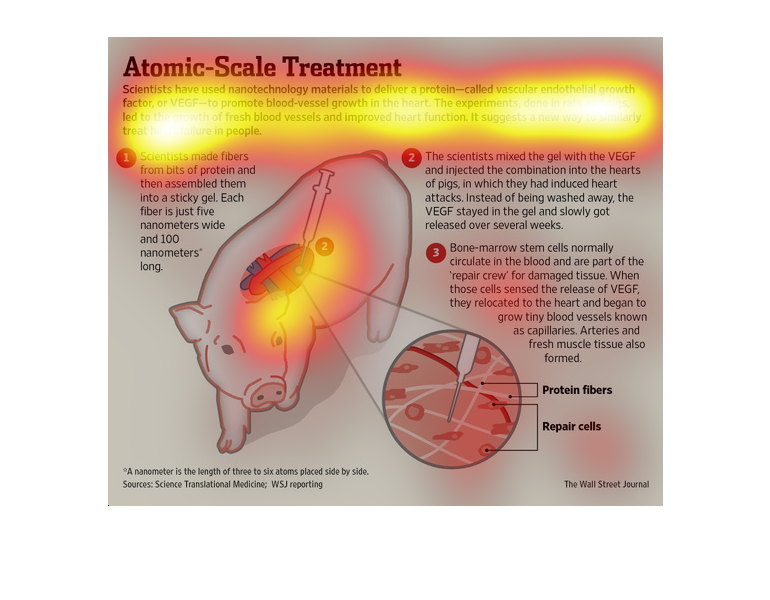
This chart explains how scientists have used nanotechnology materials to deliver a endothelial
growth  factor that promotes blood-vessel growth in the heart. Scientists first made fibers
from bits of protein so that the fibers were 5 nm wide and 100 nm long. They then injected
these mixtures into the hearts of pigs and the fibers were released over a couple week time
frame. When the stem cells sensed the release, they relocated to the heart and grew tiny blood
vessels known as capillaries.
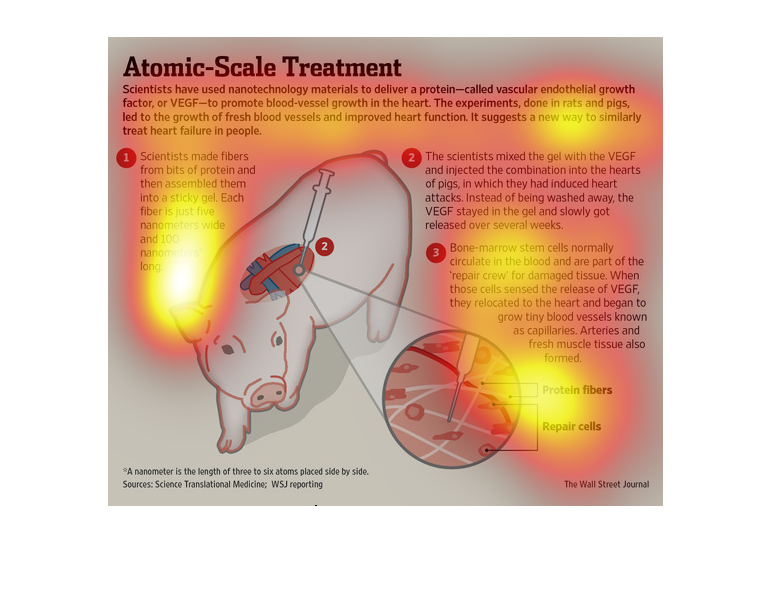
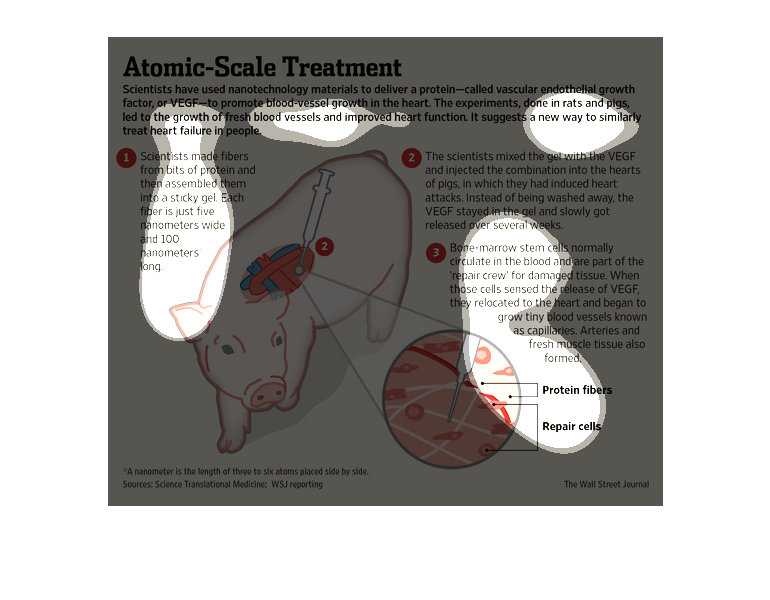
This chart illustrates atomic scale treatment of heart failure and details the steps that
go into delivering a VEGF to promote vascular growth and reduce heart attack risk.
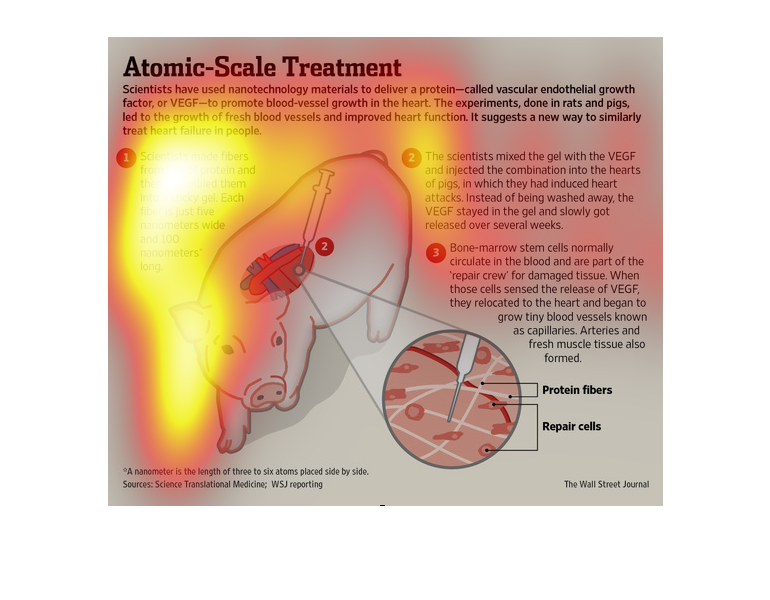
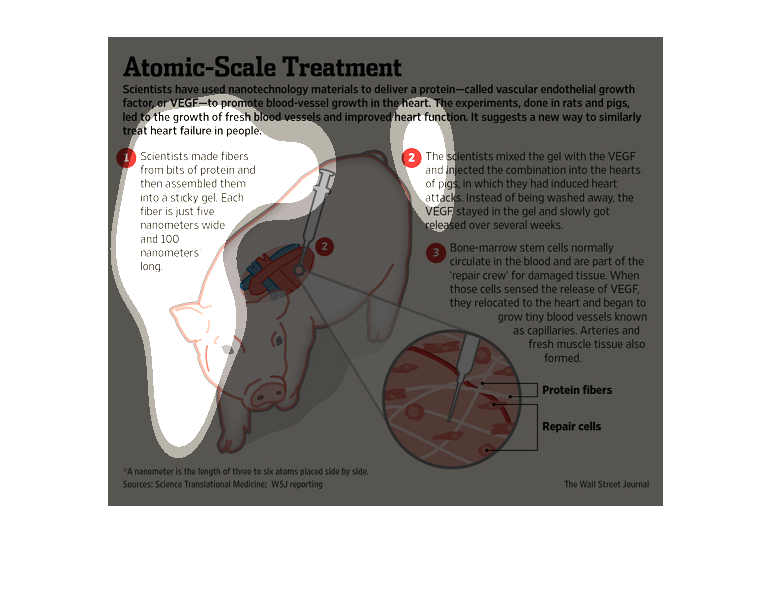
This chart describes atomic scale treatment. Specifically, scientists have used a nano technology.
The chart contains illustrations to enhance the information presented.
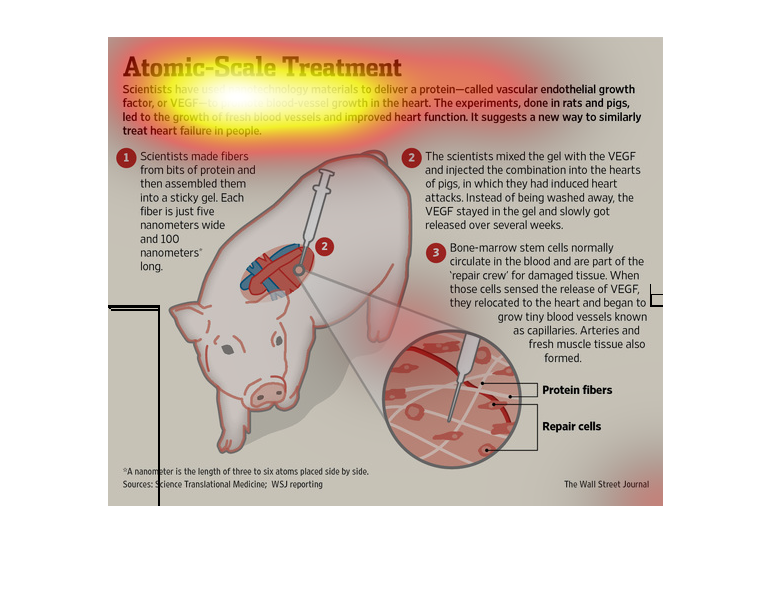
This chart from the Wall Street Journal shows how nanotechnology has evolved over time and
how it has become more advanced over time. Other than that it is dense
This chart illustrates atomic scale treatment and discusses VEGF being used to promote blood
vessel growth in the heart in order to prevent cardiovascular disease and heart attacks.

Atomic-Scale Treatment.  Scientists have used nanotechnology materials to deliver a protein
- called vascular endothelial growth factor (VEGF) to promote blood vessel growth in the heart.
This chart breaks down how scientists genetically modify a cell by adding protein. There are.
Pictures and extensive details that shows how it is done
This chart depicts recent advances by scientists in using nanotechnology materials to deliver
a protein to promote blood vessel growth in in the heart.
This image describes and explains how scientists have been using nanotechnology to create
actual proteins that we could use as a biological figure. In specific, the main protein that
is discussed is called vascular endothelial growth factor. It promotes blood vessel growth.