

and
Artificial Intelligence Laboratory
|
Resources for
MIT world :
Resources for Globalization: TJG Resources :
|
| |
|
Thomas J. Greene (Tom) |
|
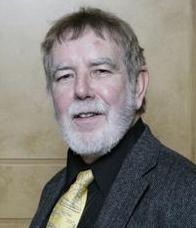 |
Position: Outreach Officer Office: 32-D432 Phone: +1.617.253.5987 Fax: +1.617.258.8682 E-mail: tjg@mit.edu BLOG: In Process at http://www.tjpgblog.blogspot.com/ |
|
Brief
Biography:
Dr. Tom Greene has been a member of the Research Staff of the Laboratory for 20 years. The lab's new role of CSAIL Outreach Officer is his present assignment. Concerning this role, the need for research laboratories to reach out to non-traditional communities has become much more important. The reason is since research is funded by all members of society, the work should be knowledgably endorsed by all of society. The benefits that research creates should be understood by a very wide public. Increasing gender and racial diversity in all organizations has obvious benefits and should be and is of direct concern. Wider Technical lliteracy brings benefits to society collectively and to its individual members. Outreach is a new concern of CSAIL and of all of us. Recent changes in awards by funding agencies (NSF, NIH, DARPA, NASA,) reflect an increased awareness of a second goal for a proposed project; the reserach should have Broader Impact on society. Reaching out with CSAIL information will have several benefits to the lab, including recruiting, increased funding opportunities. The effforts also is in keeping with the MIT tradition of being a good citizen as an organization. Outreach with information about the lab and the research that better suited to a wide audience including k-12 and the public at large is the thrust of activity. The effort is focused on k-grey, to include all lifelong learners. In the fall of 2003 Tom returned to Cambridge after completing 3 years as a program officer at the National Science Foundation, (NSF). During his years at MIT-LCS he had managed a variety of projects including as Information Officer, the logistics of LCS35. Other projects included working with Tim Berners-Lee, in helping establish the World Wide Web Consortium (W3C) at LCS, while W3C was building both the consortium membership base and the world wide team of workers. Prior to that Tom managed the MIT-LCS Project SCOUT focused on research use of a 128 node CM5 super computer. This project concerned collaborations amongst LCS and other scientists at MIT, Harvard and Boston University. His very first LCS assignment in 1987 was managing the computer resources services team (CRS) that supported the LCS Research Groups. The challenge at that time was making a computer equipment transition from the age of time-sharing machines to the world of distributed desktops. Tom has been a visiting Scientist at Stanford University (1981), IBM Cambridge Scientific Center (1985), and the NASA Manned Spacecraft Center- Houston (1970). He has served as a consultant with the United Nations ( UNIDO). He is an active member of the IEEE, the ACM and Sigma Xi. and a fomer member of the American Physical Society. Before joining LCS, Greene was a Professor of Computer Science at the King Fahd University of Petroleum & Minerals in Dhahran, Saudi Arabia, While there he first built a Computer Aided Learning Laboratory used for instruction by 1000 students/semester and later established the Department of Computer Science (1975-86). Greene completed his PhD in Theoretical Physics at the University of Toledo in 1973. He later earned a Ed.M from Harvard University in 1990. His early studies with a dual major in Physics and Philosophy at Boston College (1966) resulted in award of the B.Sc. Tom has been an invited speaker to conferences over the years, and has given video teleconference speeches at conferences and other meetings. This has included representing W3C, NSF, and speaking as an invited keynote speaker of several international conferences. This year of 2006 he was named MIT freshman advisor of the year. Professional
Memberships & Awards |
|


|
MIT
Computer Science and Artificial Intelligence Laboratory (CSAIL) |