


 and an enter event happens, we merely update
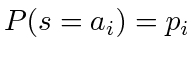 to
to
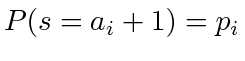 . On the other hand, an exit
event does the opposite and we change
to
. On the other hand, an exit
event does the opposite and we change
to
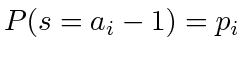 . A complication arises here: If shadow
  splits
into shadows
splits
into shadows  and an
  event happens to shadow
  , it
suggests that it is impossible for
to have 0
target before the
event. The affected probability mass needs to be removed and the
remaining values renormalized. The null event does not change the
target distribution.
, it
suggests that it is impossible for
to have 0
target before the
event. The affected probability mass needs to be removed and the
remaining values renormalized. The null event does not change the
target distribution.
Now, to propagate a probability mass through a field-of-view
observation,  , we essentially break the entry into three pieces
according to above rules, multiplying each resulting entries with the
probability
, we essentially break the entry into three pieces
according to above rules, multiplying each resulting entries with the
probability
 , and
, and
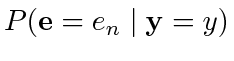 , respectively. If an enter event is not possible for the
observation, the two remaining entries are renormalized.
, respectively. If an enter event is not possible for the
observation, the two remaining entries are renormalized.