
Wojciech
Matusik


Biography
Matusik's group asks what AI needs in order to design real things, and then builds it. The work starts with representations of materials, structures, mechanisms, and robots that AI can synthesize and a solver can verify. Physics simulators run forward from a design to its performance and backward from a target to a design. Discovery systems propose new materials and molecules, test them on real instruments, and learn from what came back. And the group builds what makes them real: 3D printers that watch themselves print, knitting machines, automated labs. AI is not a layer on top of this but is built into the representations, the discovery loop, and the machines themselves.
The approach goes back to his doctoral work. The 2003 thesis built a data-driven generative model of reflectance, two decades before generative models moved to the center of AI; fabrication followed in 2009. He received his Ph.D. from MIT in 2003, an S.M. from MIT in 2001, and a B.S. from the University of California, Berkeley in 1997, and before returning to MIT he was at Mitsubishi Electric Research Laboratories, Adobe Systems, and Disney Research Zurich.
The breadth is deliberate. A method that has only been tried in one domain has usually been fitted to it. Carrying the same method across optics, textiles, chemistry, and molecular design is what shows whether it holds, and where it breaks.
Organizers and press: ready-to-use short biographies in three lengths, plus a photograph.
Talks and press
 TEDxMIT · April 2025
The Robot That Broke the Rules, and What It Means for the Future of AI
On engineering general intelligence: why the next step for AI may be
learning when to break the rules, and what changes when machines design things that have to
survive contact with the physical world.
Watch the talk on YouTube
TEDxMIT · April 2025
The Robot That Broke the Rules, and What It Means for the Future of AI
On engineering general intelligence: why the next step for AI may be
learning when to break the rules, and what changes when machines design things that have to
survive contact with the physical world.
Watch the talk on YouTube
Seven more recorded talks and seminars, from the 2009 SIGGRAPH award lecture to the 2026 GRASP seminar, are collected on the talks page.
Open problems
Three questions drive the group today. Each one is open, funded, and taking new students.

Domain-specific languages for design
Programs, not pixels. We build design languages that a machine can write and a solver can check, so that a generated artifact is correct by construction rather than plausible by appearance.
Neural physics surrogates
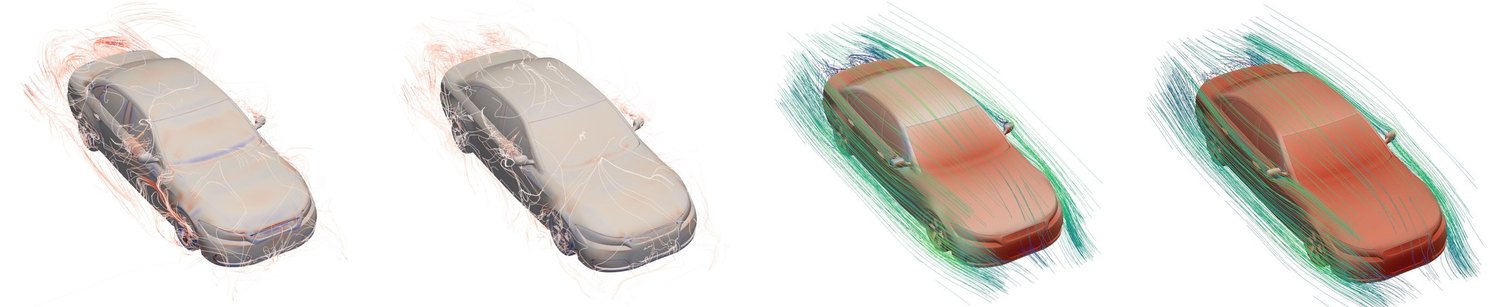
Learned simulators that preserve physical structure and can be checked against a classical solver. The aim is models that replace or accelerate those solvers without discarding the constraints and invariants that make them trustworthy.

AI for scientific discovery
Closing the loop from hypothesis to experiment. Discovery systems that propose candidates, run them on real instruments, and learn from what actually came back.
Foundations. All three sit on long-running work in computer graphics, computational design and fabrication, computer vision, and robotics. The group's open problems in full.
Selected publications
Among the field's seminal work
For SIGGRAPH's 50th anniversary, ACM republished the most significant papers of the field's second 25 years as Seminal Graphics Papers: Pushing the Boundaries, Volume 2.
 A data-driven reflectance modelFirst author, doctoral work
- Design and fabrication of materials with desired deformation behavior
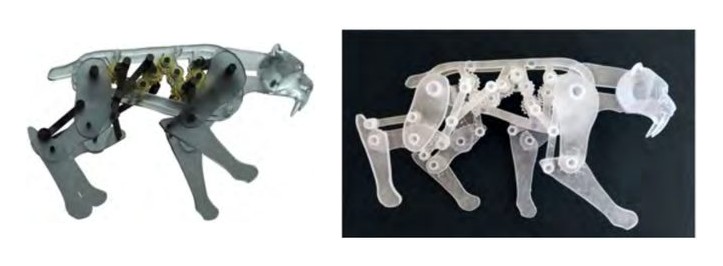
 Computational design of mechanical characters
Published in Nature
 Learning the signatures of the human grasp using a scalable tactile gloveSenior author
- Towards real-time photorealistic 3D holography with deep neural networksSenior author
 Vision-controlled jetting for composite systems and robots
Communications of the ACM Research Highlights
Selected by CACM as work the wider computing field should know about.
 OpenFab: a programmable pipeline for multimaterial fabricationResearch Highlight
 The Frankencamera: an experimental platform for computational photographyResearch Highlight
Recent award-winning work
Recognized by three separate communities: robotics, robot learning, and human-computer interaction.
 NeuralActuator: neural actuation modeling for robot dynamics and external force perceptionOutstanding Systems Paper
 Fabrica: dual-arm assembly of general multi-part objectsBest Paper Award
 TelePulse: enhancing the teleoperation experienceBest Paper Award
The complete list lives on the group site. All CDFG publications · SIGGRAPH record · Google Scholar · DBLP
Honors and awards
- 2026Outstanding Systems Paper in Memory of Seth Teller, Robotics: Science and Systems NeuralActuator
- 2025Best Paper Award, Conference on Robot Learning Fabrica
- 2025Best Paper Award, ACM CHI TelePulse
- 2025Cadence Design Systems Professorship, MIT named chair
- 2023Joan and Irwin M. Jacobs Professorship, MIT named chair
- 2023Humboldt Research Award, Alexander von Humboldt Foundation
- 2022Best Paper Honorable Mention, British Machine Vision Conference VoRF
- 2021Best Paper Honorable Mention, ACM CHI KnitUI
- 2020Frank Quick Faculty Research Innovation Fellowship, MIT
- 2014Ruth and Joel Spira Award for Excellence in Teaching, MIT
- 2012Sloan Research Fellowship, Alfred P. Sloan Foundation
- 2012DARPA Young Faculty Award
- 2009ACM SIGGRAPH Significant New Researcher Award · award speech: part one, part two
- 2004MIT Technology Review TR100, Innovators Under 35
Where people go next
15 doctoral theses supervised, plus 34 master's and undergraduate theses. 60 former group members went on to research careers: 23 in universities and institutes, 37 in industry labs. The group roster lists everyone, current and past.
Teaching
The subjects cover the same span as the research: computer graphics from the undergraduate class through a graduate seminar, machine learning, and the computational fabrication subject created here. The two MIT Professional Education courses are short programs for working scientists and engineers, taught on campus and live online.
- 6.4420J / 6.8420Computational Design and Fabrication. Offered jointly with Mechanical Engineering as 2.0911J.
- 6.4400Computer Graphics
- 6.3900Introduction to Machine Learning
- 6.838Advanced Topics: Computer Graphics
- Professional Ed.AI for Scientific Discovery
- Professional Ed.AI for Engineers
Join the group
The group takes students through both EECS and Mechanical Engineering. Work here usually spans an algorithm and something physical, so say which end you want to start from.
Email wojciech@mit.edu with your CV, two or three representative papers, and a short note on what you would want to build here.
Apply to the MIT EECS or MechE PhD program and name Wojciech Matusik as a potential advisor. Mention which of the three research threads above fits your interests. Applications open in the fall for the following year; each department posts its own deadline.
UROP positions run every term. Email Wojciech or any current group member with your background and what you would like to learn.