![]() |
Sam HasinoffPrincipal Software EngineerGoogle Labs
|
|
|
I work at Google Labs, bringing AI research into practice. My former work was in computational photography, with the broad goal of extending what's possible with conventional photography. Before working at Google, I was a Research Assistant Professor at TTIC. Before that, I was a postdoctoral fellow at MIT CSAIL, working with Frédo Durand and Bill Freeman. I received my Ph.D. in computer science at the University of Toronto in 2008, under the supervision of Kyros Kutulakos. [Email] [LinkedIn] [Brief bio] [CV - Sep 2012] [Google scholar] |
||
|
|
The Google Camera app produces images using the Ultra HDR image format
introduced in Android 14.
This format is backwards compatible, and provides a more true-to-life rendering on HDR displays.
Google Photos now supports HDR as well, preserving HDR when editing and upgrading legacy images to HDR.
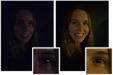
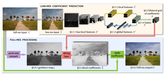
HDR+ in the Google Camera app improves image quality by capturing bursts of full-resolution images and merging them into a single result. Night Sight and other modes are also based on HDR+. Starting from Pixel 4, the viewfinder is WYSIWYG and supports live HDR editing. An early version of HDR+ ran on Google Glass.
|
The controls for shadows, highlights, and clarity introduced in Lightroom 4 and Photoshop CS6 are
inspired by our work on local Laplacian filters.
|
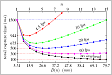
Variable-Aperture Photography
Dept. of Computer Science, University of Toronto, 2008
Alain Fournier Ph.D. Thesis Award
|
|
|
|
|
|
|
|
|
|
|
|
|
|
|
|
|
|
|
|
|
|
|
|
|
|
|
|
|
|
|
|
|
|